








Organisational Culture
Alcon's people-centric approach: Nurturing talent in today's world


 ||
||

APAC Head of HR Preneet Bindra shares the process that’s been so successful in building a strong, engaging organisational culture.
How does a multinational company with 25,000 associates worldwide maintain a people-centric culture that supports retention and engagement across more than 140 different geographies?
To answer this question, People Matters met up with Preneet Bindra, Head of Human Resources for Alcon's APAC region, to understand her perspective on the strategy that has succeeded so well for the world's largest eye care device company.
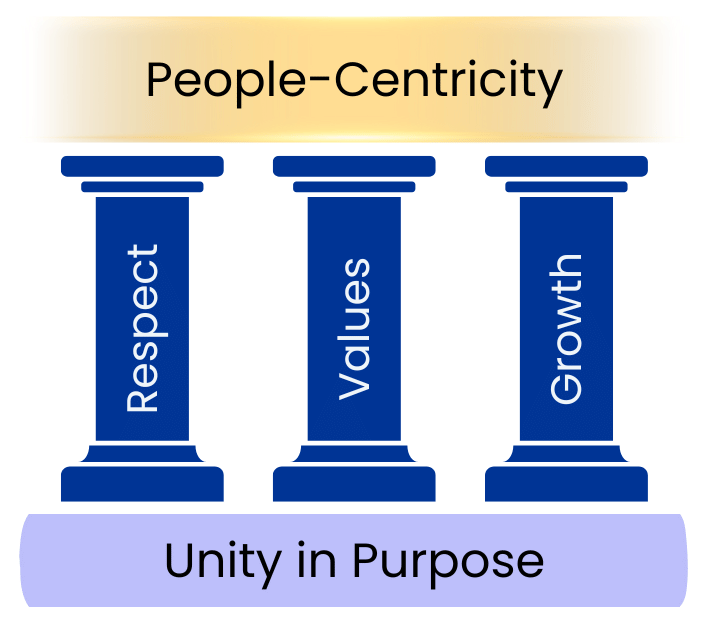
The first step is to have a very clear understanding of what a people-centric culture actually is. The concept of people-centricity as two pillars on a strong foundation, Preneet told us: the pillars are firstly an environment and a culture that is deeply rooted in respect, and secondly a strong link to the values and behaviours of the organisation. The third pillar is the growth and development of associates.
"One of our core EVPs is unleashing one's potential," she said. "It's about really providing the support through all forms of transition, whether you're taking on new roles or joining the company for the first time. We have a very deep coaching culture, and we also have a very widely articulated development planning culture that allows the associate to take ownership of their own growth."
The foundation, meanwhile, is the unity and purpose of the company – ‘We Help People See Brilliantly’. "Believe me, the foundation is the reason people join and stay," she said. "That's what happens when you have a compelling purpose."
It starts with proactive ownership, Preneet explained. People-centricity cannot be effected just through the company pushing programmes out to associates.
"People must have ownership. They must be able to voice out their needs and suggestions, to co-create and drive programmes. I'll share with you the example of our culture ambassadors. When we activate our culture, we have conversations across the company, and we have people leaders, community of practices, culture ambassadors from our local offices, all of who are passionate and willing to take those conversations forward. They are also the voice that comes back to us to say that something isn't working as it should, that it should be done differently, that some nudges are needed here or there."
A key enabler for ownership is the deliberate removal of silos. People programmes cannot be developed in isolation, Preneet said; co-creation is not just about collaboration between managers and associates, it is also about collaboration between very different parts of the company.
"You will have your HR business partners as part of the design. You will have your business leaders and select associates giving inputs. The culture ambassadors will have a voice. Deployment and activation is all owned together."
Alcon had a head start: collaboration was articulated in the company's “ways of working” from the very start, Preneet said.
"When we were spun out of Novartis and became an independent company, we articulated our values, behaviours, and purpose. And we did a fourth thing. We articulated our culture priorities. We said that what's important for our culture right now is speed and simplicity, ownership and accountability. And we further articulated speed as something that has to be done thoughtfully by aligning on decision rights. That dictates how we work and how fast decisions flow. When something has to be delivered, we’re able to deliver it with speed, with clarity and accountability."
To keep that collaboration, language becomes critical, she added.
"Having worked in different industries, I've found the everyday language is really important. And here in Alcon, we're very mindful and thoughtful about the language that we want to use when it comes to our culture."
That language - how people speak about their work, the vocabulary they use, how they communicate with and address each other - is created in a similarly collaborative way across the organisation, using Alcon's global culture activation programme.
"Culture activation often is seen as a campaign," Preneet said. "In our case, it's not a campaign, it's a series of conversations and dialogues. We designed our culture for the whole company, but we deployed it in smaller groups and natural working teams. And as part of the activation, we gave them tools: thought starters, nudges, even some games, so that the understanding could really develop of what language we are using as a company. We did it over an 18-month period, layer by layer by layer, and by the end of those 18 months, everyone was speaking the same language."
It's a major challenge when a company operates in many extremely diverse geographies: how do you make sure you're not pushing something out from HQ that isn't fit for purpose at the local level?
The answer is to make localisation the very first step, Preneet said.
"When we design a programme, we'll have folks from all the involved regions present in the global call at the design stage. The first thing we do is gather their input. And after we've incorporated their input, we pilot it in selected markets which are very diverse. We'll even pilot it for different entities such as commercial, manufacturing, shared service, and so on, and then we'll take the feedback from all of these diverse markets and functions, incorporate it, and roll out again on a wider scale. All this ensures that when we move to deployment, the programme is already fit for purpose wherever it's launched."
This approach has received very good feedback from managers and associates alike, she added; it means that programmes can be simultaneously customised to all countries while maintaining the same overall style.
But programmes don't end there, either. Once a programme has been activated locally, it can be extended and modified in small ways: gamification for some departments, different formats for other functions, even visual aids depending on the physical environment.
"For example, the folks in our office space can set aside time for longer formats, but our manufacturing associates need a shorter format so they can stay on shift," Preneet described. "And signage also changes. In an office environment your activation can be mostly online, but on the shop floor you need visible signs. And we pick all these up through dialogue. Every year, we bring advisors from all over the world to share their input with the design team, and we make the changes that they tell us they need."
Author
Loading...