








Strategic HR
Closing the talent gap: FUJIFILM Business Innovation’s digital transformation strategy



 ||
||


How are companies bridging the skills gap to make their digital transformation initiatives successful? We hear from FUJIFILM Business Innovation Singapore’s head of people and culture.
Digital transformation sounds very appealing amid the AI hype, but the catch is: does the company as a whole, from policies to processes to workforce, have the capability to undertake a successful transformation?
People Matters asked Ong Hiow Yim, the head of people, culture, and corporate social responsibility at FUJIFILM Business Innovation Singapore, for her perspective on the challenge and how the organisation is working through it.
The first step, she said, is to identify the gap and its cause. The next step is to approach the gap from three different angles: skill sets, mindsets, and leadership.
For skill sets in particular, the gap lies in digital skills.
"Whether it's machine learning or deep learning or data science and analytics or even more basic computing, these topics were not popular or common during our school days. So as we can imagine, talents with such expertise are not readily available now. But having said that, the good news is that skill sets can be learned."
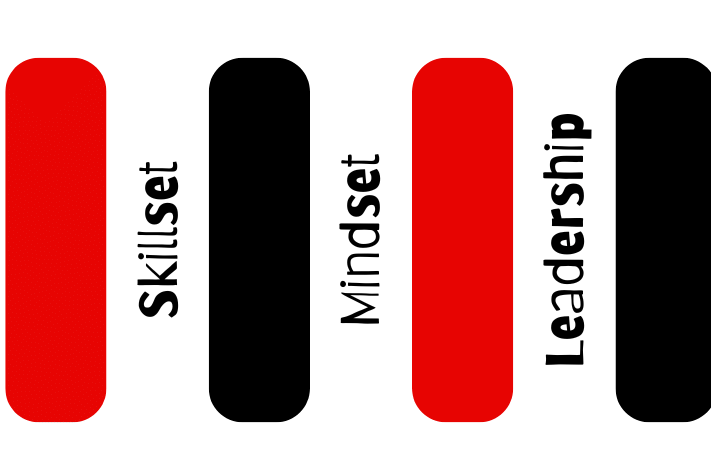
Initiatives to drive upskilling
Hiow Yim shared the multi-pronged strategy that has worked for her organisation, and the initiatives that comprise it.
To address skill sets:
Training sessions for all digital platforms that are used in the business
Digital transformation initiatives aimed at helping employees build skills and then apply what they have learned in practical business settings
To address mindsets:
Build a culture that encourages employees to be open about changes and also to challenge the status quo
Teach employees the “see-think-plan-do” concept, and to apply it in problem-solving as well as continuous improvement
Create a safe environment for employees to generate ideas and experiment - FUJIFILM Business Innovation Singapore has done this with an event called FUJIFILM Innovation Festival where employees are encouraged to look into how they can improve their daily work
To address leadership:
Equip leaders with knowledge about both technology and strategy, so that they can develop the strategic vision to drive innovation and lead transformation
HR should work closely with leadership to provide perspective on what people capabilities are required to drive and support transformation
If leaders face challenges in connecting technology and strategy, consider working with an external partner to co-create and implement the needed strategies and initiatives
The role that AI plays in a digitally transformed workplace
“I think AI has reshaped the way that we capture and manage information, the way we manage workflow, as well as the way we make smarter decisions,” Hiow Yim told People Matters.
For FUJIFILM Business Innovation Singapore, she explained, the focus is currently on cost optimisations and efficiency improvements, and AI alongside other digital solutions can drive this by automating or streamlining manual processes and routine tasks.
It also frees up employees for more strategic work including problem solving, collaborations and strategic planning, and critically, the abilty to start developing insights for the business.
“We are looking at data like workforce readiness, demographics, or skill sets. These are important information that can help to enable faster and better data driven decisions,” she said.
In some cases, AI-enabled predictive analytics can also directly improve front-line operations. Hiow Yim shared an example of using AI to predict the toner utilisation of customers, so that service teams can proactively replenish the supplies for the print device.
“As you can imagine, this not only increases efficiencies, it helps to minimise business disruption, ensure business continuity, reduce wastage, and eventually create a happier customer experience.”
What about AI in HR?
The technology absolutely can bring operational efficiencies to HR, Hiow Yim said. For example, it can streamline or automate the management of employee records, letters and notices, freeing up HR to work on more important business insights such as employee engagement.
“We can have deeper insights on the sentiments of employees, by tenure, by age, group, by functions, and we can compare the data with different countries, different industries, and different companies. These insights help us better understand how we can benchmark ourselves and where are the opportunities we should aim towards, and it also helps us shape our engagement strategies, whether it's in terms of how we design our focus group engagements, or how we craft our communications approach, or even how we tailor our wellbeing programs for different groups.”
FUJIFILM Business Innovation Singapore has also recently designed and developed a 360-degree assessment tool with analytics to better understand the strengths and the skill gaps of the employees, so that the L&D team can better support progression, deployment, and even coaching sessions with employees.
That said, Hiow Yim added that one very important aspect of AI implementation is ethical and responsible use.
This means a very clear policy and standards on the use, development, and deployment of AI, she explained. Employees must understand the capabilities of the technology so that they can apply it effectively at work, but they also need to have a broad awareness of the possible risks and ethical implications, and they must understand their accountability as a user: for sensitive and confidential information, and also for validating the tool’s output.
FUJIFILM Business Innovation Singapore, she said, requires every employee to go through compliance training on AI awareness before they can so much as use the company’s in-house AI chat function.
“I think we can also ensure there are cross-functional partnerships in place to make sure that we we have regular audits of the AI model, to ensure that we detect any potential bias in the data. We also want to make sure that the system is secured and the data is protected, especially employee data and confidential company data. So it’s very important for the different stakeholders to be aligned on the AI initiatives and the organisational values. And I think finally, leadership, as always, plays a very important role. Leaders have to lead by example and model the responsible use of AI, and also foster the correct environment and culture for responsible innovation.”
Author
Loading...