








Strategic HR
From Uncertainty to Unity: Reimagining the Workforce for the Next Wave of Transformation





Data can tell us where to act and empathy tells us how. In moments of uncertainty, when job roles shift, new technologies emerge, or teams are restructured, leaders must communicate with transparency and care.
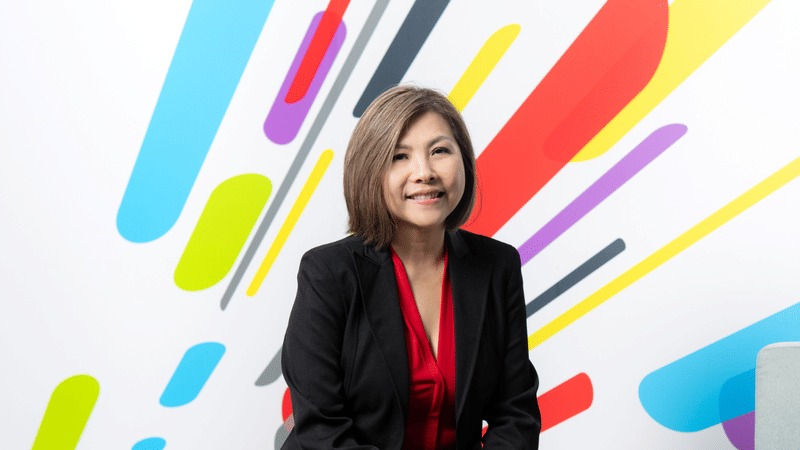
By Wendy Foong, Regional People Director APAC at Inchcape
Yet amid this constant flux, one truth has emerged, the most successful organizations are those that move from uncertainty to unity in managing this organisational stress. Transformation today isn’t only about technology, structures, or market share. It’s about people, how they align, adapt, and act together with clarity of purpose. And that makes the role of the Chief Human Resources Officer (CHRO) more pivotal than ever.
1. Transformation at the Speed of Change
Across APAC, businesses are being reshaped by forces that test both agility and resilience. AI and automation are redefining job roles; demographic shifts are reshaping talent pools; and geopolitical tensions are redrawing trade and workforce patterns.
In this VUCA environment, transformation cycles that once spanned years are now compressed into months. Traditional change programs, linear, top-down, and compliance-driven, no longer suffice. The CHRO’s mandate has evolved from managing workforce stability to enabling transformation velocity.
To thrive, organizations must embed adaptability into their very DNA. That means cultivating a workforce capable of learning faster, collaborating deeper, and innovating amid ambiguity.
2. Human-Centred Agility: The New Competitive Advantage
The past few years have taught us that agility without humanity is unsustainable. Leaders can deploy the most advanced technologies or restructure teams overnight, but without trust, empathy, and inclusion, transformation falters.
Across APAC, we are witnessing inspiring shifts toward human-centered agility. Companies are embracing internal talent marketplaces, allowing employees to pivot to new roles and projects dynamically. Reskilling programs are being reframed as “career growth ecosystems,” not mandates. And flexible working models, once a pandemic necessity, are now a competitive differentiator.
The CHRO sits at the nexus of this change, orchestrating systems that balance efficiency with empathy. By designing workforce models that give people both stability and stretch, we can turn transformation fatigue into transformation energy.
3. Culture as the Catalyst
Culture has always been a defining force in organizational success, but in times of disruption, it becomes the engine of transformation.
In APAC, where organizations often span multiple markets, languages, and cultural norms, maintaining alignment is both a challenge and an opportunity. The key lies in clarity of purpose. When employees understand not only what is changing but why it matters, they become active participants rather than passive recipients of transformation.
As the year ends, December offers a natural moment to pause and reconnect with that purpose. It’s a time for leaders to celebrate resilience, listen deeply, and re-energize teams for the year ahead. Small rituals, recognition ceremonies, storytelling sessions, and open forums, can powerfully reinforce a sense of shared identity.
Because ultimately, transformation doesn’t happen through strategy decks or restructuring charts, it happens through culture in motion.
4. Data and Empathy: The Dual Levers of Leadership
The CHRO’s toolkit has expanded dramatically. People analytics now allow us to predict attrition, model skill gaps, and measure engagement in real time. Yet, the true power lies in combining this precision with empathy-driven leadership.
Data can tell us where to act and empathy tells us how. In moments of uncertainty, when job roles shift, new technologies emerge, or teams are restructured, leaders must communicate with transparency and care. The most trusted organizations in APAC are those where leaders are not just visible, but vulnerable, acknowledging uncertainty while reaffirming shared direction.
As we harness AI and analytics to make smarter talent decisions, the CHRO’s role as chief empathy officer remains irreplaceable.
5. From Transformation Fatigue to Transformation Flow
One of the quiet challenges across industries this year has been change fatigue.
After multiple waves of transformation, digital, structural, and strategic, many employees feel stretched thin. The CHRO’s next frontier is to turn this fatigue into flow: creating momentum where change feels continuous but manageable.
How? By embedding transformation into the rhythm of work rather than as an additional layer. By giving employees agency, co-creating change instead of announcing it. And by measuring success not only through KPIs, but through indicators of human vitality: belonging, psychological safety, and innovation energy.
When people feel seen, heard, and equipped, transformation stops being something done to them and becomes something achieved with them.
6. Looking Ahead to 2026: Unity as a Strategic Advantage
As we look toward 2026, the next wave of transformation will be shaped by AI-augmented work, sustainability-driven business models, and a multigenerational workforce unlike any before. The organizations that will thrive are those that move beyond reacting to disruption, to designing for unity amid it.
Unity doesn’t mean uniformity. It means creating a shared sense of purpose that transcends geography, generation, and function. It means ensuring every employee understands how their role connects to the broader transformation story.
For CHROs, that means evolving from being the guardians of people processes to the architects of organizational coherence—bringing together data, culture, and leadership to form one integrated human ecosystem.
In a world where change is the only constant, unity is the ultimate differentiator.
As the year ends, let’s take a moment not only to reflect on how far we’ve come, but to recommit to what truly drives transformation: people aligned by purpose, empowered by trust, and united in the pursuit of progress.
In 2026, success will not be measured by how fast we transform—but by how deeply we bring our people along the journey.
Loading...