








Strategic HR
The strategic shift: Grundfos CHRO Anne Grønbjerg on HR's path forward





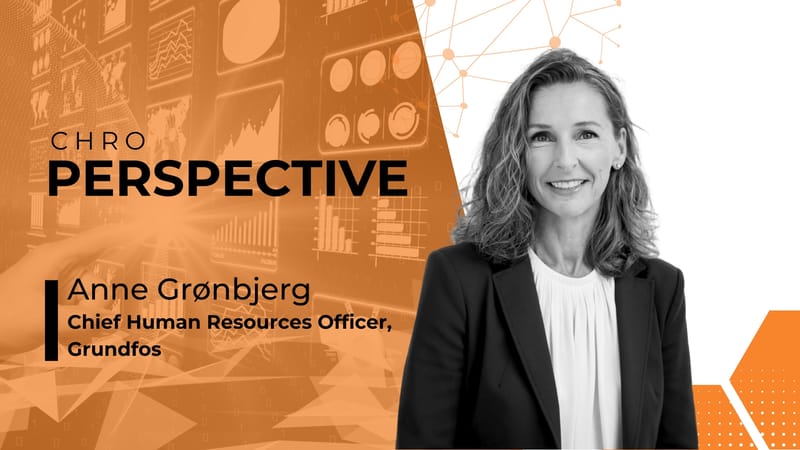
It's a truism that HR leaders must understand the business. Anne, who entered the CHRO's role from the commercial side, shares a unique perspective of what that understanding could look like.
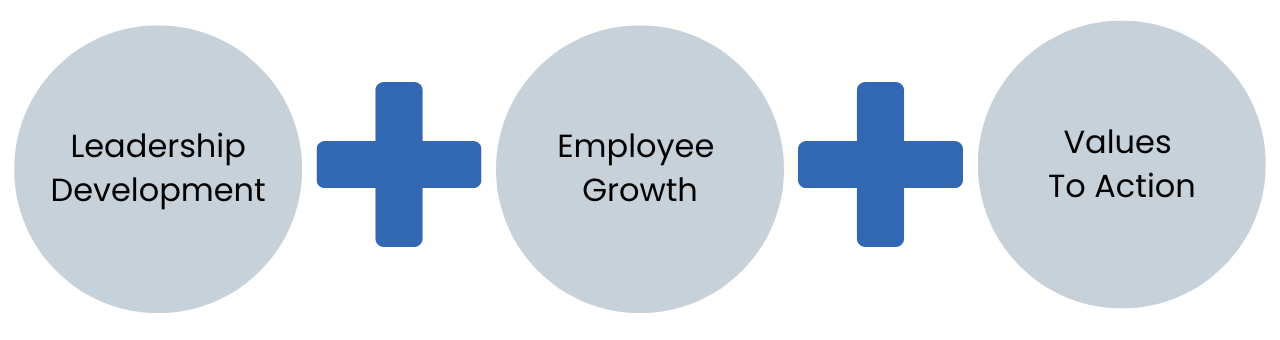
When Anne Grønbjerg moved from leading product management and marketing to take up the CHRO seat at global water solutions company Grundfos, she brought three decades of experience across the entire business spectrum: sales, communications, shipping, commercial strategy, change management. She also brought what she calls two-plus-one passions: the opportunity to uplift leadership skills at an enterprise level, the opportunity to create learning and development for employees, and underlying those, an intense love for the company's values paired with curiosity about how to operationalise them.
People Matters asked Anne for her view on HR's role in a business environment where expectations of the HR function are increasingly shifting away from the traditional focus on process excellence, and how people leaders can respond to the broadening scope of their portfolios.
Her first thought, based on everything she has observed over the course of her career, was: growing the leadership.
"I've been working full time in the corporate world for almost 30 years. And if there's a common denominator that I've seen, it's the business multiplier impact of great leadership. It doesn't matter if it's in general management or communications or commercial shipping or developing new pumps and solutions. Great leadership has a genuine impact on business results and business outcomes," she said.
"How great are your leaders, and what do they actually bring to the table? How do they show up?"
She sees her second passion and focus, employee growth, as similarly intertwined with business success. Part of it is simply that employees are entitled to grow with a company and will leave if they don't receive that opportunity; part of it is the impact that competent employees have on the business.
The many places where HR adds value
With all of that said, HR leaders today frequently face pressure to support or even deliver business metrics, and the value they bring comes under a level of scrutiny that can be challenging to manage. But the way to manage these expectations is already in HR's hands, Anne believes.
For a start, HR's specialty is process excellence, and that by itself means that the function carries a large amount of mental load for business leaders.
"If you think about the daily life of a leader, having easy recruitment, easy salary adjustment process, easy performance management process, that takes up quite a lot of mental space," Anne pointed out. "We have to be passionate about that. It's something that we can take a lot of pride in, something that's important today and that will remain important throughout the life of a company."
Then, there are all the areas where HR is already solidly positioned to support business priorities: succession planning, talent development, strategic capability building, and more.
"To give you one example, if I'm a people leader and I have some critical roles in my team, I need to make a succession plan. If this person who has the role today resigns or gets promoted, what do I do? But that people leader has a limited view of what relevant talent is available in the organisation. In Grundfos, we have 21,000 people. How can one leader possibly know all the relevant people who might step into that critical role in his or her team?"
HR, in contrast, has the visibility and overview of talent throughout the organisation; HR knows who has the right experience and skills, who is interested in moving into a needed role. "We can really lift the succession planning game to a whole new level if we as professionals in HR have the right data, if we have the right tools, if we have the right processes and the right relationships with those managers who are in that difficult position of replacing one critical person with another," Anne said.
The same applies to capability building. In Grundfos, she said, there is an ongoing need for new capabilities to constantly be built up inside the company, and for those capabilities to be tracked. They might be internally developed, or temporarily brought in from outside; but someone needs to have that overview of what the business needs, where the gaps are, and how to go about closing those gaps.
Where the most immediate capability needs are
Within Grundfos's context, the business most on Anne's mind right now is understanding and solving customer problems. This breaks down into two separate components: the ability to combine digital and physical value, and the ability to understand customer needs and translate that into “sale-able”, scalable offerings.
For example, Grundfos has customers in water-scarce areas who must be very cautious about how they extract their water resources; they also have customers who own and operate extremely large and complex real estate portfolios, who are looking to reduce the amount of water and energy consumed in their buildings. Still other customers are extremely advanced manufacturers who need very high levels of precision in their water supply.
"When I say that's a capability, it's an easy headline to make, but there's so much complexity underneath," she commented. "The capability we need to build is understanding our customers’ needs, as varied as they are, translating that into requirements, developing hardware and software to those requirements, testing it, making it solid and scalable, and then selling and servicing those offerings."
It is, she said, an end-to-end capability that breaks down into multiple different sub-capabilities - not something that will be expected of any one person, but rather of many different teams collaborating and each bringing their individual specialisations to the table.
How HR can manage all these expectations
The many areas of focus create a series of paradoxes for HR, Anne said. The very first one is the balance between immediate requirements and long-term planning, delivery and cost.
"We're living in a time where businesses really are being asked to do a lot. Just for example, all the teams must juggle delivering for today or for this week or this quarter, with whether we are doing the right thing and setting ourselves up for success in the long term. And every team is constantly under cost pressure. Whether you have a P&L ownership or you're a cost centre, everyone is looking to reduce cost all the time – while doing more."
Then there is the AI paradox: the technology represents great opportunities, but it is also a major source of stress for both individual employees and business leaders. People are worried, she said, but also have no choice but to just dive in and start experimenting.
"HR is in a situation where we want to do more, we want to become more efficient, and to be honest, we want to spend less. But that's the world we're in. We have to take this as a chance to take a hard look at our priorities and explore if what we do is business critical, if it really adds value, or if there is something we can live without. It's also a chance to review our mandate: what is the business actually looking for from HR? We won't always like the answers, but it's something we need to do and be super curious about."
It helps that the Grundfos HR team is a diverse one, Anne added. She isn't the only person coming from a non-HR background; there are team members who have worked in marketing and sales, who have held regional roles, who come from other industries, and from multiple cultural backgrounds. And as a leader, her part, she believes, is to give them the opportunity to shine in what they do.
Topics
Author
Loading...