








Strategic HR
The Torch and the Terminal: Why AI cannot own the final decision
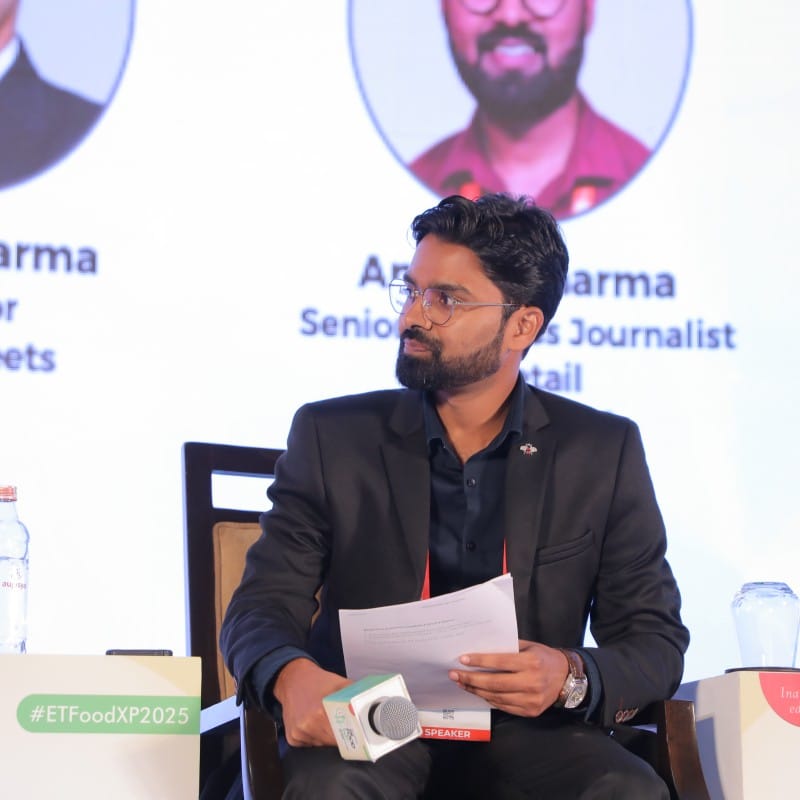


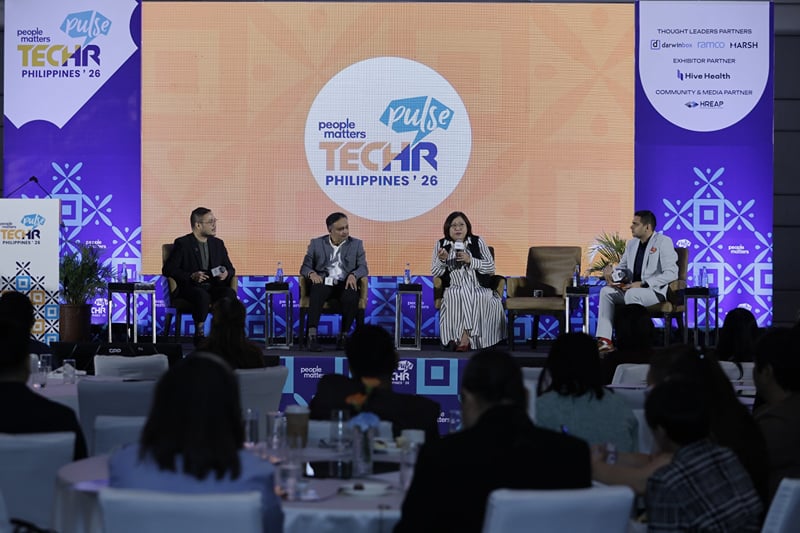
At TechHR Pulse Philippines 2026, leaders from UnionDigital Bank, AG&P and China Bank explain why capability, trust and human accountability must shape the next phase of AI-led transformation.
The future of work is often discussed through the capabilities of technology: what AI can automate, how quickly it can improve productivity and which roles it might reshape. The closing conversation at TechHR Pulse Philippines 2026 turned the question around: what must organisations, and the people leading them, take responsibility for now?
For Mike Malicsi, CHRO, UnionDigital Bank; Devendra Pratap Singh, Chief Information Officer, AG&P; and Tani Cruz, CHRO, China Bank, the answer begins with clarity. Organisations must understand the outcomes they are pursuing, build the capabilities required to deliver them and decide where human judgement must remain decisive.
Moderated by Pushkar Bidwai, CEO, People Matters, the conversation offered a practical sequence for transformation: define the purpose, strengthen the foundations, involve the people affected by change and retain human accountability for its consequences.
The decisions leaders cannot keep postponing
Malicsi identified organisational clarity as the starting point. Before adopting another system or launching another transformation initiative, leaders must be clear about what the organisation wants to achieve, where it intends to go and how it expects to get there.
Singh placed capability assessment alongside that clarity. AI is already influencing business expectations, but organisations cannot innovate consistently without understanding their existing skills and deliberately developing them for new forms of work.
Cruz noted that many organisations have already invested in AI awareness and fluency. The priority must now shift towards useful application: where can AI improve work, create value and solve a real organisational problem?
That shift cannot be delivered through a standardised workforce strategy. Employees enter transformation with different capabilities, experiences and levels of readiness. Leaders must understand those differences before bringing people together around a common direction.
The immediate leadership responsibility is therefore not simply to accelerate AI adoption. It is to connect technology with a clear business objective and an honest understanding of workforce capability.
Moving from cost advantage to capability advantage
For the Philippines, the larger opportunity is to move beyond competing primarily through cost and build an advantage around capability, innovation and higher-value work.
Malicsi said organisations must stop viewing talent through a linear lens. Employees are frequently defined by their current position, previous function or established career track. That approach overlooks the skills people acquire through projects, informal learning and experiences outside their formal job descriptions.
Businesses need a fuller view of what their people can do—and what they could do next. That requires learning pathways which allow employees to develop new capabilities and create alternative careers within the organisation.
AI can widen those possibilities by lowering the barriers to creating, analysing and building. Work that once required specialist technical knowledge is becoming more accessible. However, access to technology will create value only when organisations give people the opportunity to apply it.
The capability advantage will come from organisations that can recognise potential early, move talent across conventional boundaries and connect learning with real work.
AI needs architecture before adoption
Singh cautioned against beginning the transformation conversation with AI alone. Organisations first need a dependable information architecture: the data, systems, integrations and decision structures on which AI will operate.
He pointed to three foundations: governance, skills and trust.
Governance defines how technology will be used and where accountability sits. Skills determine whether employees can apply it effectively. Trust influences whether people engage with the change or resist it.
Existing policies and processes must also be challenged. Adding AI to outdated workflows can reproduce their limitations at greater speed. Organisations need to reconsider how work moves across functions, how systems connect and whether their governance is suitable for emerging technology.
Singh also drew a clear distinction between launching a system and making it work inside an organisation. Technology teams can implement platforms, but HR plays a critical role in helping employees understand the change, adapt their behaviour and incorporate new tools into everyday work.
Technology should fit the organisation’s purpose and operating reality. The organisation should not be forced to reshape every process simply to accommodate the limitations of a tool.
Trust determines whether transformation reaches the workforce
The panel’s two banking perspectives showed that trust matters in both established institutions and digital-first businesses.
Cruz described China Bank’s digital transformation as a deliberate, multi-year journey across an organisation of approximately 11,600 employees. One of its earliest decisions was to address the fear of displacement directly. Employees were told that technology-led productivity gains would lead to redeployment and upskilling rather than automatic job loss.
The bank also introduced psychological safety as part of the transformation. Employees needed to feel able to suggest ideas, provide feedback and experiment with unfamiliar ways of working. Digital and AI fluency programmes supported that environment, while early wins helped build confidence in the broader roadmap.
Malicsi highlighted a similar need within the faster-moving environment of digital banking. When teams are simultaneously building products, solving operational problems and responding to rapid change, employee connection and safety can easily be neglected.
His central point was simple: when people feel safe to question decisions, learn from mistakes and suggest alternatives, culture becomes stronger. That culture subsequently supports creativity, productivity and a more meaningful connection with work.
Trust, in this context, is not separate from performance. It is part of the infrastructure that makes adoption and innovation possible.
Co-creation must still lead to execution
Transformation weakens when decisions are made at the top and handed to employees for implementation. But consultation without action creates a different problem: continuous discussion with little progress.
China Bank has sought to address this through a people and culture committee chaired by HR and involving business leaders. Initiatives affecting employees are discussed with the functions responsible for delivering the bank’s products and services.
Cruz described the approach as consultative, but with a clear intent to execute. Once an initiative is agreed, HR works with the business on change interventions and implementation. This prevents people transformation from becoming an HR-only programme and places ownership closer to the workforce.
The bank also avoids waiting for a perfect solution. It introduces workable versions, observes employee and business responses, and adjusts the programme where necessary. Bite-sized implementation helps an established organisation absorb change, but agreed timelines prevent gradual adoption from becoming indefinite delay.
Singh added that successful change requires adaptability, a willingness to challenge existing processes and sustained engagement around purpose. Employees are more likely to support a difficult transition when they understand why it is happening and how their contribution fits into it.
What must remain human
The final question moved beyond what AI can do to what organisations should never delegate entirely to it.
Malicsi identified three areas: judgement, accountability and creativity. AI can provide information, recommendations or a starting point for a decision. The employee using it must still assess the context, determine the appropriate action and remain accountable for the outcome.
Singh added empathy to that list. Decisions involving approval, rejection, consent or a direct effect on an individual require meaningful human oversight. A tool may support the decision, but it cannot carry responsibility for its consequences.
From the perspective of a regulated bank, Cruz emphasised critical thinking, accountability and adaptability. When something goes wrong, customers expect a credible human voice, not a system, to explain what happened and take responsibility.
Across the three perspectives, one principle remained consistent: AI can accelerate analysis and execution, but it cannot become the final owner of a consequential decision.
Building for what comes next
The central challenge for leaders is not choosing between technological progress and a human-centred organisation. It is designing an operating model in which the two strengthen each other.
That requires clarity about the business problem, reliable information architecture, skills connected to real work, governance that can move at speed, and trust strong enough to support experimentation. It also requires business leaders to share ownership of workforce change rather than treating it as an HR programme.
Most importantly, organisations must decide where responsibility sits. As AI becomes more capable, human judgement, empathy and accountability become more, not less, important.
The organisations built to last will not be those that simply deploy AI fastest. They will be those that know what technology should do, prepare people to work with it and ensure that a human remains answerable for the outcome.
Author
Loading...