








Strategic HR
Tracy Han on rethinking the ‘office’ amid shifting workplace realities






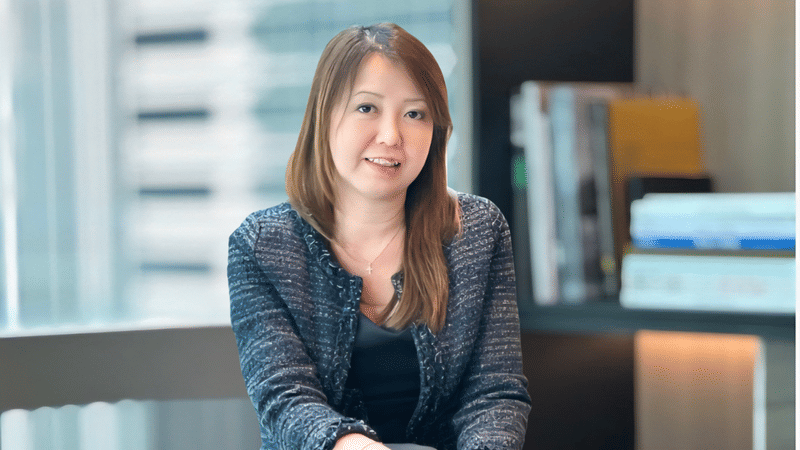
Tracy Han explains why building a true flexibility culture requires more than remote work policies, highlighting the importance of infrastructure, leadership, and employee-centric workplace experiences.
The reality of workplaces today has been reshaped by rising workforce expectations and challenges such as the cost-of-living crisis, which is increasingly affecting even basic necessities. These pressures are being amplified by economic volatility across the world.
In Southeast Asia, in particular, the landscape is shaped by a highly diverse mix of household incomes and levels of economic development. At the same time, the region's rapidly expanding middle class is driving consumption, urbanisation, and growing demand for flexible work and lifestyle solutions.
Together, these trends are redefining how & where people work, with employers increasingly being challenged to rethink their workplace strategies towards solutions that better align with these evolving needs and expectations.
In this exclusive conversation, Tracy Han, General Manager of Singapore and Malaysia at Arcc Spaces, shares her perspective on the forces reshaping the workplace. She discusses the growing role of flexible/ hybrid work and third-space ecosystems, and what organisations can do to prepare for the future of work.
Read the edited excerpts below:
The real picture of workplace today
The relationship between people and work has been reprioritised across the region. Employees are no longer evaluating jobs based solely on salary or title. Instead, they are looking at the total value proposition of employment, and flexibility has become a critical part of that equation.
The conversations we hear in the market have shifted. It is no longer just about what benefits an employer offers; it is about whether the work arrangement genuinely helps people manage their lives. This reflects a meaningful and lasting change in how people relate to work.
From the employer's perspective, ongoing economic and geopolitical uncertainty has also changed the equation.
Long-term fixed commitments can feel riskier, which is why agility has become a genuine strategic priority for many organisations. It is no longer simply a buzzword or a perk, it is an operational necessity.
Practicality has replaced perks as the key driver of workplace decisions. Organisations that have not recognised this shift are already feeling the impact through lower engagement, higher retention challenges, and increasing difficulty in persuading employees to return to work environments that do not support their real-life needs.
Evolving shifts in the ways of working
Hybrid work has evolved from being a value-add during the COVID period to becoming a form of protection for employees. Today, organisations are no longer differentiating themselves by offering hybrid work. In many cases, they are actually disqualifying themselves if they do not offer meaningful flexibility.
Organisations need to internalise flexibility as a productivity tool, not a privilege. That shift in mindset is what separates organisations that are building for the future from those that are still optimising for the past.
In Malaysia, for example, government initiatives have increasingly connected workplace well-being to broader economic resilience. That is a significant and mature way of looking at the issue. It helps normalise flexibility at a cultural and societal level, not just within individual companies, and those kinds of changes tend to be far more durable.
One point I often emphasize to leaders is that when presence becomes a proxy for performance, they are not really managing performance, they are managing visibility. The people with the most portable and in-demand skills are often the first to recognise that distinction. As a result, they are also the most likely to move on from organisations that continue to equate visibility with value.
Reality shaping demand for ‘third spaces’
Across many parts of Southeast Asia, home is not always a viable workplace. Multigenerational living arrangements and space constraints are often the norm rather than the exception.
For many employees, working from home is not a perk, it can actually be a pressure point, particularly when they are sharing space with several family members.
At the same time, commuting to a central office every day is becoming increasingly difficult to justify when every trip carries a real financial and personal cost. As a result, many workers find themselves caught in the middle.
Home does not always provide an effective environment for focused work, while the office is not always worth the time, expense, and effort of the journey.
This is where third spaces are filling a critical gap. The demand is being driven by the need for professional, well-designed, and accessible work environments that are closer to where people live.
Employees are looking for spaces that provide the structure, focus, and productivity of an office without requiring a lengthy commute – a trend playing out across Singapore and Malaysia.
Importantly, the demand is not just coming from freelancers or independent workers. It is increasingly coming from employees of established organisations that have introduced flexible work policies but have not necessarily provided the infrastructure needed to support them effectively.
In many ways, third spaces have become the missing link between policy and practice. They are helping make flexible work not just possible, but genuinely functional on a day-to-day basis.
Rethinking ‘office’ amidst rising costs of living
The office used to derive its authority from obligation, with people coming in simply because they were expected to. That model has largely lost its acceptance. Today, employees have greater choice over when and where they work, which means the office has to compete for their time.
Workers have become far more deliberate in their decisions. They are asking whether a day in the office genuinely justifies the commute, and that question is being asked more seriously than ever as the financial and personal costs of travel continue to rise.
As a result, the bar is much higher. If a workplace does not offer meaningful value, it will feel the pressure.
We encourage leaders to move away from fixed attendance policies and instead design attendance around purpose. People should come into the office for what physical workplaces do best, collaboration, mentoring, relationship-building, and the spontaneous exchanges that no video call can truly replicate, not simply to satisfy a required number of office days.
As employees become more intentional about when they come in, organisations need to ensure the workplace actively justifies that decision.
At Arcc Spaces, we approach this through a hospitality lens. The goal is to create environments where people feel welcomed, supported, and genuinely want to spend time. Ultimately, the office has to offer something that home cannot. It cannot be just a desk; it has to be an experience worth the investment of time, effort, and cost.
Identifying gaps in flexible work policies
A policy that permits flexible work is not the same as an organisation that truly enables it. The biggest gaps we are seeing today exist between permission and enablement, making many flexible work strategies to fall short.
The most visible gap is physical infrastructure. Many organisations have reduced their office footprints without providing credible alternatives for employees whose home environments are not suitable for productive work. As a result, people are often trying to work from spaces that were never designed for sustained professional output, and over time, the cost of that compromise becomes apparent in both productivity and well-being.
The management gap is equally significant. Hybrid work requires managers to build trust in distributed environments and evaluate performance based on outcomes rather than observation. These are capabilities that many organisations have not invested in developing alongside their flexible work policies.
There is also a cultural gap that organisations need to address. Proximity bias can quietly become embedded in the workplace, influencing who receives stretch assignments, greater visibility, and ultimately opportunities for promotion.
When physical presence is rewarded without being explicitly acknowledged, the result is often a two-tier workforce. No flexibility policy is designed to create that outcome, yet many organisations are unintentionally producing it.
This is what separates a flexibility policy from a flexibility culture. It is not just about reducing costs or allowing people to work remotely. It is about creating the infrastructure, leadership capabilities, and human-centered experiences that enable employees to feel supported, trusted, and valued, regardless of where they work.
Employers rethinking real estate and workplace strategies
Today, real estate decisions have increasingly moved onto the CEO’s agenda in a way they simply were not before.
Workplace strategy is no longer separate from how a business performs, retains talent, or builds culture. Those conversations have become deeply interconnected, and that shift has changed the importance of the decisions being made.
What we are seeing is that the single headquarters model is gradually losing its status as the default. Organisations are asking whether a smaller, higher-quality central office, combined with workspaces closer to where employees live, might be a more effective strategy. Increasingly, the answer is yes.
The business case is becoming clear. Reducing commuting burdens can improve retention, engagement, and employee experience. At the same time, more flexible real estate models reduce long-term fixed commitments, which is particularly valuable when organisational agility has become an operational priority.
In many cases, the cost of losing talent now outweighs the cost of investing in the infrastructure that helps retain and support people.
At Arcc spaces, one of the most encouraging shifts we have seen is in conversations with enterprise clients. The discussion has moved from “Do we need this?” to “How do we design it properly?” That evolution reflects how seriously organisations are now taking the question of where and how work happens.
Rather than viewing the workplace as a single destination, more companies are beginning to see it as a network of environments that support different ways of working.
Rise of flexible work and third-space ecosystems and mindset shift businesses and HRs need
This is not simply a trend, but a structural reset. The underlying forces driving it are not going away. Urbanisation, multigenerational living arrangements, the rising cost of commuting, and the growing maturity of digital infrastructure have all become fundamental parts of how people in this region live and work.
What leaders need to internalise is that flexibility is no longer a privilege employees have to earn. It is a competitive advantage that organisations need to offer. The companies that will define the future of work are those building cultures around how people actually work, rather than around where they happen to sit.
For business leaders and HR teams, I believe three practical shifts matter most.
First, performance evaluation needs to move from visibility to outcomes.
Second, access to workspace should be treated as an integral part of the employee value proposition.
And third, flexibility policies should be designed around the realities of work itself, rather than being tied exclusively to physical locations.
For policymakers, the priority is ensuring that infrastructure keeps pace with changing work behaviors. Flexible work is already happening at scale. The real question is whether the surrounding ecosystem is designed to support it effectively or merely accommodate it inadequately.
The cities and regions that invest in getting this right will create a durable advantage when it comes to attracting talent, supporting productivity, and strengthening economic resilience.
The opportunity to act is now. The organisations and policymakers that adapt early will be far better positioned for the future than those that continue to plan around assumptions that no longer reflect how people live and work.
Author
Loading...