








Strategic HR
When business changes, HR has to transform too


 ||
||Updated on


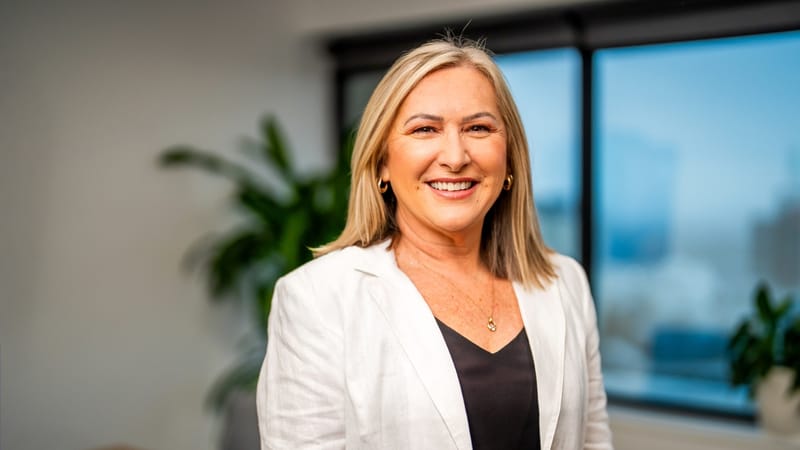
New business strategy, new people strategy. Global logistics firm DP World is overhauling its operating focus, and that means its talent focus has to completely change too - ideally by the end of this year! People Matters gets the story from APAC HR lead Gaylynne Neill.
In 2020, logistics multinational DP World had just four employees in its Singapore head office. Today, there are over 100, and thousands more in its operating business units across the region.
This high-speed growth is part of a strategy to transform the company's core business: DP World started as a port operator back in 1972 and is today the largest seaport in the Middle East. But the sector is fragmented; it's difficult to meet customer expectations along the supply chain, and to address that risk, the company has been expanding into providing end to end logistics.
The current milestone in the strategy, says Gaylynne Neill, DP World's Executive Vice President of People for Asia Pacific, is to complete the people and capability aspect of the transformation by the end of 2025. It's an ambitious plan, she acknowledges, but it's one that will make a massive difference to accelerating business growth.
A diversity of skills and synergies
"It's definitely interesting in terms of trying to bring in talent," says Neill. "Not only are we continuing to expand and build on our container terminal operations, but we are operating in more traditional areas such as freight forwarding, contract logistics, land side logistics, or container parks. We're operating many different capabilities up and down the supply chain."
That's not all; DP World's APAC operations are divided into four regional clusters, each of which have a wildly different operating landscape and capability needs. Bringing in talent to match this huge diversity of skill sets has involved a combination organic and inorganic strategy: business acquisitions paired with highly targeted hiring.
"One of the things I've learned around our people strategy over the last two years is that we've had to make sure it's agile," says Neill.
A large part of that evolution involves literally thinking outside the box. Capabilities that operate within traditional functions are still needed, but they can't be structured the same way any more. The whole objective of the business transformation was to give the operations a customer-centric focus, Neill says, and that means laying that same lens of customer centricity over all the functions.
For example, "Having our commercial team not sit within a business unit drives a different behaviour, and it drives a different level of thinking around what we're trying to do," she says. "That is really important, because you need people that are experts in their respective areas of operating, but you need their thinking to be non traditional, so they can adapt and be agile to the way of our business transforming."
The talent acquisition challenge
Logistics is a sector that doesn't change easily, from processes to technology to people. Infrastructure, after all, is fixed. As Neill describes it: "Ordinarily, businesses don't need to be agile like we are. They don't need to collaborate like we do. They don't need to work in cross-functional teams where they have to really think differently and lead differently. But our strategy won't be met if they don't think like that."
And it has definitely been a challenge to onboard and integrate people who come from those traditional ways of working and traditional ways of thinking, she adds. "There's a real balance. We want them to bring the skills and capabilities that we don't have, but we also want them to actually be able to adapt and evolve to our business strategy."
One thing Neill and her team are doing to tackle this hurdle is hiring in very close collaboration with the business leaders.
"We are very particular with the talent we're bringing in," she says. "We make sure that our our talent acquisition teams understand the business well, and they understand what we're looking for. We make it very clear to the talent that we're bringing in, and we use the recruitment process to really test how agile their thinking is, and whether they've got the adaptability and the agility to come into our organisation. And it's extraordinary how many people can and how many people cannot."
The most key part of doing this, Neill says, is that the talent acquisition team absolutely must understand the business well enough to know exactly what the organisation is looking for. The team has to work with the business leaders, and gain very strong clarity on the strategy, the milestones, the plan, and what the skills and capabilities are that the business needs for the future.
"It's really important to me that we have that that level of depth and understanding. And I also pride myself that we do most of our recruitment and sourcing internally, which I think has made a really big difference."
Getting the talent acquisition team up to speed
That one trick that ensures the TA team knows everything the business leaders need them to know? Keep them from getting into silos. Talk to them about the business, Neill says; update them constantly about what is changing; take them on the journey with you.
"I absolutely encourage every single one of my TA team to sit with the hiring managers when they're doing role briefs, to sit with our comms team to understand what is the narrative and how we are describing DP World in the market versus how that resonates internally? We want to make sure that what people see on our website or in an article is an actual reflection of a candidate or an employee's experience internally."
DP World has an inbuilt advantage here, in that the majority of Neill's talent acquisition team have been with the business from the start and have seen the journey.
"When they talk about our company, and when they talk about the experience of joining DP World, they talk with passion and conviction," she says.
And there's a further story of evolution under that. Neill's entire HR team looks very different today from how it did two years ago, she says; not only the functionality but also the calibre of people has changed, closely following the needs of the business.
"If when we started, I had to build the kind of team in the organisation that I have today, I think HR would have failed," she says frankly. "We would have failed because the business wasn't ready for it, and because we wouldn't have grown the way we needed to. That has been one of the biggest learnings on this journey, to right-size your team in accordance with the size of the organisation as you go."
The next step forward
With 2025 more than halfway through, the focus is not just on building people and capabilities, but keeping them for the future.
"There's not only the challenge of developing the right capabilities, but also retaining them," Neill says. "When you invest in all of these people, develop them, get them exactly where you want to get them to, you also have to be able to provide opportunities for them so you can keep them."
DP World, she adds, has an edge in this area; since the company already has a global framework for identifying potential and doing succession planning. And not only that - as a global business operating across seven regions, there is enormous opportunity for people to gain experience outside of their home countries or regions.
Most importantly, though, Neill and her team keep this in mind and always communicate it to the talent they bring on board: change is the one constant.
"There's one thing that you can be guaranteed of in DP World, and that will continually change. If you want to sit in a box and do the same thing, day in day out, then you're not for us, and we're not for you. But if you want to be inspired to do new things and change, and be open to different ways of thinking, different opportunities, be exposed to different markets and different capabilities? Well, then this is where you should be."
Author
Loading...