








Strategic HR
Can HR get out of the operational rut?



 ||
||Updated on


Research from IHRP shows that HR in Singapore is still very much in compliance mode. But there are ways to grow into more strategic, value-adding roles.
72 percent of HR functions in Singapore remain operationally focused, according to new research by the Institute of Human Resource Professionals (IHRP). And while this is a great demonstration of the strength and competence of HR teams, it also flags out the risk that HR is caught in an efficiency trap, said IHRP CEO Aslam Sardar.
"As businesses face competition and pressures from some of the global trade changes, they are looking to HR, not just as process administrators, but as strategic partners who can co pilot transformation and drive business performance," he pointed out at IHRP's Learning Day 2025 in August.
The divide between those HR professionals who have taken on higher level strategic responsibilities, and those who continue to specialise in high quality process management and compliance, manifests in a low level of HR process maturity. IHRP found that in most organisations, the HR function's expertise is still concentrated around administration, recruitment, and job requirements. Higher-value work such as succession planning and employee value proposition is much less practised. On top of this, 63 percent of organisations have low or even no digitalisation of their HR processes at all.
How do we elevate the nature of HR's work?
IHRP's report highlights four key drivers to advance human capital practices to the next level. Firstly, business leaders have to be more accountable for the human agenda. At present, only 41 percent of HR practitioners say that people KPIs in their organisation are measured against business KPIs. Business leaders have to actively become involved in connecting people priorities with business priorities.
Secondly, HR functions need to streamline their process and automate where possible, in order to free up time from operations and shift to more strategic work. The challenge here is not the availability of technology, as 91 percent of survey respondents said they do have access to HR technology - the challenge is getting the budget for the tools, then effectively implementing them.
Thirdly, individual HR practitioners need to upskill in transformation-related capabilities, including change leadership and management, technology and analytics, and even commercial acumen. Global data from the Academy to Innovate HR shows that 60 percent of HR practitioners worldwide are falling behind their colleagues in other functions in terms of efficiency and business impact.
And fourthly, business leaders and people managers need to step up and contribute to the existing work HR is doing in maintaining and improving employee experience levels. Data from Mercer shows that 60 percent of Singapore organisations are only at a basic level of embedding EX in the design and delivery of HR services, which IHRP observations back up.
"If we are to future proof our economy, we must enable our HR teams to evolve from transactional to transformational roles that can help organisations better manage support and agile workforce," said Ministry of Manpower Senior Parliamentary Secretary Shawn Huang, speaking at the IHRP event. "We need strong HR professionals to better support businesses amidst a volatile economic environment."
A new role badge for people managers
IHRP's Learning Day event was also the occasion of the launch of a new micro-credentialling pathway for upskilling people managers. Dubbed the Responsible People Manager Role Badge and co-branded by IHRP and TAFEP, the Tripartite Alliance for Fair and Progressive Employment Practices, the new badge is meant to provide managers and leaders with a targeted way of acquiring competencies related to driving the people agenda.
The Responsible People Manager Role Badge focuses on skills and knowledge related to supporting workplace fairness and inclusivity, and performance and transition role management. It is paired with a second badge, the Progressive People Manager Role Badge, which focuses on skills supporting team engagement, growth, and development. The second badge will be released in the fourth quarter of 2025.
As a next step, IHRP speakers encouraged HR practitioners to spend some time thinking deeply about ways in which they can add value to the business, and what actions that might translate into for themselves and their functions.
Importantly, HR practitioners need to connect with their counterparts in business, with their fellow professionals from other companies and industries, and with their contacts in industry associations to build their own holistic view of what is really needed in the here and now.
"Innovation doesn't happen in isolation," commented IHRP's Aslam Sardar. "It emerges from the intersection of deep people insights, business acumen, and technological fluency. HR must become very comfortable with experimentation, rapid learning and the courage to evolve practices that no longer serve our workforce."
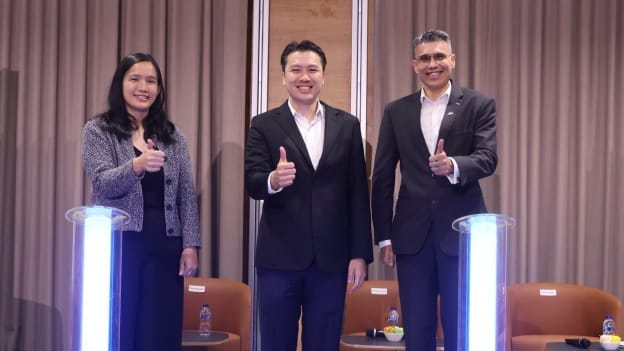
Image: Faith Li, General Manager of TAFEP (left) and Aslam Sardar, Chief Executive Officer of IHRP (right) jointly officiate the launch of the Responsible People Manager Role Badge, witnessed by Shawn Huang, Senior Parliamentary Secretary (Manpower) (centre). Credit: IHRP.
Topics
Author
Loading...