








Strategic HR
Why the ‘15-minute office’ is the new talent magnet in Southeast Asia





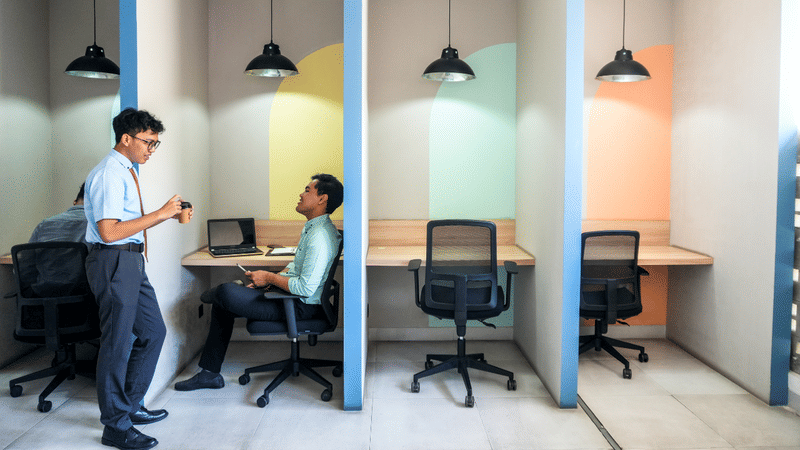
15-minute workplaces can help address the “Great Detachment,” though they are not a complete solution. The challenge isn’t remote work itself, but the isolation and blurred boundaries that arise when home becomes the workplace.
The rush into a central business district at 8 AM and the crawl back home at 6 PM reached a breaking point in early 2026. Southeast Asia’s most dynamic hubs are currently seeing the emergence of a new geography of work: the 15-Minute Office.
The concept places professional-grade workspaces directly within residential fabrics, ensuring employees can access a high-quality office environment within a 15-minute walk or cycle from their front door.
Why has this shift happened? Managers are beginning to see short commutes as a core part of employee retention. Studies have shown that reclaiming the hours lost to traffic will be the “human edge” that defines people management in 2026.
The anatomy of ‘transit fatigue’
By late 2024, commuting became a physiological and psychological rejection of professional life. In Bangkok, the TomTom Traffic Index 2024 ranked the capital as the second most congested city globally. Drivers in Bangkok lose 96 hours a year to rush-hour standstills. Those 96 hours represent four full days lost to a bumper-to-bumper vacuum.
Singaporean transit is more predictable, but density creates its own stress. Peak-hour "crush loads" on the MRT are statistically linked to lower sleep quality and reduced upskilling. Workers now prioritize "work-near-home" over traditional remote setups. Professionals want office-grade infrastructure within a 15-minute walk or cycle from their front door.
Singapore’s planned ‘constellation’
Singapore’s transition to a 15-Minute Office hub stems from high-level statecraft. The URA Draft Master Plan 2025 utilizes a "Constellation" strategy, placing commercial centers in heartlands like Tampines, Punggol, and Bishan.
The geographical distribution aims for a "45-minute city" where jobs match residential density. The Punggol Digital District (PDD) serves as a primary example. Scheduled for full operations in 2026, PDD weaves business, academia, and lifestyle together. A software engineer can drop their child at one of the three district childcare centers, walk to a JTC business tower, and meet a researcher from the Singapore Institute of Technology for lunch within a 500-meter radius. High-security sectors are also participating.
The Ministry of Defence (MINDEF) "M-Works" initiative converts community assets into secure satellite offices. Defense staff accessing classified networks from a neighborhood library in Tampines makes the case for keeping marketing teams in a 5-day CBD mandate look increasingly weak.
A polycentric survival in Bangkok
Bangkok’s shift is a response to infrastructure saturation. Commercial activity is moving away from the paralyzed CBDs of Asoke and Silom toward suburban nodes connected by the Pink and Yellow mass transit lines.
True Digital Park (TDPK) at Sukhumvit 101 represents the peak of this movement. By 2025, TDPK became Southeast Asia’s largest tech hub by integrating work and residential life. For a worker living in the attached Whizdom condominiums, getting to work involves a single elevator ride.
Hyper-local integration eliminates Sukhumvit traffic and reclaims 2-3 hours of daily productivity. Clustering high-density, mixed-use hubs around rail stations creates self-contained 15-minute neighborhoods that function independently of the city center.
Is the 15-minute office concept catching up across Southeast Asia?
Decentralization is currently reshaping professional hubs beyond the Singapore-Bangkok axis. Each capital faces unique infrastructure hurdles, yet the demand for hyper-local work remains universal.
In Manila, extreme congestion continues to drive the push for “satellite cities” outside of the Makati and BGC business districts. A 2025 survey showed that nearly 92% of Metro Manila residents prefer meeting daily needs—including work—within a 15-minute radius. Developers are currently responding by embedding professional hubs into township projects in Quezon City and Alabang.
In Vietnam, Hybrid work is currently evolving into “Coworking 2.0” in District 1 and beyond. Market data for 2026 shows a 12% growth in service-integrated spaces. Large enterprises are currently upgrading to boutique, green-certified Grade A hubs that focus on employee wellness rather than raw desk count.
Kuala Lumpur, meanwhile, is moving toward “secondary cities” and suburban work hubs. Demand for flexible workspaces in suburban Kuala Lumpur and Selangor is rising as professionals seek professional environments without the friction of the central commute.
Jakarta, on the other hand, is experiencing the "desakota" phenomenon, the blurring of village and city boundaries, something that’s also fueling decentralized office demand. Office demand in the technology sector is currently driving over a quarter of the market as firms repurpose older buildings into high-quality satellite spaces in residential peripheries.
Decentralization as an EVP
Flexibility remains the primary recruitment tool in 2026. JLL's 2025 Workforce Preference Barometer indicates that "location" is now a convenience metric rather than a prestige one.
Top talent frequently refuses roles requiring a constant CBD presence.
These professionals are also avoiding the "Great Detachment", the isolation of working from home in dense housing where work-life boundaries vanish. The hub-and-spoke model solves this:
The hub: A smaller CBD office for client meetings and culture.
The spoke: A network of satellite offices or coworking memberships in residential zones.
For instance, workspace provider JustCo is expanding into suburban nodes like Asia Green in Tampines to support this model. Moving to decentralized nodes allows corporations to benefit from "rent arbitrage." Grade A rents in Marina Bay can exceed SGD 12-14 per square foot, while nodes like Punggol offer comparable quality.
The micro-decentralization layer
On-demand “Switch” booths represent the most granular level of the 15-Minute Office. These soundproof pods are located in HDB void decks and community centers. Accessing these booths solves the last mile of office logistics.
A worker with a noisy home environment can walk to their building's ground floor and rent a pod for roughly $2.40 an hour for a video call. This distributed network permeates residential life.
The 15-Minute Office is an irreversible shift because it addresses the scarcity of time. Employees avoid burnout when companies remove the logistics of a long commute.
The office is no longer a mandatory destination. It is a network. Firms that move the work to the people will secure the talent and efficiency required for the 2026 economy.
Author
Loading...