








Technology
DBS CEO Tan Su Shan’s take on AI transformation


 ||
||Updated on


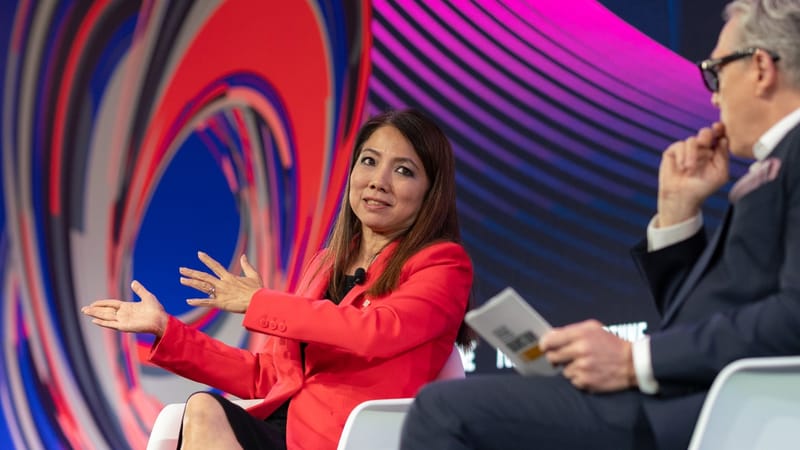
New technology will always emerge; organisations must be ready to position themselves. DBS CEO Tan Su Shan shares experiences from the bank’s AI journey.
The day DBS CEO Tan Su Shan was appointed, someone sent her an ‘inspirational’ message on WhatsApp: “Even the CEO’s job can be replaced by AI.”
“I thought, ok, if I can be replaced by AI, so can everything else. And that’s why my New Year’s message to my [] was four ‘R’s: we have to reinvent ourselves, we have to stay relevant, we have to be resistant in a volatile world, and we have to be responsible.”
Speaking at the closing session of Fortune’s Brainstorm AI Singapore conference in July, Tan described an AI implementation journey guided by these four ‘R’s and filled with opportunities, challenges, and solutions that might seem intuitive but can often escape the grasp of organisations under pressure to get on the bandwagon and stay there in a profitable manner.
Processes and guardrails
One of the first things Tan did as CEO was to create the role of Chief Operating Officer, someone who would oversee the entire end-to-end from a product, sector, and business agnostic perspective.
“As we transform the bank, it's end to end,” she said. “It's not just product customer facing, it's also operations, it's technology, it's data, it’s legal and controls, it’s governance. The transformation must be holistic and end-to-end.”
Companies that are starting on an AI journey have to start with hygiene, she added, and that means data: storing it correctly, formatting and integrating it across the organisation, having a common philosophy around its use, and keeping it secure. Most importantly, there must always be a human in the loop to safeguard the AI’s use.
Done well, AI transformation releases a lot of capacity, Tan observed, and the question for organisations is then what to do with that capacity.
An upended talent management strategy
First, people have to be provided with an alternative path. The DBS team did this by using AI to provide every employee with executive coaching, creating a digital coach based on the methods of Marshall Goldsmith and making it available for employees who need support navigating the changes that are happening in their role.
Then, the talent pipeline has to change. Don't hire for knowledge, Tan tells her managers; in an age of AI, knowledge should be democratised. Instead her directive is to hire for attitude.
“You want to hire people who are agile, who are humble, who are able to say ‘Whatever I knew up to today is no longer relevant today or tomorrow, therefore I have to not be afraid to let go, take a step back, and learn some new skills to go forward’.”
For instance, she shared, AI can automate the grunt work of developing and optimising complex pitches, crunching data to align proposals with the state of the capital markets. “But it doesn't replace human interaction and human conversation. The client still wants to have that face to face meeting, that eye to eye contact, and they want to read the body language…that’s why you still need a human to bring the deal across the line.”
That flexibility, to quickly change according to what is possible, is the basis of her stance on technology and indeed any kind of change. Regardless of what new technology emerges, she believes, organisations and those working within them need to hold on to one precept: readiness to position themselves.
“Don’t be scared of it,” Tan urged. “Face it head-on.”
Photo courtesy of Fortune.
Topics
Author
Loading...