








Wellbeing
65% of employees fear returning to work after cancer, highlighting gaps in workplace support






90% of people in Singapore say returning to work supports their recovery, sending a clear signal to employers on the need for stronger workplace support.
Cancer incidence across Asia Pacific continues to climb, turning what was once viewed as a personal health issue into a pressing workplace challenge. New data shows the disease is not only rising in prevalence but affecting employees earlier in their careers, reshaping how employers must respond.
According to the 2026 Global Medical Trends Report by WTW, cancer remains the leading condition by incidence across Asia Pacific, with more than 9.8 million people diagnosed annually. The region now accounts for 49% of global cancer cases, placing immense strain on healthcare systems, insurers and workforces alike.
The report reveals that 52% of insurers in APAC identified cancer as the fastest-growing condition by incidence, with breast, colorectal and lung cancer emerging as the most common diagnoses. Cancer has also become the fastest-growing condition in insurance utilisation and cost across the region over the past 18 months.
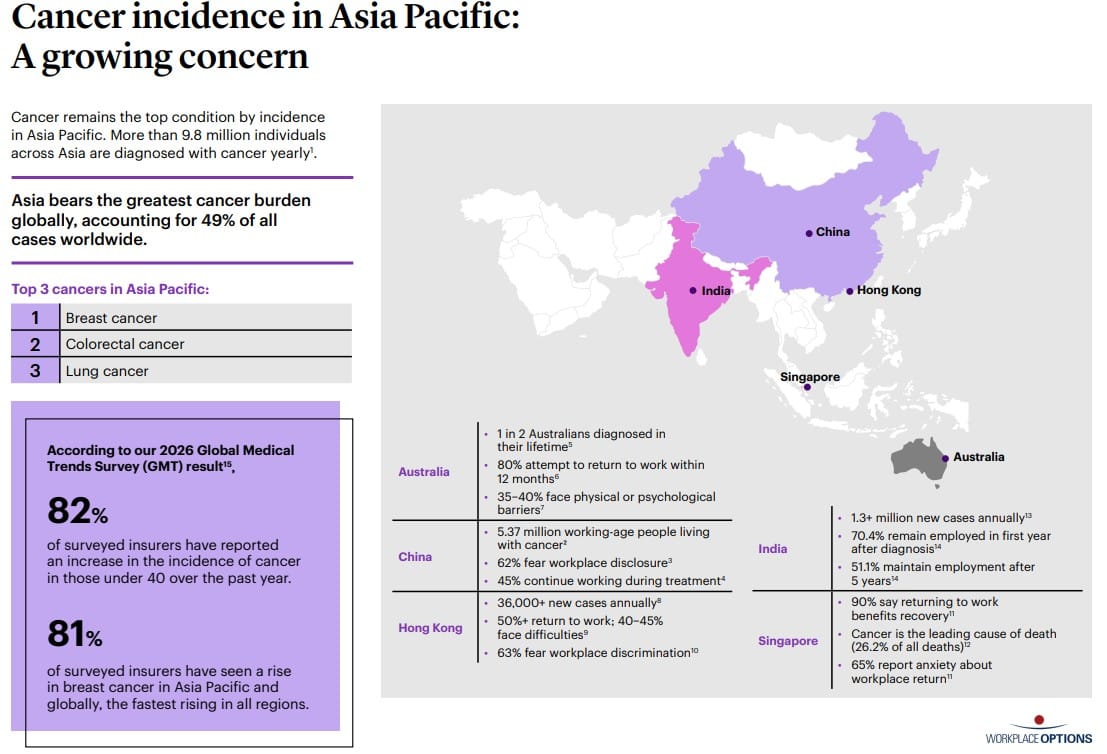
More concerning is the shift towards younger demographics. 82% of insurers surveyed reported an increase in cancer incidence among people under the age of 40, echoing global medical research that shows early-onset cancer is rising. Experts point to a combination of environmental exposure, lifestyle habits and changing risk factors as contributors to this trend.
“Cancer is no longer an issue that sits outside the workplace. It can affect employees at every stage of their careers,” said Eva Liu, Head of Strategic Development, Asia Pacific, Health & Benefits at WTW. “
A cancer diagnosis can be life-changing, not just for the individual but also for their employer. Creating a cancer-friendly workplace that supports employees through treatment, and fosters a culture where everyone feels safe and respected, is both a moral responsibility and a business imperative.”
The challenge is especially pronounced in Singapore, where cancer is the leading cause of death, accounting for 26.2% of all deaths. Workplace anxiety remains high: 65% of employees report concerns about returning to work after a cancer diagnosis, reflecting the emotional and psychological burden many carry. Yet the data also offers a clear signal to employers, 90% of people in Singapore say returning to work supports their recovery, reinforcing the role organisations can play in survivorship and rehabilitation.
Beyond physical treatment, cancer’s impact on employees is deeply emotional. Across Asia, around 54% of people with advanced cancer report high levels of anxiety or depression, while stigma, fear of disclosure, job security concerns and income loss often intensify distress. These pressures frequently extend well beyond the end of medical treatment.
“Across APAC, 30 to 60% of cancer survivors attempt to return to work within 12 months, yet many face persistent fatigue, pain, anxiety and fears around disclosure or discrimination,” said Pheona Chua, Associate Director, Corporate Health & Wellbeing, Asia Pacific at WTW. “A structured, supportive return-to-work approach can help employees rebuild confidence while enabling organisations to retain valuable skills and experience.”
She added that recovery is as much emotional as it is physical. “Returning to work can be a powerful part of recovery, but only if it is handled with care. Emotional readiness checks, phased reintegration, regular manager check-ins and long-term emotional support are critical to helping employees feel safe, valued and capable as they rebuild their working lives.”
WTW’s findings also highlight the preventative role employers can play. Wellbeing programmes that address lifestyle risks, combined with early screening and health education, are among the most effective ways to reduce cancer claims and long-term costs—benefiting both employees and organisations.
As cancer prevalence rises across Asia Pacific, employers are being urged to adopt more preventative, inclusive and flexible workplace strategies. These include promoting early detection, embedding compassionate policies, training managers to handle sensitive conversations, and supporting healthy behaviours as a foundation of workplace culture.
“World Cancer Day is an important reminder that workplaces can be a source of stability, dignity and hope,” Liu said. “By putting people at the centre and recognising the uniqueness of every cancer journey, employers can help employees not just return to work, but truly thrive.”
To support organisations on this journey, WTW has developed a comprehensive cancer health guide for employers, created in partnership with Workplace Options, aimed at helping companies build more inclusive and supportive workplaces in the face of a growing cancer burden.
Author
Loading...