








Workforce Planning
Beyond the org chart: Why CHROs must architect capability, not headcount


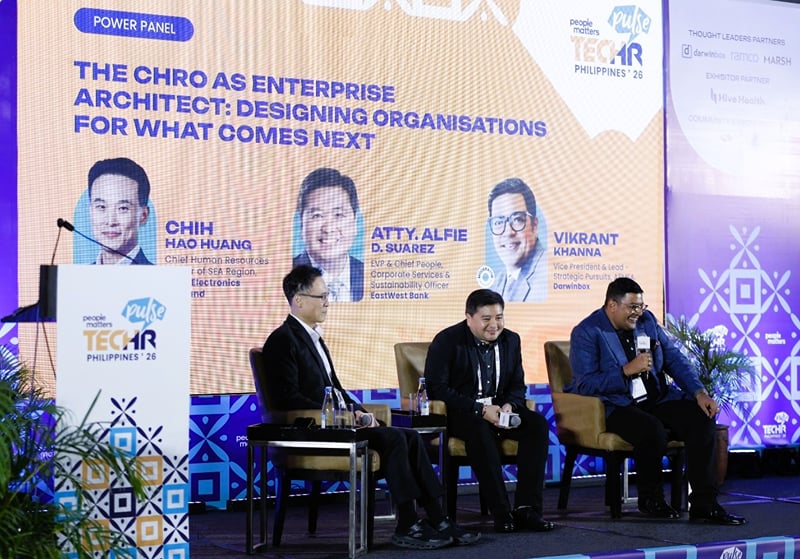
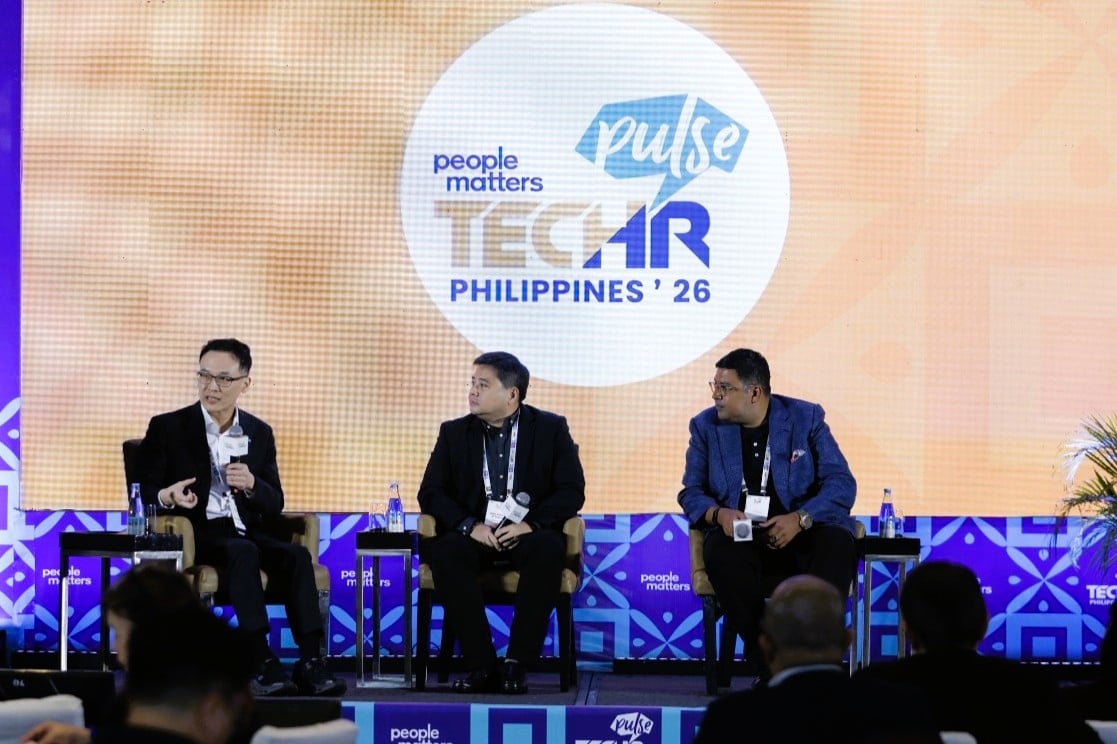
At TechHR Pulse Philippines 2026, leaders from EastWest Bank, Delta Electronics and Darwinbox explored why future-ready organisations must be built around adaptability, customer value and human judgement, not fixed structures alone.
The organisation of the future will not be defined by how neatly its reporting lines are drawn. Its real strength will lie in how quickly it can move capabilities towards emerging opportunities, organise people around changing customer needs and determine where AI should accelerate work without weakening human judgement.
This changes the purpose of organisation design. Efficiency and stability remain important, but they are insufficient for businesses operating amid continuous technological and market shifts. The enterprise must also be capable of learning, adapting and reconfiguring itself as strategy evolves.
At People Matters TechHR Pulse Philippines 2026, this challenge formed the centre of the Power Panel, “The CHRO as Enterprise Architect: Designing Organisations for What Comes Next.” The discussion featured Atty. Juan Alfonso D. “Alfie” Suarez, EVP and Chief People and Corporate Services Officer, EastWest Bank, and Chih Hao Huang, Chief Human Resources Officer, Southeast Asia Region, Delta Electronics Thailand, with Vikrant Khanna, Vice President and Lead - Strategic Pursuits, APMEA, Darwinbox, moderating.
Their conversation pointed to an expanded mandate for the CHRO: move beyond administering structures and help shape the system through which business strategy, workforce capability and technology come together.
Capability is becoming the new unit of organisation design
Strategic workforce planning has conventionally centred on how many employees a business needs to execute its plans. Suarez argued that the more important question is what the organisation must become capable of doing.
“The conversation needs to shift from headcount to capability,” he said.
This requires leaders to look beyond positions and reporting lines. Rather than organising work primarily through functions and silos, enterprises will increasingly rely on cross-functional networks formed around customer requirements, business opportunities and specific problems.
AI will become part of this workforce architecture. The workforce mix is expanding beyond permanent employees, contingent talent and external partners to include digital assistants and AI agents. These technologies will influence workflows, decision-making and, potentially, leaders’ spans of control.
Khanna distilled the shift into a memorable challenge: “Stop counting heads, make heads count.”
The distinction matters because headcount reveals capacity in numerical terms but says little about whether the organisation can deliver its future strategy. A capability-led model asks which skills, expertise and decision-making strengths are available, where they sit and how quickly they can be redeployed.
Huang brought a customer lens to the same argument. For a company operating across AI servers, thermal management and renewable-energy solutions, the starting point for organisation design cannot be the existing structure. It must be the value and solutions customers will require five or ten years from now.
Once that future value becomes clearer, leaders can work backwards to define the capabilities, functions and processes required to deliver it.
The organisation chart, in other words, should follow the value the business intends to create, not simply preserve how responsibilities have historically been divided.
AI must be designed into work, with clear human boundaries
If AI agents and digital assistants are becoming part of workforce architecture, organisations must make deliberate choices about the work they perform and the decisions they influence.
Speed alone cannot be the measure of a good design.
Huang illustrated the tension through a debate within Delta’s HR team about adopting AI in the interview process. One side saw clear advantages in speed, accuracy and efficiency. The other questioned what greater automation might remove from the candidate experience.
AI could provide comprehensive information about the organisation, but it might struggle to communicate why an employee genuinely values working there. A human response may be less polished, yet still convey passion, credibility and emotional trust.
For Huang, the decision had to begin with the experience Delta wanted candidates to have. The technology choice should support that experience rather than define it.
This is the deeper organisational-design question raised by AI: not simply what can be automated, but what should remain distinctly human because it depends on context, empathy or accountability.
AI can accelerate strong decisions, but it can also magnify weak assumptions and human error. If organisations expand automation while allowing human judgement to erode, technology may scale poor decisions faster than leaders can recognise them.
The goal is therefore not to protect every existing task. It is to identify the capabilities that become more valuable as routine work is automated—and ensure that people continue to own the decisions for which the organisation must remain accountable.
The enterprise-architect role demands a wider leadership range
Designing this kind of organisation requires more than functional HR expertise.
Suarez identified systems thinking as a foundational capability for CHROs. Organisation design now sits at the intersection of strategy, culture, talent, technology, operating models and financial sustainability. A decision made within one part of this system can create unintended consequences elsewhere.
A structure may appear compelling from a talent perspective but prove unsustainable because of its cost base. A technology investment may improve efficiency while creating capability gaps or unclear accountability. A new operating model may look agile on paper but fail because leaders have not prepared employees to work differently.
The CHRO must understand these connections rather than approach each component as an independent HR intervention.
Business acumen is equally critical. HR cannot architect an enterprise without understanding how the organisation creates value, competes, manages risk and serves customers.
Workforce intelligence must also progress beyond reporting conventional metrics such as attrition. Leaders need visibility into the capabilities already present, the gaps that could constrain strategy and the areas where talent should be developed, recruited, redeployed or augmented through technology.
Tech fluency completes this picture. It does not require CHROs to become programmers. It requires them to understand how technology changes work and connect the people strategy with the organisation’s technology agenda.
Design, however, is only the beginning.
“You cannot stop at design. You have to build it thereafter,” Suarez said.
Future-ready organisation design must therefore include the difficult work of changing roles, behaviours, decision rights and leadership practices. Without execution, even a sophisticated operating model remains an organisational diagram rather than an organisational reality.
CHROs cannot architect the enterprise as order takers
The enterprise-architect mandate also changes how HR must operate in senior leadership conversations.
“We cannot position ourselves as order takers,” Suarez said.
If the CHRO simply receives a decision about how the organisation should be structured and then implements it, HR is administering a design created elsewhere. It is not shaping the enterprise.
CHROs must enter these conversations as business leaders who can challenge assumptions, introduce workforce evidence and make the capability consequences of strategic decisions visible.
“We cannot afford to be meek in those conversations,” Suarez added.
This requires courage without functional defensiveness. The CHRO must be prepared to offer a different perspective while retaining the humility to listen to leaders across finance, technology, operations and the business.
Huang emphasised the importance of this role in boardroom discussions dominated by speed, efficiency and cost savings, outcomes that are comparatively easy to quantify. The people leader must also ask which human capabilities the company needs to protect, develop and retain as AI enters more areas of the business.
Human judgement is not a softer counterpoint to technology. It is an enterprise capability that influences decision quality, trust, customer experience and the organisation’s ability to recognise when an automated recommendation is wrong.
Influence depends on being in the right decision rooms
The CHRO cannot design the future enterprise from within HR alone.
The most critical relationships are with the CEO, technology and data leaders, and business heads. The CEO sets direction, technology teams determine how work can be enabled or automated, and business leaders define the capabilities required to deliver results.
EastWest Bank has translated this collaboration into recurring governance mechanisms. Alongside a monthly people cadence with the CEO, the bank conducts organisation-design reviews examining how strategy is evolving, whether existing operating models remain appropriate, which capabilities need to surface and where AI or automation could reshape work.
Suarez also participates in the bank’s AI Governance Council and Technology Steering Committee. This enables workforce implications to be considered while technology decisions are being shaped, rather than after systems have been selected and deployed.
That presence marks the difference between consultation and influence. By the time HR is asked to manage the people impact of a completed technology decision, many of the most consequential design choices may already have been made.
The CHRO’s enterprise role therefore depends not only on relationships but also on access to the governance structures where business, workforce and technology choices converge.
AI adoption must reflect different workforce realities
Designing an AI-enabled organisation also requires leaders to recognise that employees will not approach the technology in the same way.
Huang described a spectrum ranging from employees hesitant to use AI, to enthusiastic adopters inclined to apply it everywhere, with a third group selectively using tools it already trusts.
Each group requires a different response.
Employees who remain hesitant need accessible tools and opportunities to experience practical benefits. Highly enthusiastic adopters need clear boundaries around responsibility and the decisions that must remain human-owned. Those in the middle need support to explore unfamiliar applications safely.
Resistance and overconfidence are different organisational risks. Treating both as generic adoption problems can result in communication and learning interventions that address neither effectively.
The architecture of an AI-enabled enterprise must therefore include more than technology and processes. It must account for differences in employee trust, readiness and judgement.
The architect role must be earned
During the conversation, Khanna recalled an observation Suarez had made while the panel was being prepared: “Not every builder is an architect.”
The difference lies in the ability to see the whole system.
Builders implement programmes, structures and processes. Enterprise architects understand how customer value, business strategy, workforce capability, technology, culture and economics must fit together, and influence the decisions that shape that system.
The CHRO does not become an enterprise architect through a title change or a seat at the table. The role is earned by moving the business from headcount planning to capability design, bringing human judgement into technology decisions and ensuring the organisation can continually adapt what it builds next.
Author
Loading...