








AI & Emerging Tech
AI investment surges, but enterprise value lags as only 8% see measurable returns







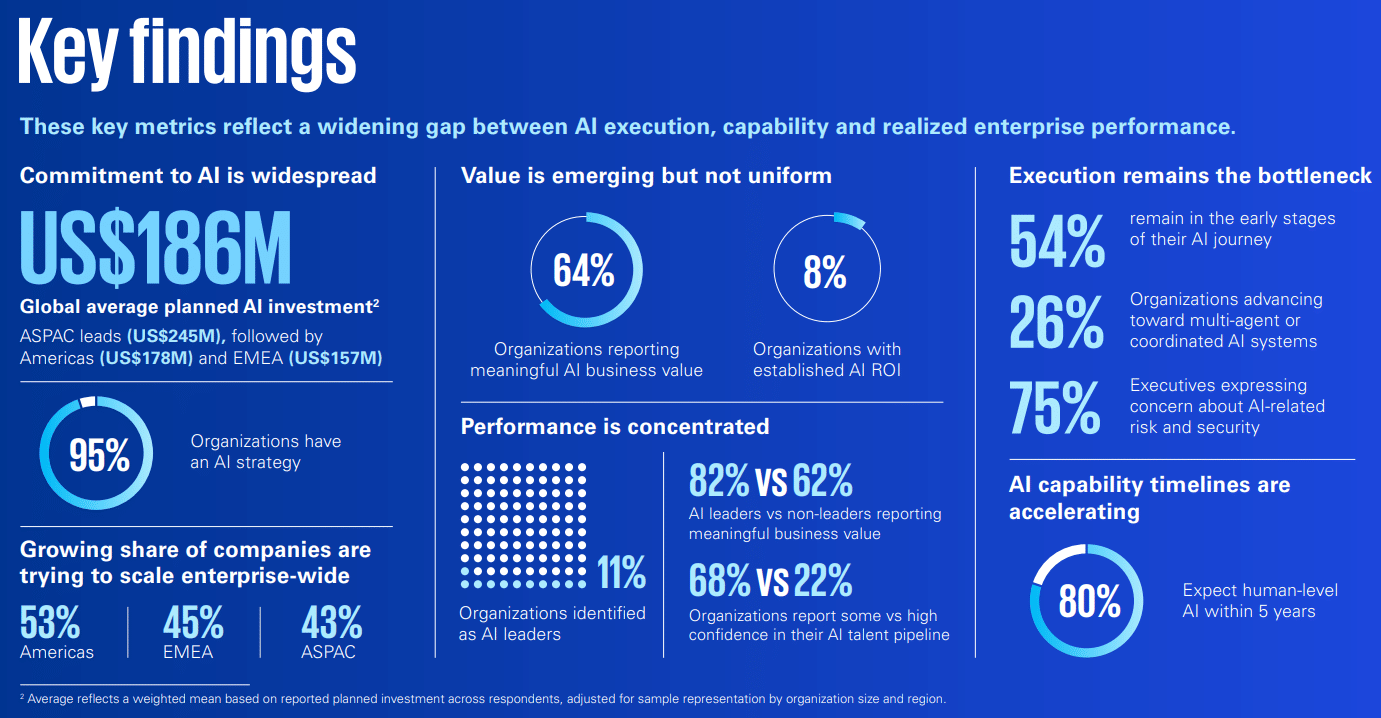
About 11% of organisations are emerging as AI leaders, successfully scaling AI into measurable outcomes by integrating it across workflows, decision-making, and enterprise-wide systems.
Artificial intelligence is being deployed at scale across global enterprises, but the returns are failing to keep pace with the surge in investment, according to new findings from KPMG.
The firm’s first Global AI Pulse survey, which gathered insights from more than 2,100 senior executives across 20 markets, reveals a widening disconnect: while 95% of organisations now have an AI strategy, just 8% report measurable return on investment (ROI).
Despite this, ambition remains high. Nearly 64% of companies say AI is already delivering meaningful business value, and 39% are scaling AI or driving enterprise-wide adoption. Organisations are also doubling down financially, with average planned investments reaching $186 million over the next 12 months.
A small group pulls ahead
The report identifies a clear divide emerging within the AI landscape. Around 11% of organisations, dubbed “AI leaders”, are beginning to translate investment into tangible, enterprise-wide outcomes.
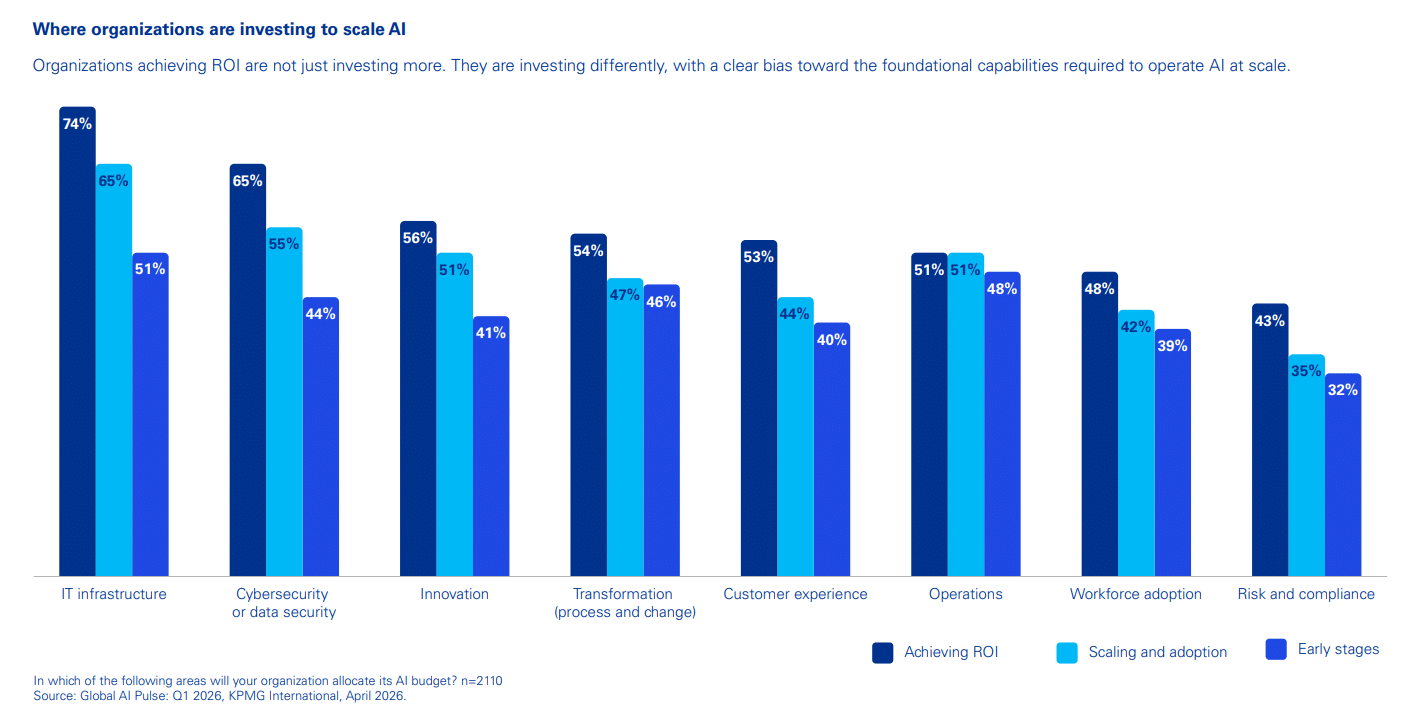
Their advantage is not rooted in spending more or deploying more tools, but in how AI is embedded into the fabric of the enterprise. These organisations integrate AI across workflows, align it with decision-making, and operate it as a coordinated system rather than a collection of isolated use cases.
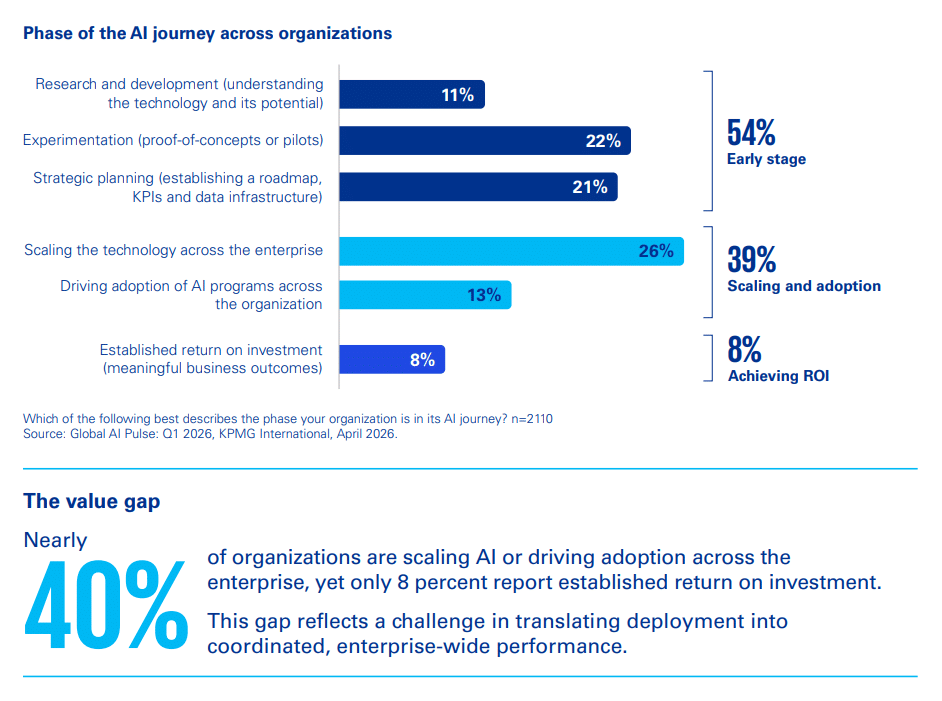
“They are redesigning how the enterprise runs,” the report suggests, pointing to a shift from experimentation toward full-scale operational integration.
The real bottleneck: enterprise design
For most companies, the challenge is no longer access to technology but the ability to operationalise it at scale. Fragmented data systems, inconsistent governance, and misaligned workflows continue to limit impact.
Key barriers cited include data privacy and cybersecurity concerns (42%), data quality issues (34%), and regulatory uncertainty (31%). But beneath these challenges lies a deeper structural issue: enterprises are not yet built to run AI as an integrated capability.
As a result, many organisations are seeing increased AI activity without corresponding improvements in performance.
From pilots to orchestration
The report highlights a critical transition underway, from isolated AI pilots to enterprise-wide orchestration. Success increasingly depends on three factors: integrating AI into operating models, embedding governance as a core enabler, and building workforce capability to support AI-driven execution.
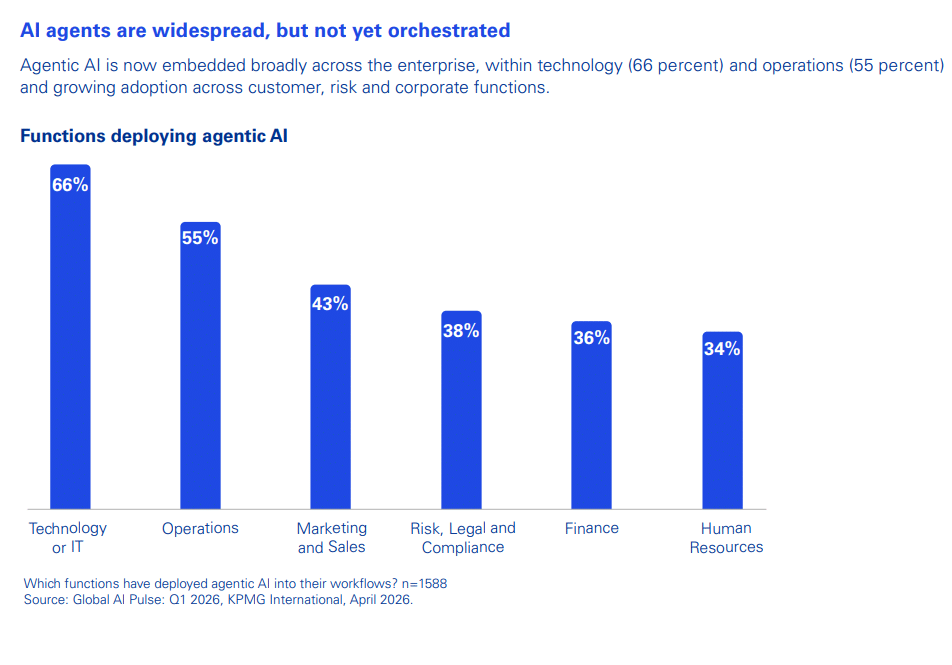
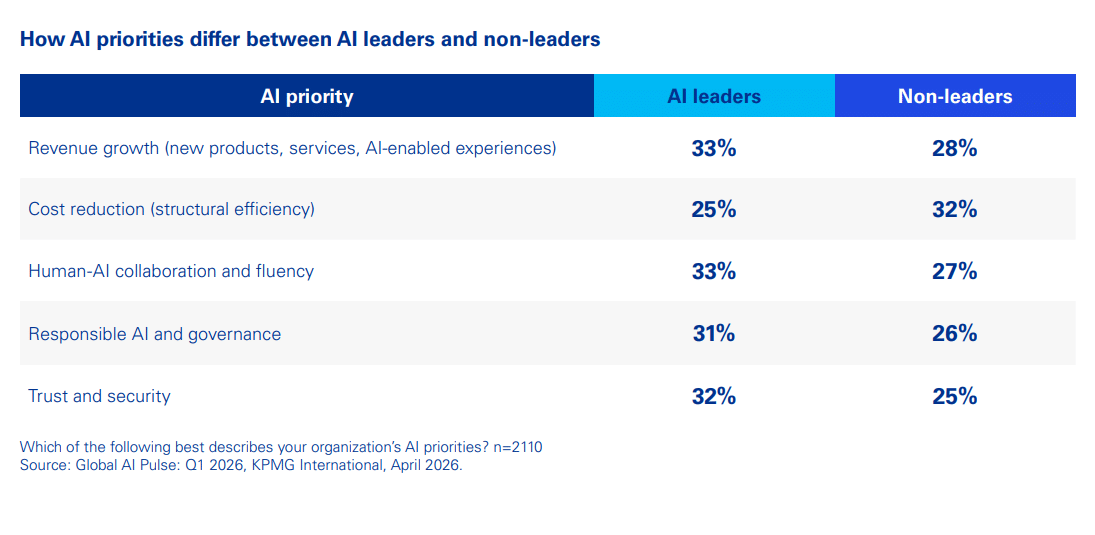
Companies that excel in these areas are more likely to use AI for growth rather than just cost-cutting, and they show stronger confidence in measuring business impact.
Workforce readiness, in particular, is emerging as a decisive factor. Organisations confident in their talent pipeline are nearly four times more likely to report meaningful outcomes.
A fragmented global landscape
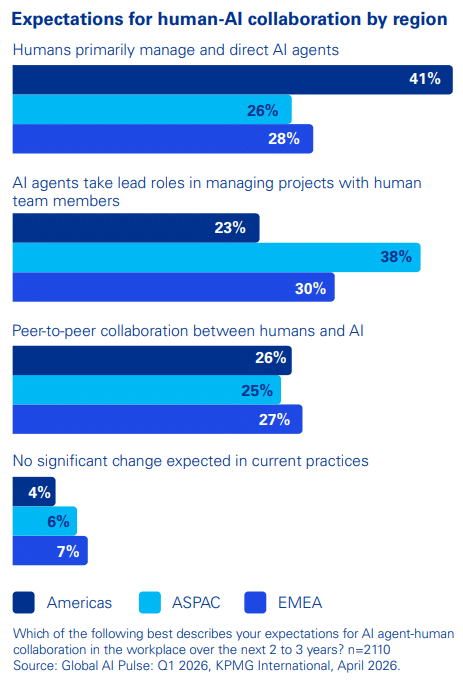
The pace and model of AI adoption also vary significantly across regions. Organisations in the Americas lead in enterprise-scale deployment, while Asia-Pacific firms show early signs of advancing toward AI-led coordination of workflows.
Europe, the Middle East and Africa remain more cautious, shaped by regulatory complexity.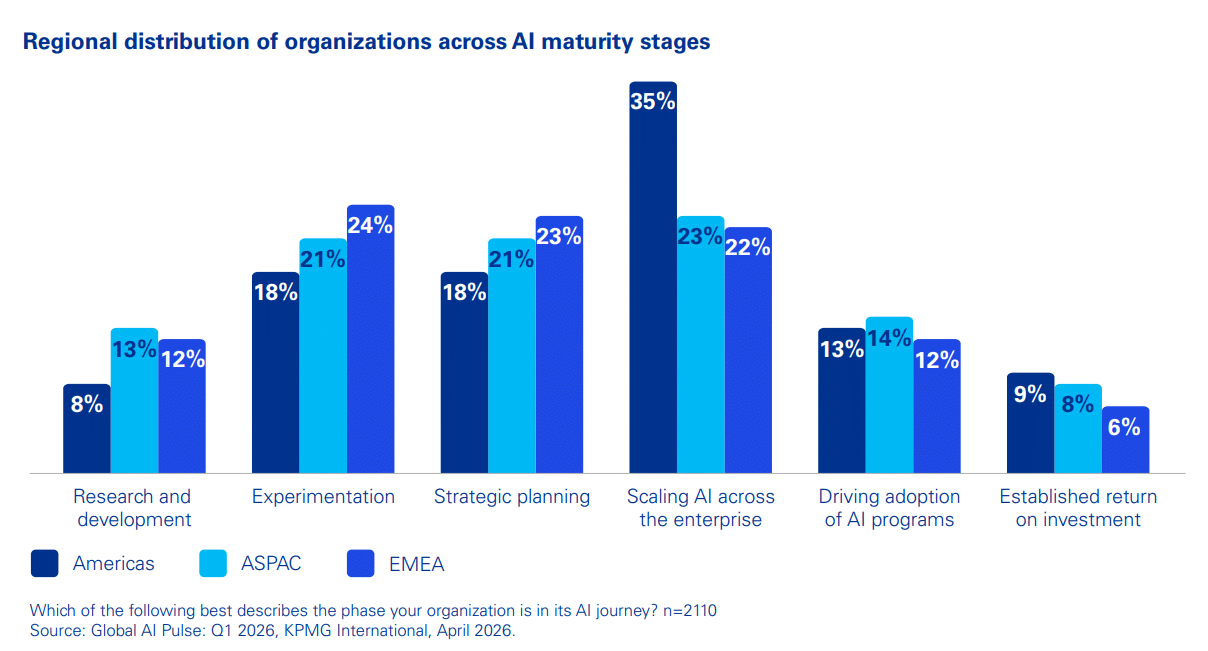
These differences are creating a fragmented global environment where a single, standardised AI strategy may no longer be viable.
The next phase: execution over expansion
With expectations rising, 80% of organisations anticipate human-level AI capabilities within five years, the focus is shifting from expansion to execution.
The report concludes that enterprise structure will ultimately determine who captures AI value.
Organisations that continue layering AI onto existing systems risk diminishing returns, while those that redesign their operating models around AI stand to gain a lasting competitive edge.
In short, the problem is not AI itself, it is whether enterprises are ready to run it.
Author
Loading...