








AI & Emerging Tech
Block co-founder Jack Dorsey envisions AI replacing middle management in future workplace






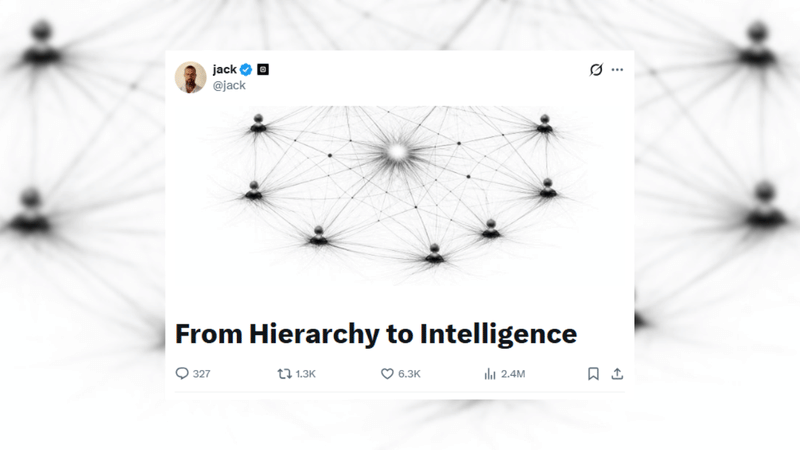
Dorsey and Botha argue that modern companies still rely on centuries-old hierarchical structures, but artificial intelligence could now manage coordination, information flow, and decision-making faster and more efficiently than traditional management layers at Block.
Block co-founder and CEO Jack Dorsey has outlined a bold vision for the future of work in which artificial intelligence could take over many of the responsibilities traditionally handled by middle managers, as the company continues to restructure around AI.
In a recent blog post co-authored with Block’s lead independent director Roelof Botha, the company said it is in the early stages of transitioning toward an organisational model where AI systems coordinate work, track projects, assign tasks and provide real-time business insights, roles historically performed by management layers.
The announcement comes weeks after Block cut around 4,000 employees in a major restructuring that Dorsey said was driven by the rapid acceleration of AI within the company and the need to remain competitive.
Moving beyond hierarchy
Dorsey and Botha argued that modern companies are still built on hierarchical structures developed centuries ago to manage information flow and coordination across large organisations. However, they believe AI can now perform many of those coordination functions more efficiently than humans.
“We’re questioning the underlying assumption that organisations have to be hierarchically organised with humans as the coordination mechanism,” they wrote. “Instead, we intend to replace what the hierarchy does.”
According to the company, AI systems can provide a real-time view of operations, showing what teams are building, where projects are blocked, how resources are allocated, and what is performing well, without relying on layers of managers to collect and relay information.
“Companies move fast or slow based on information flow. Hierarchy and middle management impede information flow,” they said.
A company organised as an “intelligence”
Rather than simply using AI as a productivity tool, Block is attempting to build what it describes as a company structured around an intelligence system, sometimes referred to internally as a “mini-AGI”, that coordinates work and identifies opportunities automatically. Under this model, employees would be reorganised into three main roles:
Individual contributors, who build and maintain systems and products
Directly responsible individuals (DRIs), who solve specific problems and lead projects
Player-coaches, who mentor teams while still working on technical or product development
Traditional middle management roles focused on reporting, coordination and status updates would largely disappear, with AI systems handling alignment and information flow.
Humans still central to decisions
Despite the shift toward AI coordination, Dorsey and Botha emphasised that people would still play a critical role in decision-making, particularly in ethical decisions, strategic direction and complex situations where human judgement is required.
They described humans as operating “at the edge” of the organisation, handling creative, cultural and ethical decisions, while the AI system manages coordination and operational intelligence.
A broader shift in corporate structure
Block believes this model could reshape how companies operate in the coming years, especially remote-first organisations where most work is already digital and machine-readable.
“We believe the pattern behind this, a company organised as an intelligence rather than a hierarchy, is significant enough that it will reshape how companies of all kinds operate over the coming years,” they wrote.
The company acknowledged the transition will be difficult and experimental, but argued that AI could eventually replace the information-routing role that middle management has played in organisations for centuries, potentially marking one of the biggest shifts in organisational design since the modern corporation emerged.
Topics
Author
Loading...