








AI & Emerging Tech
How CHROs are becoming architects of AI-first organisations






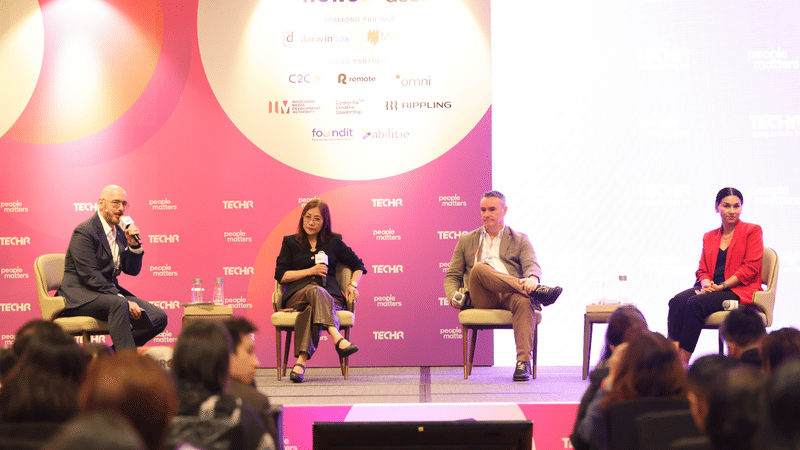
CHROs are being redefined as chief systems orchestrators in the AI era, shifting from traditional HR leadership to designing interconnected systems that align technology, data, and human behaviour.
The role of the CHRO is undergoing a fundamental reset as organisations navigate an AI-first operating environment. Once primarily seen as custodians of culture and talent, HR leaders are increasingly being recast as designers of interconnected systems, where technology, data, and human behaviour converge to enable organisational agility at scale.
At TechHR Singapore, a panel discussion on 'The CHRO 2.0: Becoming the Chief Systems Orchestrator', centred on a fundamental shift in the HR function. The CHRO is no longer positioned solely as a custodian of culture or talent, but is increasingly emerging as a designer of interconnected systems where technology, data, and human behaviour converge to enable organisational agility.
The session featured leaders including Natalia Navin (POS Malaysia Berhad), Paul Simons (MUFG), Jaclyn Lee (Certis), and Mario Jacober (Zurich Insurance). Across the discussion, one core idea repeatedly surfaced: AI transformation is not a technology initiative, but a workforce transformation challenge.
CHRO as system designer in an AI-driven enterprise
Jacober set the tone by reframing the CHRO’s expanding mandate. “AI transformation is not about technology, it’s also about workforce transformation,” he said, stressing that the CHRO role is increasingly about design rather than administration.
He pointed to the use of telematics systems for riders and drivers that track behaviours such as harsh braking and speeding.
While these systems improve safety and performance visibility, they also introduce a critical human challenge.
“The first reaction is: you’re watching me, you’re going to punish me, and you’re going to be the big brother,” he noted.
For him, the real responsibility of HR lies in shaping how such systems are perceived and experienced. It is not enough to deploy data systems, the emotional and psychological impact must also be designed.
The productivity question in the age of AI
Simons highlighted a growing organisational gap: most companies still lack clarity on what productivity means in an AI-enabled world.
“We need to get better at how we spend our time. We don’t know how much time we need,” he said, pointing to the absence of meaningful productivity definitions in modern organisations.
He added that HR now has a critical role in helping organisations articulate what value creation looks like when human effort and AI are deeply intertwined. Without that clarity, traditional performance frameworks risk becoming outdated.
Designing employee experience through “special moments”
Navin focused on how organisations can prevent employee experience from becoming fragmented in increasingly digital workplaces.
To address this, she described the deliberate creation of “special moments” within the organisation.
“We sit with the team members and create the content for them,” she said, explaining how leaders are given structured weekly talking points to ensure consistent and meaningful communication.
The aim is not just communication, but connection. “Making sure the communication is two-way. So the employees don’t feel we’re just telling them and updating them, but they also are telling us how they do it,” she added.
For her, the challenge is ensuring that digital transformation does not dilute human interaction, but instead strengthens it through intentional design.
AI as empowerment: redesigning trust at work
Lee shared practical examples of how AI is reshaping employee experience by embedding trust and empowerment into everyday processes.
At Certis, expense claims were redesigned for speed and simplicity. “It’s half an hour,” she said, referring to reimbursement timelines that previously took weeks.
Employees now submit claims via an app, where AI checks consistency and fraud risk, while payments are processed directly through integrated banking APIs. “It’s about empowerment,” she emphasised, noting that claims under a certain threshold no longer require managerial approval.
Another example was the Cadence system, designed for a 24/7 operational workforce. It allows employees to swap shifts, choose flexible schedules, and manage personal commitments more effectively. “I can actually use that shift to attend an important appointment,” she explained.
These changes, she suggested, are not just operational improvements but trust-building mechanisms embedded into systems.
AI adoption must solve real employee problems
Jacober reinforced that successful AI adoption depends on relevance to employees’ daily work.
“These small things will show employees that AI transformation is not there just to take the job,” he said, emphasising that AI must be positioned as an enabler, not a threat.
His point highlighted a broader principle: AI initiatives succeed when they improve lived employee experience, not just organisational efficiency.
Slow to run fast: Rethinking AI transformation strategy
Navin acknowledged that embedding AI across an organisation is rarely straightforward.
“To be absolutely honest, we kind of struggle a bit,” she said, describing how multiple iterations were needed before arriving at a workable strategy.
Her organisation eventually adopted a “slow to run fast” philosophy, prioritising trust and relevance over speed.
The approach now includes three layers: improving personal productivity, focusing on high-ROI organisational use cases, and running division-level workshops to co-create solutions.
Importantly, she noted that frontline employees do not need to be trained extensively in AI. Instead, AI should be embedded directly into their workflows. “They don’t need the skills to use AI, they just need the tool with AI to make the change,” she said.
Curiosity over incentives in driving adoption
Simons shared a key insight from MUFG’s experience with citizen developers, where employees built thousands of internal use cases in a short time.
Interestingly, engagement was not driven by financial incentives. “Nobody wants the prize money. Getting together and sharing experiences, that’s what we enjoy,” he said.
Instead, peer learning, visibility, and shared experimentation proved to be the real drivers of innovation. The focus shifted from reward systems to curiosity-led participation.
A recurring theme across the panel was the need to rethink learning itself.
Traditional batch-based training models are increasingly insufficient in environments where technology evolves continuously. Instead, organisations are moving toward embedded, always-on learning systems that evolve with work.
This shift reflects a broader recognition that capability building must now happen at scale and in real time.
Human-centred design as the anchor of transformation
Despite the strong focus on AI and automation, the panel consistently returned to a human-centred philosophy.
Navin emphasised this clearly: “We have to be human-centred and focused because we should be designing for humanity and not for efficiency.”
She also acknowledged that organisations are still learning how to navigate this transition and must remain transparent with employees throughout the process.
Simons added that HR can no longer remain on the sidelines of technological change. Instead, it must actively shape how technology impacts people and productivity.
The CHRO as Chief Systems Orchestrator
The session closed with a clear convergence of ideas: the CHRO role is undergoing a structural transformation.
From managing HR processes to designing enterprise systems, from overseeing talent to orchestrating human-AI collaboration, the modern CHRO is increasingly functioning as a systems architect.
In this emerging reality, the CHRO is not just responding to transformation, they are designing the ecosystem in which transformation continuously happens.
Topics
Author
Loading...