








AI & Emerging Tech
Indonesia to add up to 19 vocational training centres to close skills gaps






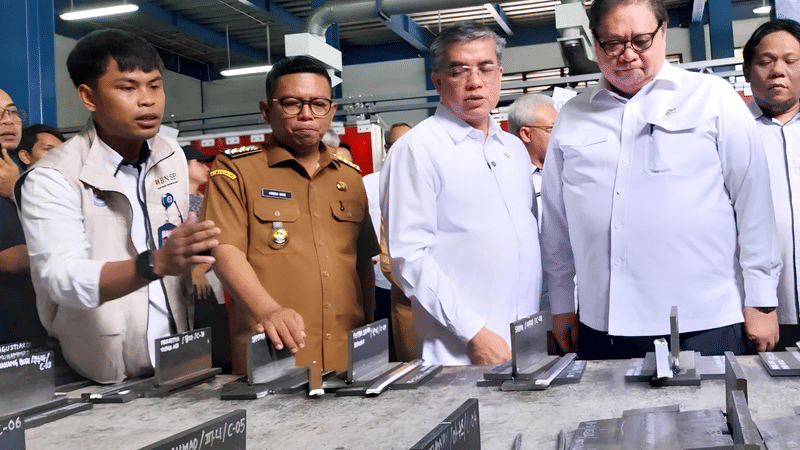
The inclusion of AI and green skills signals a broader shift in Indonesia’s workforce development strategy as employers face changing technology, industrial processes and sustainability requirements.
Indonesia plans to establish up to 19 new vocational training centres in 2027 as the government steps up efforts to close the widening gap between workforce skills and employers’ needs.
Manpower Minister Yassierli said the ministry plans to add between 15 and 19 vocational training centres next year, taking the total number of facilities across Indonesia to between 50 and 60.
Speaking during the opening of the fourth batch of the 2026 National Vocational Training programme in Serang, Banten, on September 1, Yassierli said expanding the training network is necessary to support the government’s ambition of providing competency development opportunities to one million people.
The expansion comes as Indonesian employers continue to face difficulties in finding workers with the skills required for available roles. Yassierli cited World Economic Forum data showing that 54% of companies in Indonesia struggle to recruit workers with the necessary skills.
The government is therefore seeking to shift vocational education from a supply-driven model towards a demand-driven approach, with training programmes designed more closely around labour market requirements.
Under the new approach, industries are expected to participate in the training process from curriculum development through to graduate recruitment. The aim is to ensure that vocational programmes produce workers with skills that can be applied directly in the workplace.
“The industry is actively involved in processes from curriculum formulation to graduate recruitment,” Yassierli said, describing the model as a way to produce work-ready talent.
The ministry is also targeting 330,000 participants in the National Vocational Training programme this year, significantly above its original target of 70,000.
Participants receive a daily stipend of Rp50,000, along with access to free training facilities and competency certification through Indonesia’s National Professional Certification Agency, or BNSP.
The training portfolio reflects the government’s focus on both established industrial skills and emerging areas of the economy. Courses include welding, manufacturing, hospitality and agroforestry, alongside green skills, smart operations and artificial intelligence.
The inclusion of AI and green skills signals a broader shift in Indonesia’s workforce development strategy as employers face changing technology, industrial processes and sustainability requirements.
The planned expansion of training centres could also strengthen access to skills development outside Indonesia’s major urban and industrial hubs, while giving employers a larger pool of certified workers.
For Indonesia, the challenge is increasingly not only creating jobs but ensuring that workers are equipped for the changing demands of those jobs. By bringing employers into curriculum design and recruitment, the government is seeking to make vocational training more closely connected to real hiring needs.
The 2027 expansion therefore represents more than an increase in training infrastructure. It forms part of a broader attempt to build a more responsive skills ecosystem, where vocational education keeps pace with technological change and the evolving requirements of Indonesia’s labour market.
Topics
Author
Loading...