








AI & Emerging Tech
Mars can wait: SpaceX is making billions from data centres and AI infrastructure






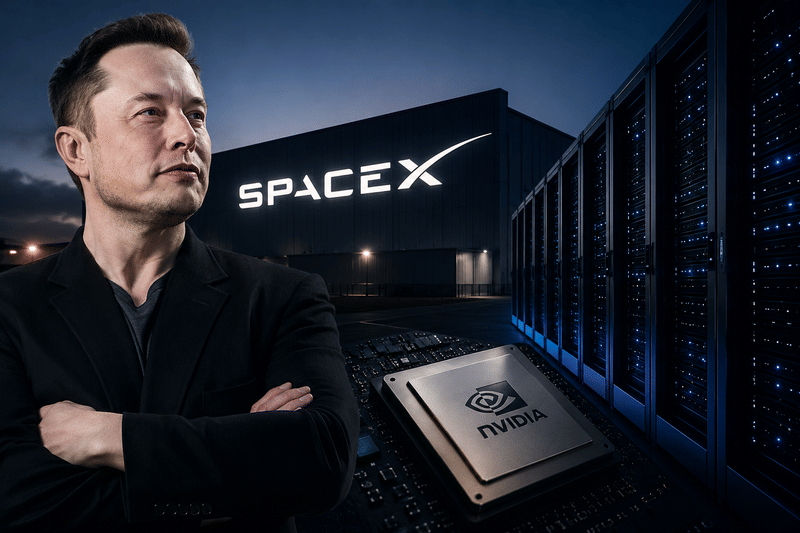
A reported $150 million-a-month deal with open-source AI startup Reflection underscores how computing infrastructure is emerging as a major revenue driver for SpaceX.
For decades, SpaceX has been synonymous with rockets, satellites and ambitions to colonise Mars. Increasingly, however, the company's growth story is being shaped by something far more terrestrial: the infrastructure powering artificial intelligence.
According to reporting by Gizmodo, SpaceX has signed a long-term agreement with Reflection, an open-source AI startup, under which the company will pay $150 million per month for access to SpaceX's computing infrastructure. If the agreement runs through its reported 2029 term, the deal could generate more than $6 billion in revenue.
The partnership highlights a broader shift across the AI industry, where access to large-scale computing power has become one of the most valuable assets in the race to build advanced models.
AI compute becomes a lucrative business
The reported agreement centres on Colossus, SpaceX's data centre facility in Memphis, Tennessee. According to Gizmodo, the site spans more than one million square feet and serves as a key hub for AI computing workloads.
The Reflection deal follows similar arrangements reportedly signed by SpaceX with Anthropic and Google, both of which are developing advanced AI systems and require significant computing capacity to train and operate their models.
Key details reported by Gizmodo include:
- Reflection will reportedly pay SpaceX $150 million per month
- The agreement is expected to begin next month and run through 2029
- The contract could generate more than $6 billion in revenue over its lifetime
- Colossus reportedly houses more than 220,000 Nvidia GPUs
- Nvidia has reportedly invested $800 million in Reflection
The deal reflects growing demand for AI infrastructure as model developers compete to secure computing resources needed for training increasingly sophisticated systems.
A growing role in the AI ecosystem
The agreement also illustrates how the AI industry is becoming more interconnected.
While companies such as Anthropic, Google and Reflection are building AI products and models, they continue to rely on infrastructure providers capable of delivering vast amounts of computing power. SpaceX appears to be positioning itself as one of those suppliers.
According to Gizmodo, the company's role expanded following its merger with xAI earlier this year. Rather than using its computing capacity exclusively for internal AI development, SpaceX has increasingly sought external customers willing to pay for access to its infrastructure.
The strategy mirrors a broader trend across the technology sector, where infrastructure providers, chip manufacturers and AI developers are becoming deeply intertwined through partnerships, investments and long-term computing agreements.
Why open-source AI needs scale
Founded in 2024, Reflection focuses on developing open-source AI models that can be freely accessed and modified by developers.
Interest in open-source AI has grown significantly since the emergence of DeepSeek, whose models demonstrated that open alternatives could compete with proprietary systems developed by larger AI companies.
However, building frontier AI models remains an expensive undertaking.
Industry experts have long pointed to computing power as one of the biggest barriers facing AI developers. Training advanced models requires enormous quantities of graphics processing units, storage and energy, making infrastructure partnerships increasingly important.
For companies such as Reflection, access to large-scale compute capacity may prove as critical as access to talent or funding.
Infrastructure emerges as AI's next battleground
The reported Reflection agreement highlights a reality increasingly shaping the AI economy: companies that control computing infrastructure stand to benefit regardless of which AI models ultimately dominate the market.
As investment continues to pour into artificial intelligence, demand for data centres, GPUs and high-performance computing resources is expected to remain strong. For SpaceX, a company best known for launching rockets into orbit, the next phase of growth may come from helping power the technologies being built back on Earth.
Topics
Author
Loading...