








AI & Emerging Tech
Why Microsoft fired the engineer who disrupted CEO Satya Nadella's speech





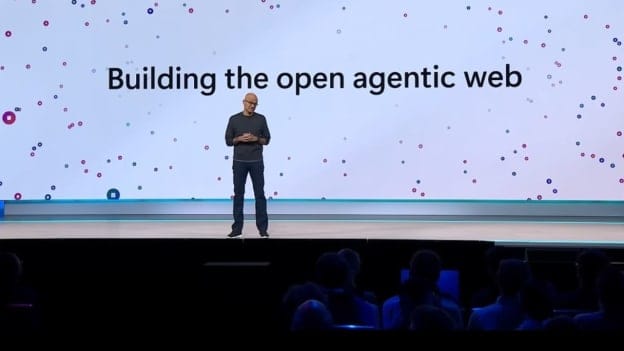
The protest reflects rising tensions between employee values and Big Tech’s global partnerships.
The calm veneer of Microsoft’s annual Build conference in Seattle cracked this week when Joe Lopez, a software engineer at the company, interrupted CEO Satya Nadella’s keynote with a loud and impassioned protest.
His target: Microsoft’s contracts with the Israeli military, and its Azure cloud platform’s alleged role in the war in Gaza.
Security swiftly escorted Lopez from the venue, but the ripple effect of his outburst travelled far beyond the conference hall. It marked the first of multiple disruptions during the four-day event, with at least three executive sessions interrupted and a protest gathering forming outside the venue. In one instance, Microsoft even cut audio from a livestreamed talk in response to heckling.
Lopez’s protest did not come out of the blue. He’s part of a broader employee-led movement, No Azure for Apartheid (Noaa), which has publicly challenged Microsoft’s involvement in Israeli military operations for over a year. Following the disruption, Lopez sent an all-staff email – also posted on Medium – accusing the company of complicity in war crimes.
“As one of the largest companies in the world, Microsoft has immeasurable power to do the right thing: demand an end to this senseless tragedy, or we will cease our technological support for Israel,” he reportedly wrote. “The world has already woken up to our complicity and is turning against us.”
Lopez’s bold act, however, came at a cost. According to Noaa, he received a termination letter from the company soon after – though he has been unable to open the document. If confirmed, it would mark the third such firing over similar protests in recent weeks. Two other employees, Ibtihal Aboussad and Vaniya Agrawal, were dismissed in April after confronting Microsoft’s AI chief Mustafa Suleyman at a separate company event.
A growing pattern of unrest
Lopez’s protest aligns with a broader pattern of dissent across the tech sector. The past year has seen Google grapple with similar internal backlash and mass terminations over its military contracts with Israel. At Microsoft, these employee actions are coalescing into a more organised and vocal resistance, one increasingly difficult to ignore.
Noaa claims Microsoft’s Azure platform supports Israeli military infrastructure, including its air force’s Ofek Unit, which handles target databases for airstrikes. According to investigative reporting by +972 Magazine, Microsoft technology is embedded across “all major military infrastructures” in Israel.
In response, Microsoft has maintained that a third-party investigation found “no evidence” that Azure or other Microsoft technologies were used to “harm or target” civilians in Gaza. Yet internal critics, including Lopez, oppose this view.
“Leadership rejects our claims that Azure technology is being used to target or harm civilians in Gaza,” Lopez is said to have written. “Those of us who have been paying attention know that this is a bold-faced lie … We see it live on the internet every day.”
Noaa also claims that Microsoft is now actively suppressing dissent within the organisation. The group says internal emails containing words like “Palestine” and “Gaza” have been blocked – a move that, if true, signals a tightening grip on internal communications around the conflict.
Corporate values vs contracts
Microsoft’s leadership has so far declined to comment publicly on this week’s events, and it remains unclear whether Lopez’s dismissal has been finalised. But the silence is growing louder.
For business and HR leaders, the situation presents a thorny dilemma. On one hand, companies must uphold codes of conduct and workplace decorum – especially at high-profile public events. On the other, employee activism is increasingly part of the corporate landscape, particularly among younger, values-driven workers who expect their employers to take principled stands on global issues.
Balancing free expression with corporate cohesion is not a walk in the park. In Microsoft’s case, the stakes are even higher. Its Azure business is a multibillion-dollar revenue stream and a critical part of its long-term AI and defence strategy. Severing or scrutinising defence-related contracts could send ripples through both financial performance and national security partnerships.
Yet employee-led movements like Noaa are forcing the issue. Their message is clear: silence is complicity, and accountability must start at the top. As Anna Hattle, a Microsoft employee and Noaa organiser, wrote in a 15 May email to leadership: “We are currently witnessing the same crimes committed 77 years ago with one key difference: now, the Israeli Occupation Forces are carrying out this genocide at a much greater scale thanks to Microsoft cloud and AI technology.”
As protests grow louder and more coordinated – both inside and outside its digital walls – Microsoft may soon have to face more questions from various staleholders.
Loading...