








AI & Emerging Tech
Singapore warns AI could break entry-level career ladder, urges stronger workforce training






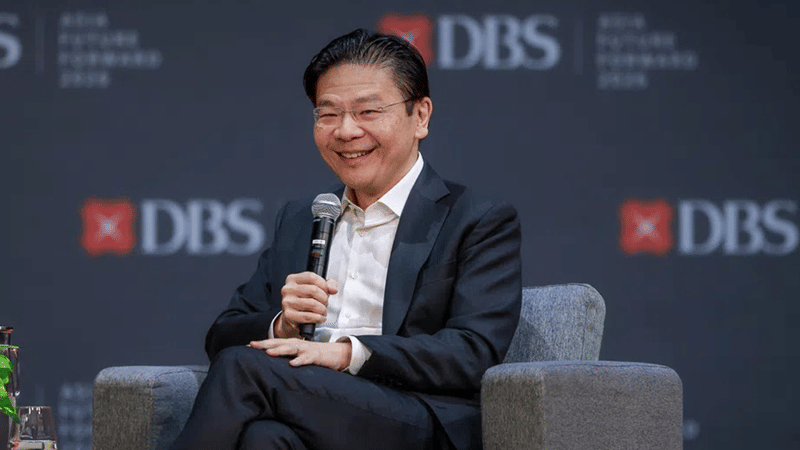
Wong said cooperation between employers, unions and the Government would be essential to managing the effects of the technological shift.
Singapore Prime Minister Lawrence Wong has warned that artificial intelligence (AI) could disrupt the entry-level career ladder by automating routine tasks traditionally assigned to junior employees, potentially depriving young workers of essential workplace learning and development opportunities.
Speaking at the DBS Asia Future Forward Conference on October 12, Wong said employers must take a more deliberate approach to training and mentoring new hires as organisations adopt AI to improve productivity.
“We are concerned that there may be that bottom rung of the career ladder that is broken, and young people may not get sufficient training, and we want companies to pay attention to this,” he said, adding that the Government is considering whether new programmes or schemes are needed to address the challenge.
Wong stressed that Singapore must ensure AI adoption improves people's lives rather than allowing technological advancement to become an end in itself.
“We want technology to translate into better lives for Singaporeans, so we are not trying to be an AI-driven society,” he said. “We are trying to be a better society enabled by AI.”
AI adoption must not come at the cost of workplace learning
Wong said employers increasingly need workers who are AI-literate but can also think independently, adapt to changing situations and exercise sound judgement.
While AI can automate routine tasks, these assignments often provide new employees with practical experience and tacit knowledge that help them develop professional capabilities. Removing such tasks without creating alternative learning opportunities could weaken the development of future talent, he cautioned.
He also emphasised the importance of maintaining strong educational foundations, including subjects such as mathematics and algebra, rather than allowing AI to become a shortcut for learning in schools.
“We are working with our tripartite partners on this, because we want employers to harness AI fully to get the productivity benefits,” Wong said. “But we also want to make sure that employers pay attention to training and continue to nurture the next generation of industry leaders.”
The comments highlight a growing challenge for employers: balancing the productivity gains from automation with the need to develop junior employees who may traditionally have learned through tasks that AI can now perform.
Singapore opts for a more gradual AI transition
During a dialogue with DBS chief executive officer Tan Su Shan, Wong acknowledged that Singapore has chosen a more challenging path by seeking to protect workers even when specific jobs cannot be preserved.
Responding to a question about whether this approach meant moving more cautiously on AI adoption, Wong said the Government believes a transition that supports workers would be more sustainable in the long run.
He warned that allowing AI to advance at a pace that triggers widespread unemployment could provoke a strong public backlash against technology.
“I don’t think the world can continue like that,” he said. “It will not be acceptable to many people around the world.”
For Singapore, deploying AI at scale over approximately a decade would provide time for affected workers to acquire new skills and move into other employment opportunities, Wong said.
He acknowledged that retrenchments would continue as businesses automate and adopt new technologies, but stressed that employers must manage workforce reductions responsibly.
“But do it properly – be fair to the workers,” he said. “Give the workers advance notification so that then the unions can come in, and they can help the workers retrain and get new jobs.”
The Government will also provide additional support programmes to help workers navigate the transition. Wong said cooperation between employers, unions and the Government would be essential to managing the effects of the technological shift.
Singapore looks to strengthen regional digital cooperation
Beyond workforce development, Wong said Singapore aims to remain an open system where AI companies and international partners can operate and collaborate.
He also pointed to ASEAN's efforts to strengthen regional digital cooperation through the Digital Economy Framework Agreement, which regional leaders are expected to sign at the upcoming ASEAN summit in Manila.
The agreement represents an initial step towards harmonising fragmented digital rules across the region, making it easier for businesses to expand across markets and reducing friction and costs associated with cross-border payments.
Wong said further work would be needed to achieve these goals and indicated that Singapore would prioritise selected digital cooperation initiatives when it assumes the ASEAN chairmanship in 2027.
As AI reshapes the workplace, Singapore's approach underscores the importance of pairing technology adoption with workforce reskilling, responsible employment practices and sustained investment in early-career talent.
Author
Loading...