








Business
Five years after controversial Zoom layoffs, Vishal Garg seeks return as Better CEO






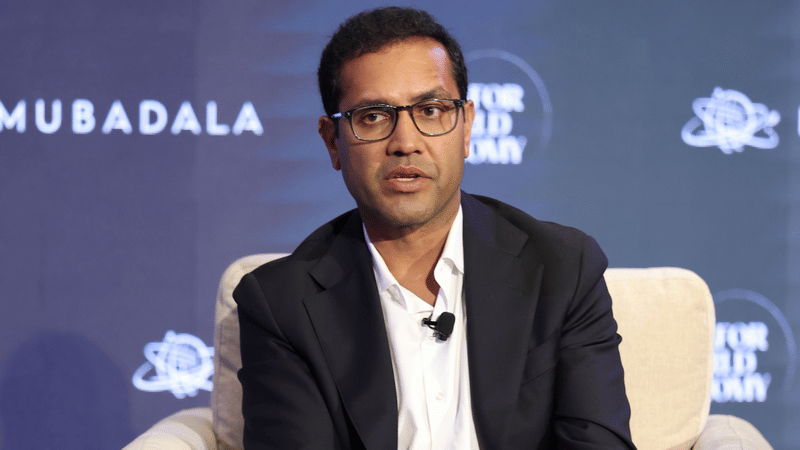
Better removed founder Vishal Garg as CEO in August 2026 after board members unanimously raised concerns about his leadership, conduct and decision-making.
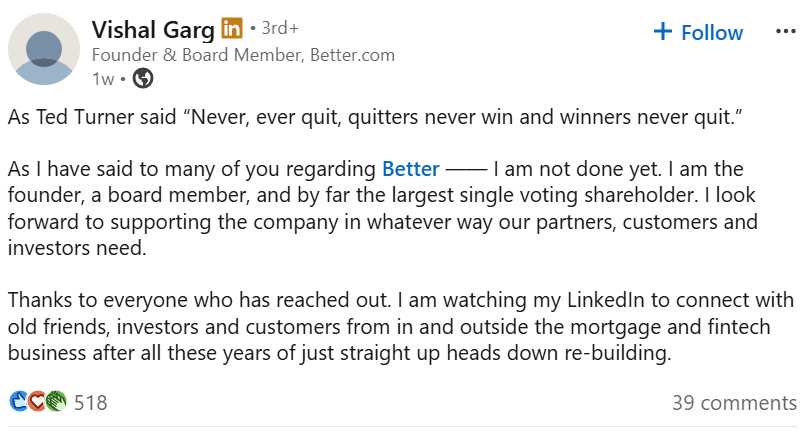
Vishal Garg, the founder and former chief executive of Better Home & Finance, is seeking to reclaim the company's top leadership position less than two weeks after being removed from the role, offering to work for an annual salary of just $1 until the company returns to profitability.
Garg, who drew global criticism in 2021 after dismissing 900 employees during a three-minute Zoom call, was replaced as CEO on 3 August, with hedge fund manager Daniel Lewis appointed as interim chief executive.
In a letter submitted to the company's board on 10 August, Garg called for the resignation of all directors except himself and board members Michael Farello and Hugh Frater. He also announced that shareholders representing a majority of the company's voting power had signed declarations supporting his proposal.
To support the shareholder action, Garg has retained Alex Spiro, a partner at law firm Quinn Emanuel.
In a public statement, Garg argued that Better had reached a critical stage in its turnaround journey.
He said the company had spent years rebuilding its operations around technology, significantly reducing mortgage origination costs and creating a platform capable of scaling. As part of his proposal, Garg pledged to invest an additional $30 million alongside shareholders and continue leading the company's restructuring efforts.
His plan also includes a $30 million stock buyback and a personal investment of $5 million. Garg said he would oversee an independent search for a permanent chief executive before transitioning into a chairman or chief product and innovation officer role.
The leadership battle comes as Better's market performance has weakened. According to CNN, the company's stock has declined by 45% since Lewis assumed the CEO position, adding to an earlier 16% decline recorded before Garg's departure was announced.
Garg told CNN that Better had been approaching a major operational breakthrough after several years of rebuilding its business following the collapse of the pandemic-era refinancing boom.
Annual sales reportedly fell from $1.5 billion in 2021 to $70 million in 2023 as higher interest rates reduced demand for mortgage refinancing. However, Garg said the company had reversed its trajectory through investments in artificial intelligence and operational efficiencies.
He pointed to AI-powered mortgage processing systems that significantly reduced application timelines and highlighted a partnership with Neo Home Loans that helped cut loan origination costs by half.
Better also expanded its technology partnerships this year through collaborations with Intuit, Coinbase and OpenAI while growing its home equity lending business. According to Garg's shareholder letter, funded loan volume increased from around $600 million in the first quarter of 2024 to $1.67 billion in the second quarter of 2026.
Despite highlighting the company's recent progress, Garg acknowledged that his leadership had been marked by controversy.
The 2021 dismissal of 900 employees over Zoom triggered widespread backlash and led to a temporary leave of absence. His tenure was also overshadowed by a whistleblower lawsuit and an investigation by the US Securities and Exchange Commission. Both cases were later closed without enforcement action.
Garg also criticised Lewis, accusing the interim chief executive of misrepresenting his intentions while seeking a board position earlier this year.
Neither Better Home & Finance nor Lewis responded to CNN's requests for comment. Garg said that if the board failed to act voluntarily, he and his supporting shareholders would seek to convene a special meeting to force a vote on the company's future leadership.
The dispute marks the latest chapter in one of the most closely watched corporate leadership controversies in the fintech industry, reigniting questions about executive accountability, shareholder influence and the role of founders in corporate turnarounds.
Topics
Author
Loading...