








Business
Singapore hiring slows as business optimism dips amid geopolitical uncertainty: SCCB report






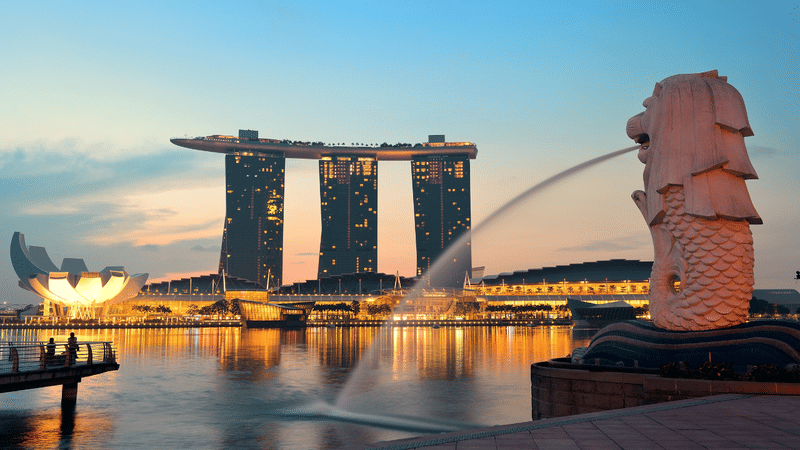
Businesses face rising margin pressures despite stabilising demand, prompting cautious investment and expansion decisions that may slow near-term growth.
Employment growth among Singapore firms slowed in the second quarter of 2026, as weakening business confidence and rising geopolitical tensions weighed on hiring sentiment.
According to data from the Singapore Commercial Credit Bureau (SCCB), employment levels rose by +3.70 percentage points in Q2 2026, down significantly from +7.20 percentage points recorded a year earlier. While this marked a slight improvement from +2.96 percentage points in the first quarter of 2026, the broader trend points to a cooling labour market.
Sectoral performance remained uneven. Financial services, manufacturing, and wholesale trade sectors registered modest quarterly gains in employment, suggesting pockets of resilience. However, services and transportation sectors saw a decline, while construction activity remained flat with no employment growth during the quarter.
The moderation in hiring comes amid slipping business optimism. Singapore’s Business Optimism Index (BOI) fell to +4.10 percentage points in Q2 2026, down from +5.20 percentage points in the same period last year, and slightly lower than the +4.30 percentage points recorded a year ago.
“Business optimism has softened for the second straight quarter, reflecting the cautious stance that many companies are now adopting amid heightened global geopolitical uncertainties,” said Audrey Chia, chief executive officer of SCCB.
She noted that while key indicators remain in expansionary territory, the pace of improvement has slowed as firms grapple with persistent external challenges. “The marginal improvements suggest that businesses are proceeding carefully as they navigate geopolitical tensions, supply chain disruptions, and a more volatile external environment,” Chia added.
The report also highlighted growing margin pressures for businesses, even as demand shows signs of stabilising. Companies are increasingly cautious in their investment and expansion decisions, a trend that could temper near-term growth.
Global developments, particularly the ongoing conflict in the Middle East, have added to economic uncertainty by driving up fuel prices. The ripple effects have been felt across Asia, with some governments promoting remote work arrangements to reduce energy consumption.
In Singapore, Tan See Leng has urged citizens to conserve energy and adopt more efficient practices amid rising global energy costs. He, however, reassured the public that the country’s energy supply remains stable despite external disruptions.
“I want to assure all of our fellow Singaporeans that our energy is secure, even in the face of these disruptions,” Tan said, as cited in local media reports.
As businesses navigate an increasingly uncertain global landscape, the data suggests that cautious hiring and tempered optimism may continue to define Singapore’s economic outlook in the months ahead.
Topics
Author
Loading...