








Compensation Benefits
Air Canada shuts down as flight attendants strike over pay





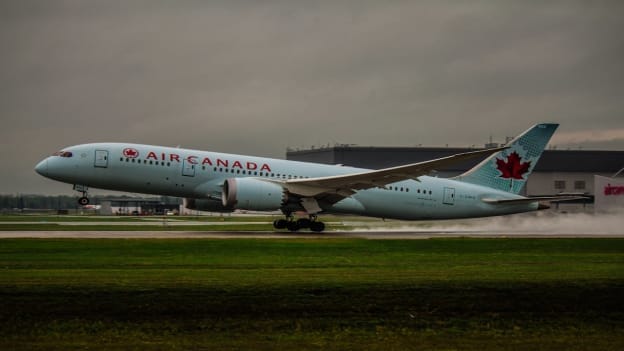
Canada’s largest airline has cancelled hundreds of flights after its flight attendants' union defied a government order to end their strike over pay disputes.
Air Canada has suspended operations after the union representing the airline’s flight attendants said on Sunday that it will defy a federal return-to-work order and will continue to strike over unpaid ground work.
"Approximately 240 flights scheduled to operate beginning this afternoon have now been cancelled," the airline said in a statement, adding that customers whose flights are cancelled by the flight attendant strike will be offered other options, including a refund or credit for future travel.
Air Canada said that flights will resume as early as Monday evening, but with more than 10,000 flight attendants still on strike, it remains unclear how it plans to operate these flights.
The Montreal-based carrier earlier announced that it will resume flights on Sunday following a directive from the Canadian Industrial Relations Board (CIRB) to end the Air Canada strike on Saturday, which caused the suspension of more than 700 flights and stranded over 100,000 passengers.
Hours later, the Canadian Union of Public Employees (CUPE) announced that its members will remain on strike and urged Air Canada to "negotiate a fair deal."
"We will be challenging this blatantly unconstitutional order that violates the Charter rights of 10,000 flight attendants, 70% of whom are women, and 100% of whom are forced to do hours of unpaid work by their employer every time they come to work," it said in a statement.
"I don't think anyone's in the mood to go back to work," Lillian Speedie, vice-president of CUPE Local 4092, told the CBC news agency at a picket line outside Toronto Pearson International Airport on Sunday.
"To legislate us back to work 12 hours after we started? I'm sorry, snowstorms have shut down Air Canada for longer than we were allowed to strike."
The union said the company was not addressing key issues such as low wages and unpaid work despite eight months of bargaining.
Air Canada said it recently offered its flight attendants a 38% increase in total compensation over four years, with a 25% raise in the first year. However, the union said the offer was "below inflation, below market value, below minimum wage" and would leave flight attendants unpaid when waiting at airports ahead of flights or during the boarding process.
After negotiations stalled and CUPE gave its advance strike notice earlier on Wednesday, Air Canada began winding down its operations. It also requested the government to intervene in the airline labour dispute.
On Saturday, Canada’s job minister Patty Hajdu asked the CIRB to send Air Canada and CUPE into binding arbitration by invoking Section 107 of the Canada Labour Code.
"I am exercising this authority because it is critical to maintaining and securing industrial peace, protecting Canadians, and promoting conditions to resolve the dispute," Hadju said.
CUPE responded that using arbitration to end the strike will "ensure unresolved issues will continue to worsen by kicking them down the road" and requested Hajdu not to interfere.
The union also launched a national day of action on Sunday, with demonstrations outside of the Toronto, Montreal, Vancouver, and Calgary airports.
Author
Loading...