








Compensation Benefits
Singapore updates Progressive Wage Model for 50,000+ food services workers







Employees working over 44 hours per week under Singapore’s Employment Act must receive at least 1.5× overtime pay, with total monthly wages meeting Progressive Wage Model requirements, starting July 1, 2026.
The Ministry of Manpower in Singapore has rolled out the Progressive Wage Model (PWM) for the food services sector, introducing structured wage and training requirements aimed at improving pay standards and skills development for local workers.
Developed by the Tripartite Cluster for Food Services Industry (TCF), the framework links wages to skills and productivity while setting out training benchmarks aligned with Singapore’s Skills Framework for Food Services.
Under the model, employers must meet PWM wage and training requirements for food services workers who are Singapore citizens or permanent residents. Compliance is mandatory for companies seeking to renew existing work passes or apply for new ones.
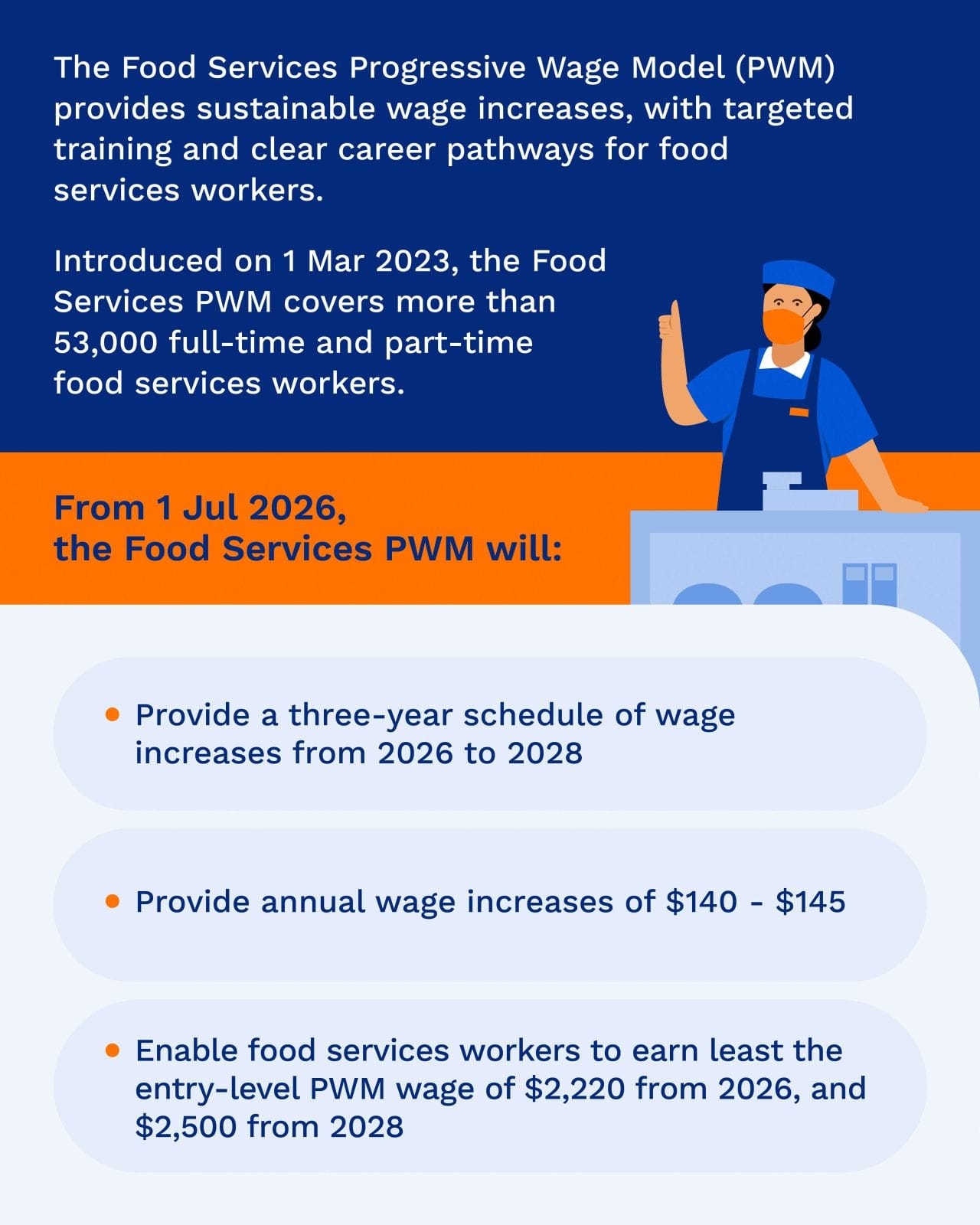
The model covers workers employed in establishments licensed by the Singapore Food Agency for food retail or central kitchen food processing operations, provided the firms hire foreign workers. It applies to both full-time and part-time employees working under a contract of service.
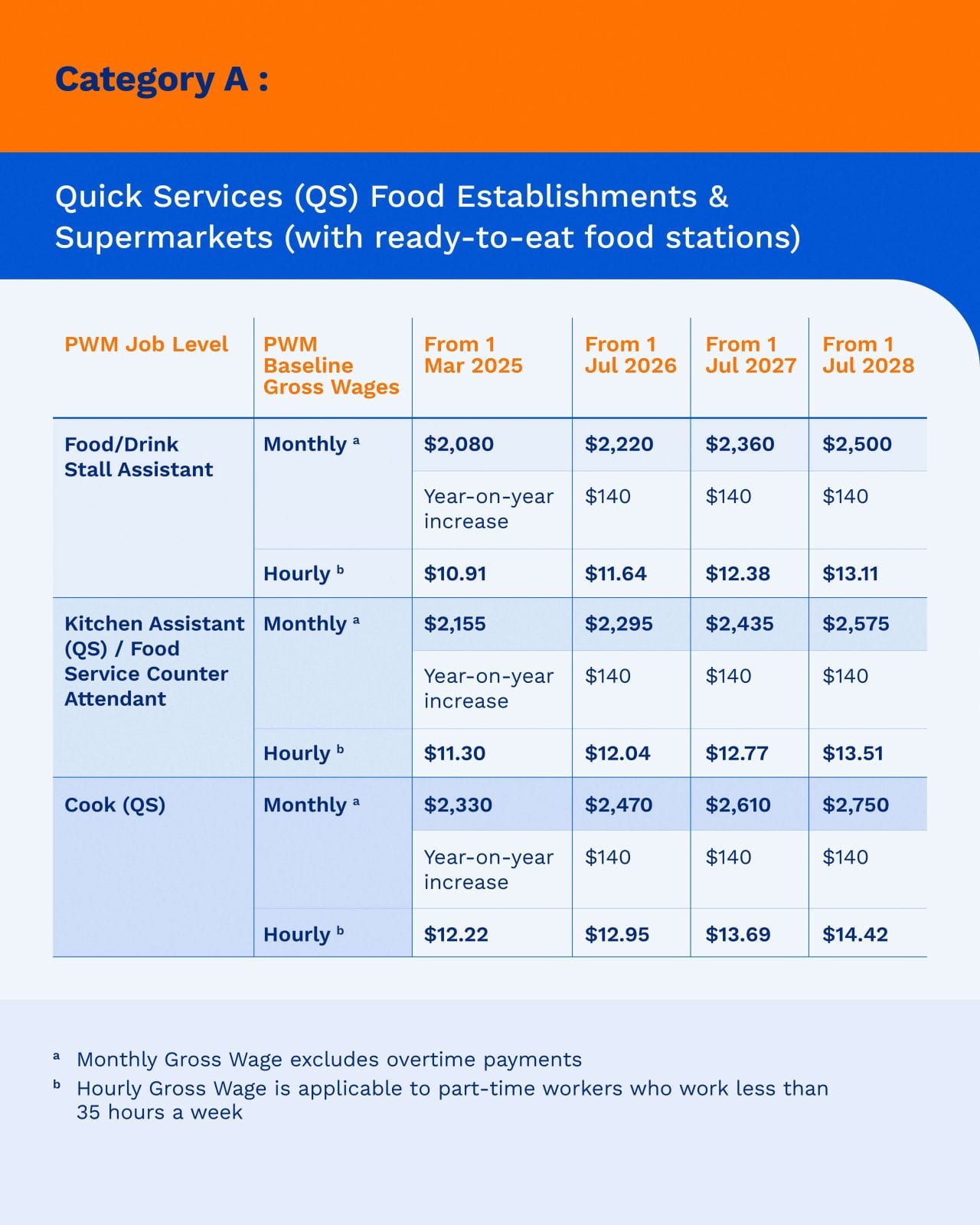
The PWM framework categorizes food establishments into two segments. Category A includes quick-service outlets such as fast-food restaurants, food courts, kiosks, eating houses with self-collection counters, and supermarkets with ready-to-eat food stations.
"From 1 July 2026, food services workers will earn at least the entry-level PWM wage requirement of $2,220, up from the existing PWM wage requirement of $2,080. From 2026 to 2028, this baseline monthly gross wage requirement will increase from $2,220 to $2,500. Food services workers can expect a year-on-year increase of up to $145 for the next three years," the Ministry said.
"To align with the implementation timeline for the majority of the PWM sectors, the food services wage schedule will take effect from 1 July each year, starting from 1 July 2026. Employers who employ workers in multiple PWM sectors can streamline their administrative processes, with lead time to adjust and comply with the new food services requirements."
Category B includes full-service establishments such as restaurants with wait staff, caterers, and central kitchens.
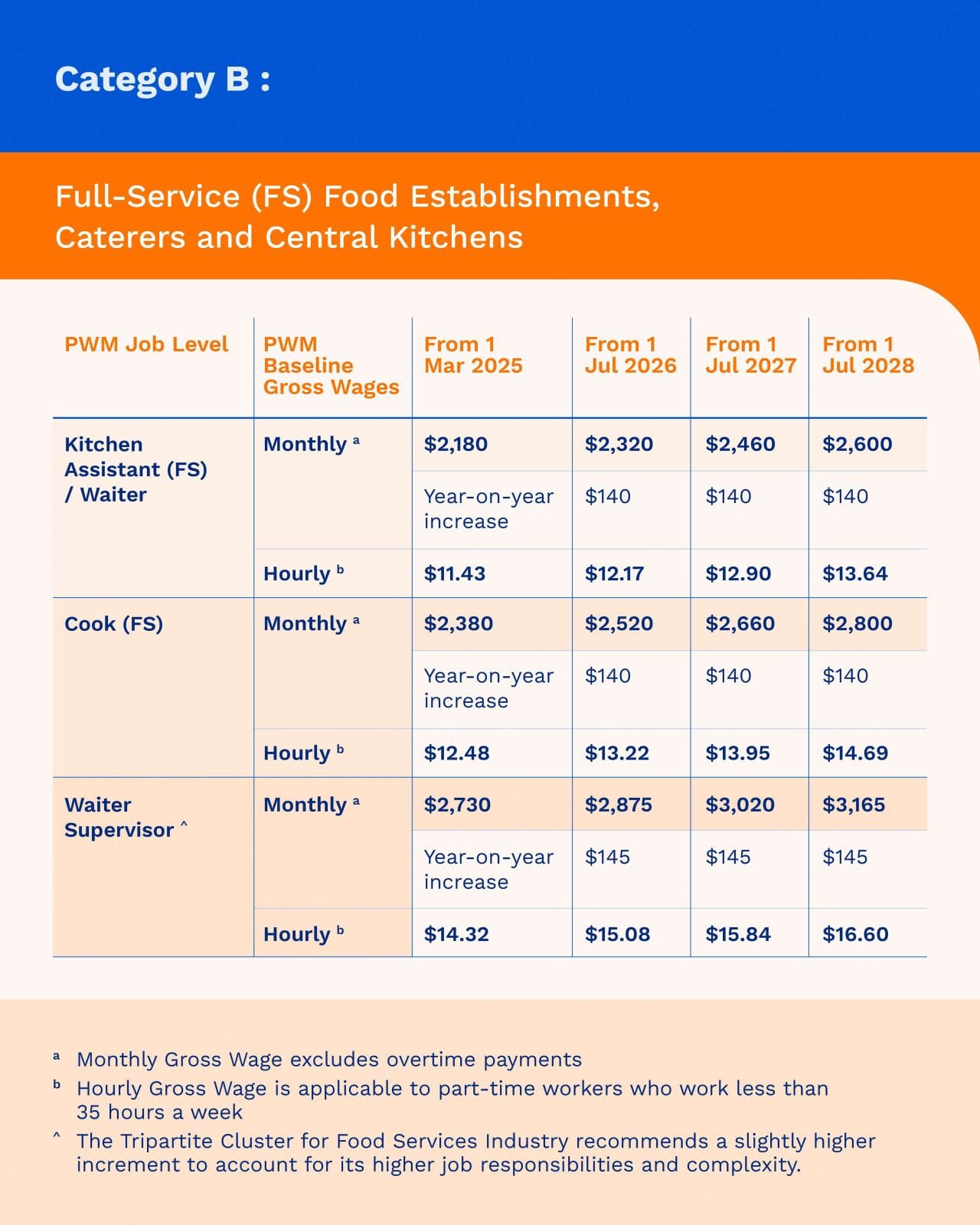
For full-time employees working 35–44 hours a week, the PWM sets minimum monthly gross wage levels that include basic pay, allowances such as travel or housing, and productivity incentives. However, bonuses, stock options, reimbursements, and employer CPF contributions are excluded from the calculation.
Additional wage requirements apply to employees who work more than 44 hours per week and fall under Part 4 of the Employment Act. Employers must pay overtime at a rate of at least 1.5 times the basic hourly wage and ensure the total monthly gross wage meets PWM thresholds.
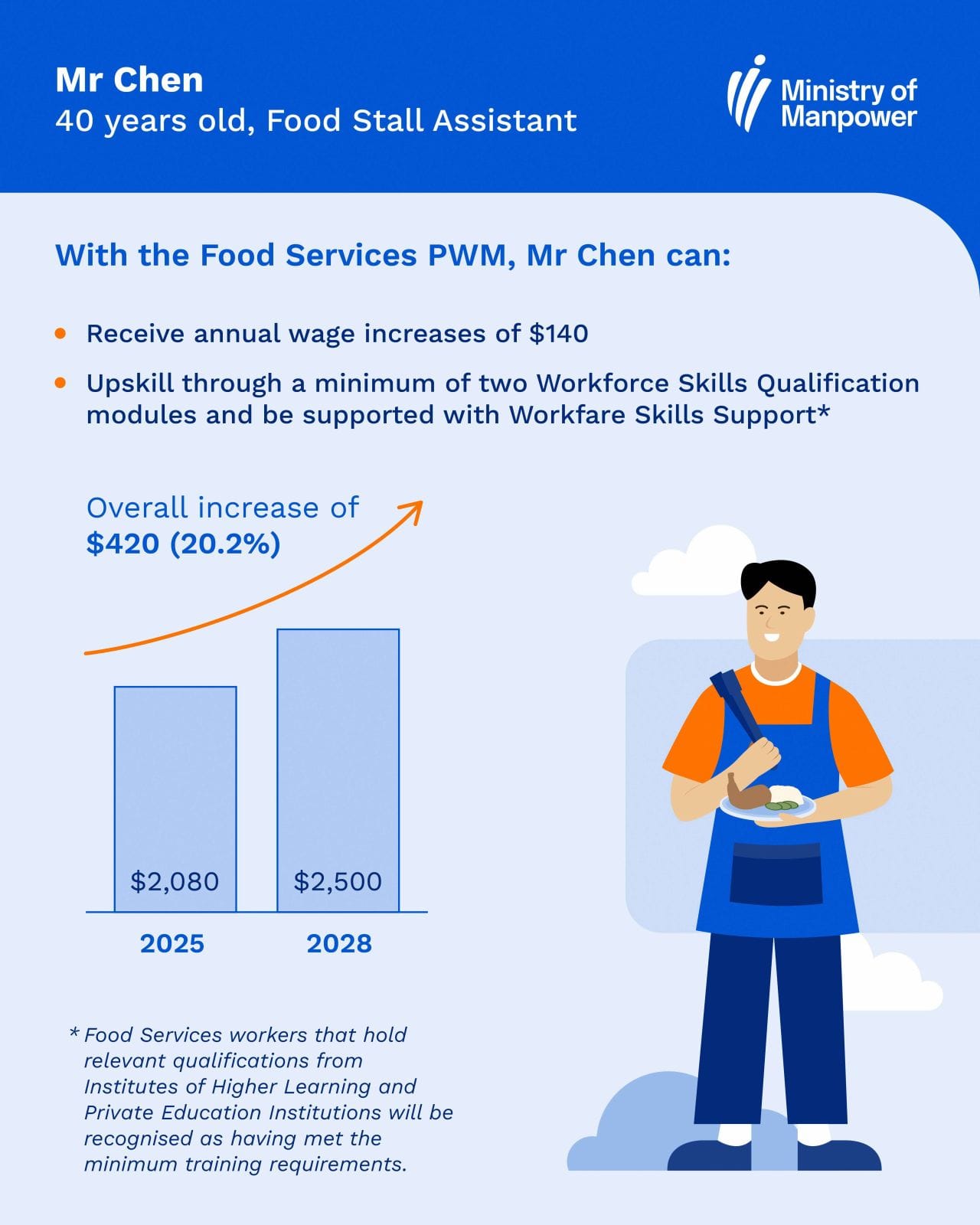
The framework also introduces training requirements to strengthen workforce capabilities. Most food service job roles require workers to complete two Workforce Skills Qualifications (WSQ) modules from an approved list, while training for senior cooks and managers is encouraged but not mandatory. Employers will have a six-month grace period to ensure new hires meet the training requirements.
"Food services workers can tap on WSS scheme, which was enhanced to provide greater support for lower-wage workers to undertake more substantial upskilling and reskilling. Under the new WSS (Level-Up), self-sponsored trainees can pursue long-form training and receive higher training allowance of up to $18,000 per year for full-time training and $3,600 per year for part-time training.
Under the enhanced WSS (Basic), lower-wage workers who complete shorter courses can receive Training Allowance of $10.50 per hour from 1 July 2026. Employers who support their workers to upskill may also be eligible for Absentee Payroll," the Ministry added.
Workers will also be able to verify their salary information and job details through the Progressive Wage Portal, which allows them to check whether employers are complying with wage standards.
The Tripartite Cluster is expected to review the PWM wage schedule in 2025 as part of ongoing efforts to ensure pay levels remain aligned with industry conditions and workforce development goals.
Author
Loading...