








Diversity Equity Inclusion
Half of Singaporeans say workplaces are still inaccessible: New SMU Study






The study found that more than half of PWDs rated physical, technological and social access in workplaces below 50%, and technology emerged as the weakest area.
A new nationwide study by Singapore Management University (SMU) has surfaced a stark truth: while Singaporeans overwhelmingly care about inclusion, the lived experience of persons with disabilities (PWDs) reveals a very different reality.
Goodwill may be abundant, but access, opportunity, and meaningful participation remain painfully limited.
The two-month study, Engage.Me., led by SMU Principal Lecturer of Statistics Rosie Ching in partnership with the Singapore Association of the Visually Handicapped (SAVH) and the Singapore Association for the Deaf (SADeaf), surveyed 7,265 people across the country.
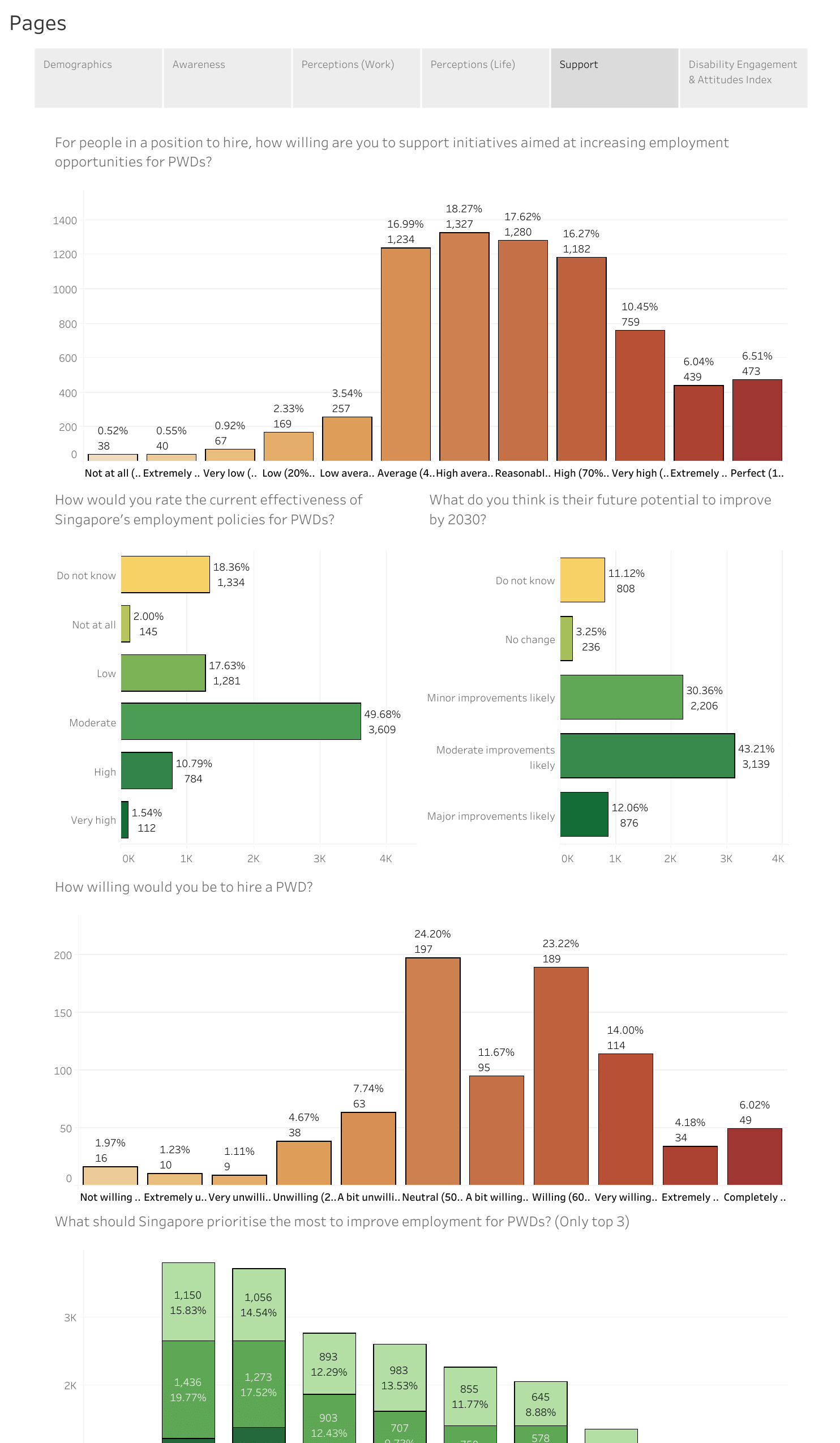
From the deaf and hard-of-hearing community to respondents with visual or physical impairments, the research paints a sobering picture: one in two Singaporeans finds workplaces inaccessible, and even those in hiring roles admit they are only “a bit willing” to hire persons with disabilities.
Despite the country’s strong rhetoric on inclusion, both PWDs and the general public rated Singapore’s existing employment policies as below moderate in effectiveness. Expectations for improvement by 2030 were described as only “minor”.
“Goodwill without access doesn’t get anyone hired,” said Ms Ching. “Until we improve workplace accessibility, make support easy to find, and give employers practical tools, people with disabilities will keep hearing ‘you’re welcome here’ while the door stays half-closed.”
Accessibility becomes the weak link
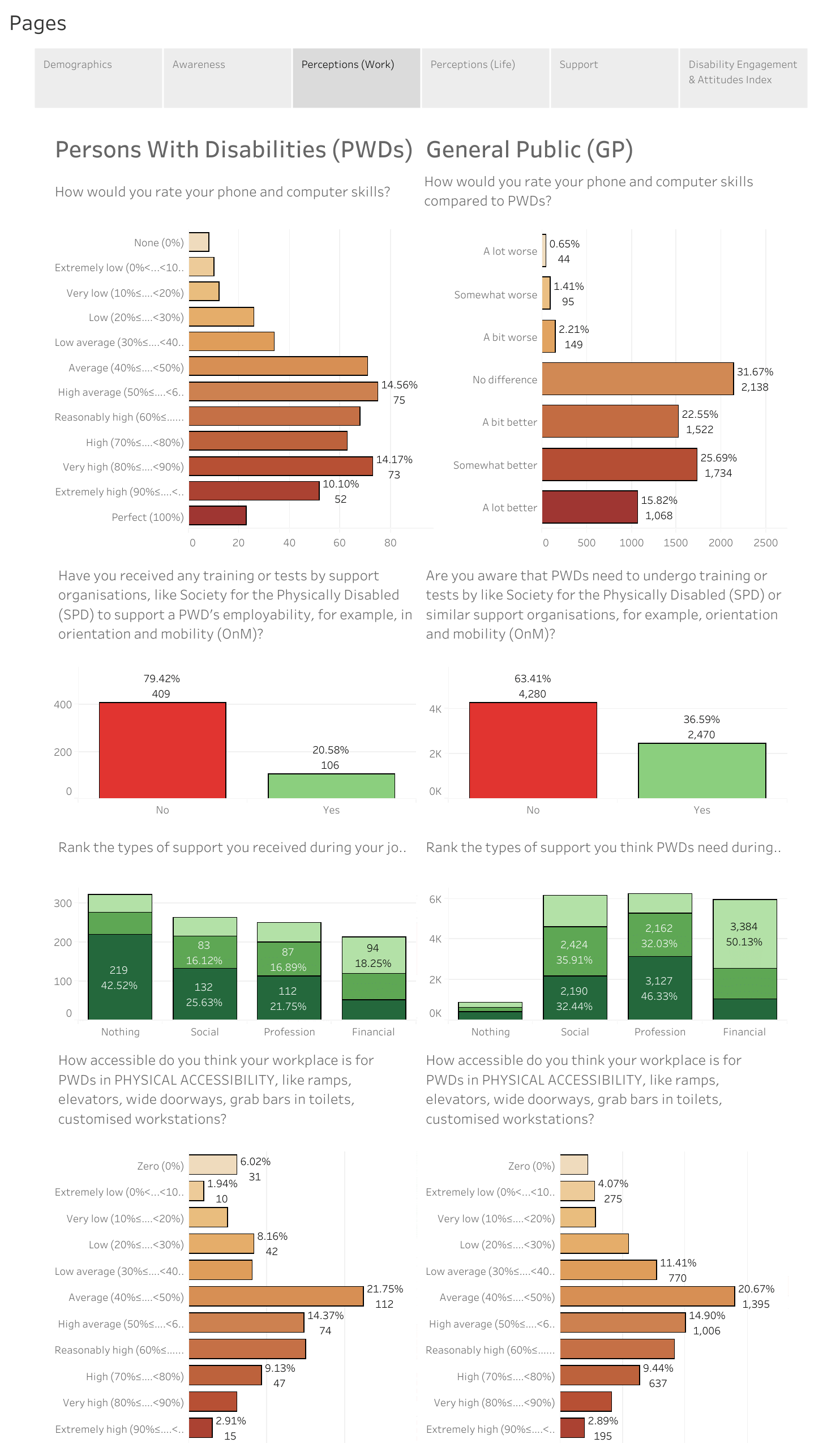
The study found that more than half of PWDs rated physical, technological and social access in workplaces below 50%. Technology emerged as the weakest area, a finding reinforced by the general public, 6 in 10 of whom said digital accessibility is still the biggest bottleneck.
“If digital access fails, PWDs cannot even reach the stage of engagement,” Ms Ching noted, emphasising that without seamless access to applications, communication tools, and internal systems, genuine participation is impossible.
The awareness gap
Beneath the accessibility challenges lies an equally worrying issue: lack of awareness about support schemes.
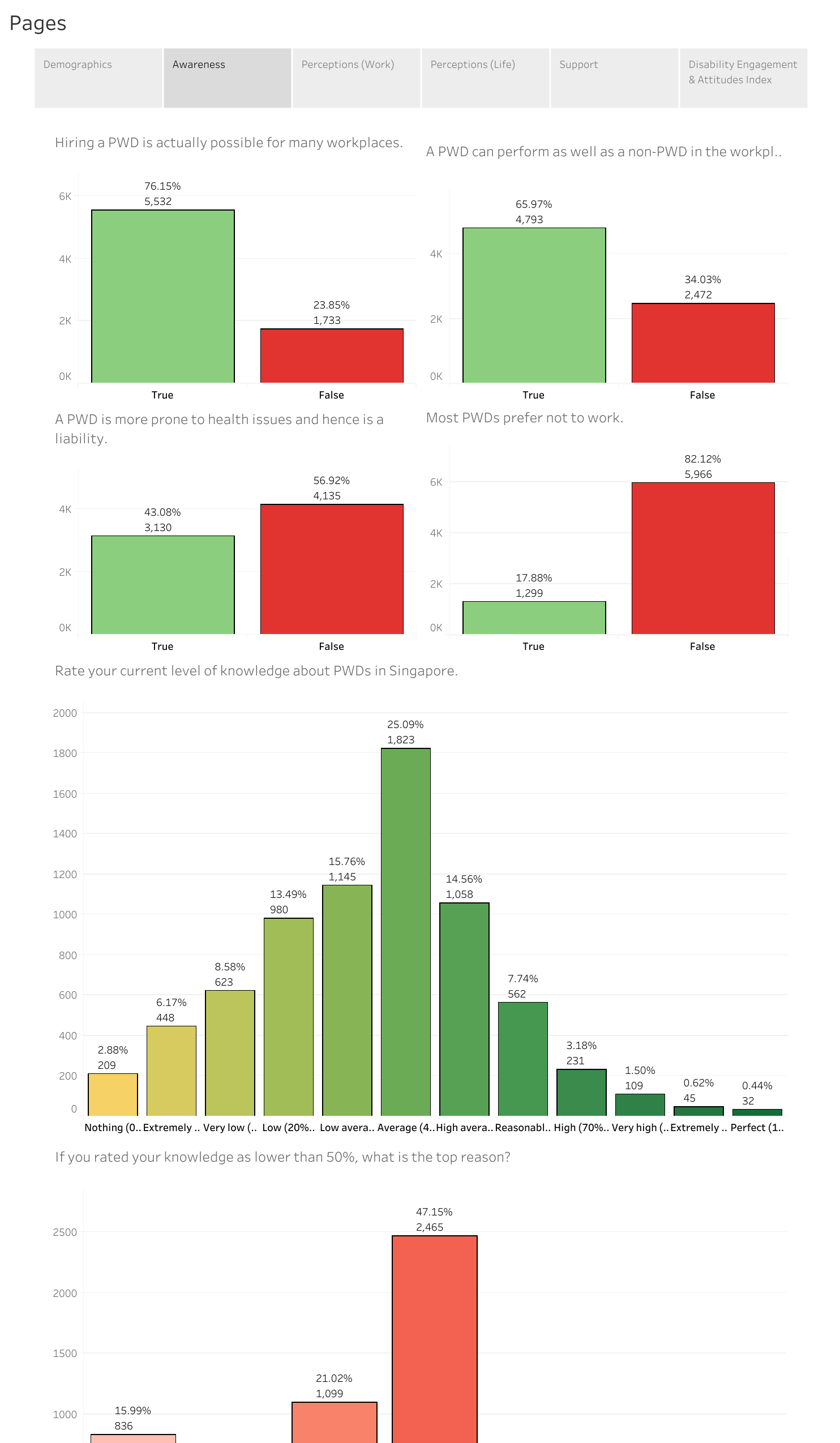
8 in 10 PWDs have never heard of employability training programmes.
2 in 3 are unaware of hiring grants.
Even among hiring managers, fewer than half know these schemes exist.
The reality served through job satisfaction
PWDs reported reasonably high job satisfaction at 6.38/10, but their sense of financial independence was much lower at 5.4/10 — significantly below the 7.0 score the general public believes it should be.
The disconnect reveals a deeper structural gap: PWDs may enjoy their roles, but many still don’t feel secure enough to support themselves independently.
“Goodwill has not yet translated into real empowerment or economic independence,” Ching added.
Mindset shifts alone aren't sufficient
One of the most important takeaways from the research is that positive attitudes alone don’t drive inclusion. While Singaporeans show strong empathy toward PWDs, attitudes account for just 11% of actual employment engagement.
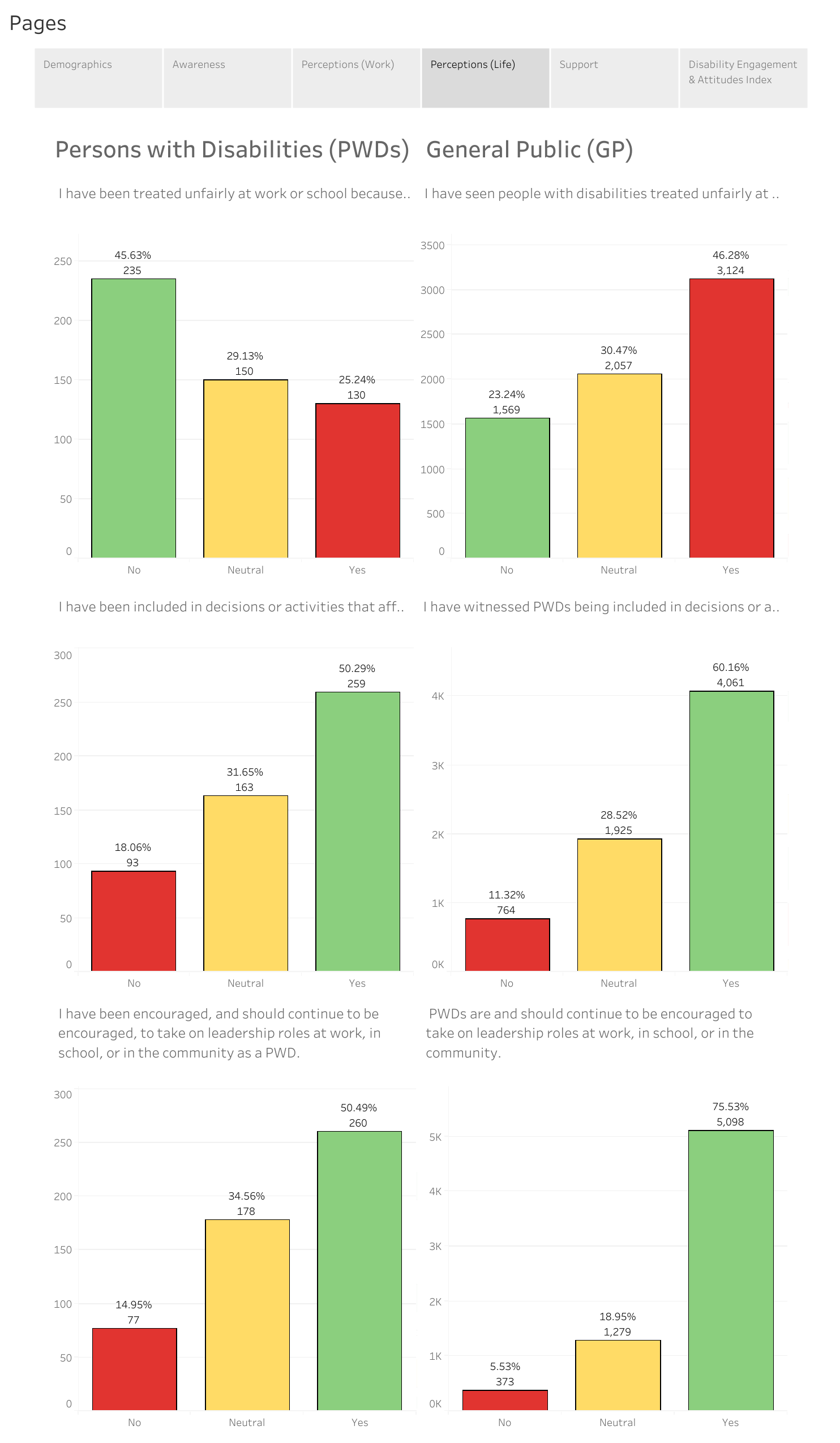
In other words: inclusion does not happen by sentiment, it happens by structure.
The study offered key recommendations to build systems that make inclusion possible:
#1 A National “Inclusion Gateway”, a unified digital platform that centralises:
job opportunities
training programmes
grants and support schemes
The platform should be designed with and tested by PWD communities, it would include SMS/WhatsApp nudges to guide users step-by-step.
#2 Incentivise Employers Beyond Goodwill, to shift from intention to action, the report suggests:
tax perks for inclusive hiring
national recognition for businesses closing accessibility gaps
practical tools for employers to make accommodations
Making inclusion measurable, and rewardable, could turn sporadic goodwill into sustained progress.
Samuel Choo, Executive Director, SAVH, said the findings offer “concrete statistical proof” of what the community has long observed, that accessibility remains the biggest hurdle. “Goodwill is there, but awareness is not,” he said. “Without both, inclusion stalls.”
Josh Lye, Executive Director, SADeaf, echoed adding, “Empathy must be matched with infrastructure. Only then can good intentions lead to real opportunity.”
What this study reveals is not a lack of empathy, Singaporeans have that in abundance. The real challenge lies in the systems: digital access that closes doors before hiring begins, support schemes that remain invisible, and workplaces not yet built for everyone to thrive.
The pathway from empathy to employment may be steep, but it’s also unmistakably clear. This research simply turns up the volume on what PWDs have long been saying: inclusion is not just a promise, it needs infrastructure, visibility, and action.
Author
Loading...