








Economy Policy
Cuts in Indonesian gas subsidies could trigger layoffs, says ministry





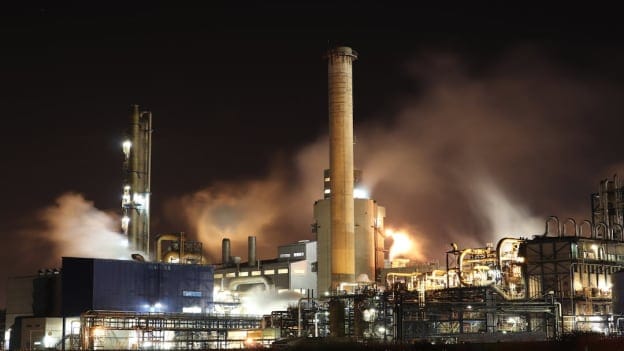
Indonesia's industry ministry warns that disruptions to subsidized natural gas supplies could result to job cuts across a wide range of industries.
Indonesia’s industry ministry is warning that further cuts in government subsidies on natural gas and supply disruptions could lead to mass layoffs and instability.
Ministry of Industry spokesperson Febri Febri Hendri Antoni Arief said on Thursday that the agency has received numerous complaints from businesses reliant on the government’s fixed natural gas price (HGBT) program.
Febri said Indonesia’s manufacturing sector is being squeezed by steep surcharges like those from state-owned gas distributor PGN, which has a tariff of $15.77 per mmbtu. Businesses in energy-intensive areas such as ceramics, glass, steel, fertiliser, and petrochemicals are especially affected.
“Energy costs make up a significant share of production expenses in these industries. Any increase in prices or cuts in HGBT supply erode margins, lower factory utilisation and, in the long run, deter investment, especially in energy-intensive manufacturing,” Febri said in a statement to the media.
He noted that such disruptions have been a recurring problem despite a presidential decree that fixes the prices and ensures continuity of supply.
“No party or institution should attempt to override the President’s order by raising the price above $6.5 or restricting the supply,” Febri said.
Indonesia’s industrial gas demand is estimated at 2,700 million standard cubic feet per day (mmscfd), but the available HGBT supply is only 1,600 mmscfd. Only half of this amount, which is roughly 900 mmscfd, is allocated to state-owned enterprise (SOE) consumers.
Febri noted that SOEs, such as electric power distributor PLN and fertilizer manufacturer Pupuk Indonesia, have been the largest beneficiaries of natural gas subsidies under the HGBT program.
On the other hand, Febri said that private manufacturers, which serve as ‘the backbone of the national industrial base’, are treated differently and create an imbalance ‘undermining the business climate’.
“If the private sector’s share continues to shrink, the consequences will be immediate: reduced capacity, lower efficiency, and potentially mass layoffs,” he added.
The ministry said the industries where workers are most at risk of layoffs include fertiliser (10,420), petrochemicals (23,006), oleochemicals (12,288), steel (31,434), ceramics (43,058), glass (12,928), and rubber gloves (1,660).
“These figures are a serious alarm. Every gas policy must weigh its impact on industrial sustainability and the livelihoods it supports,” Febri said.
Recent government data has also revealed that several sectors are already experiencing lower utilisation due to constraints in natural gas supplies. Indonesia’s ceramics sector, for instance, averaged between 70% to 71% utilisation in the first half of 2025.
“If supply disruptions persist, even critical sectors like fertiliser, which supports President Prabowo’s food self-sufficiency programme, could see output decline,” Febri said.
Author
Loading...