








Economy Policy
Indonesia confronts AI Bias to create fair, inclusive and decent workplaces






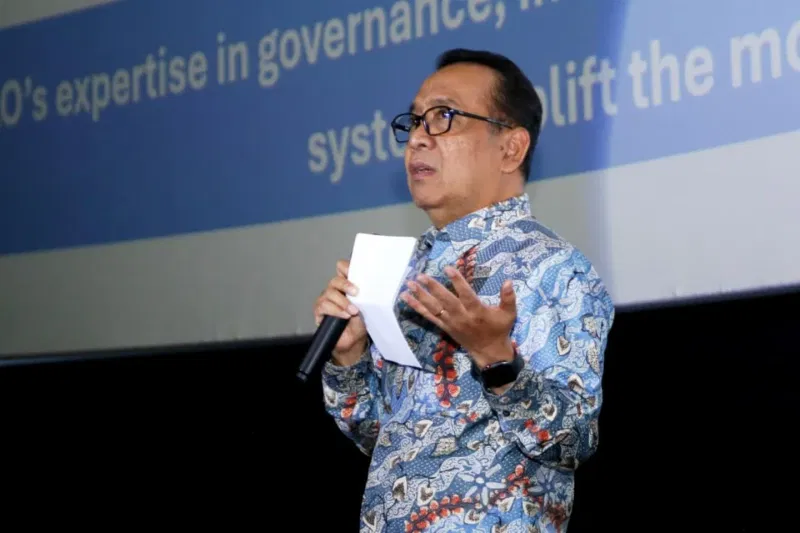
ILO called on employers and industry bodies to ensure AI deployment does not compromise equal opportunity or workers’ rights, and underscored urgency of building AI systems that expand, rather than restrict, access to decent work, fair recruitment and equitable upskilling opportunities.
The rapid advancements in artificial intelligence are reshaping Indonesia’s workplaces, but global labour experts warn the technology could deepen existing inequalities unless its deployment is guided by strong safeguards and ethical governance.
At a policy dialogue hosted by the International Labour Organization (ILO) in Jakarta on 20 November, senior government officials, labour leaders and industry executives examined how AI is influencing hiring practices, performance management, and workers’ rights, and the risks that come with it.
The forum discussed the ongoing critical concerns for Indonesia, where gender gaps in the workforce remain pronounced. According to the 2025 National Labour Force Survey, women’s labour force participation stands at just 56.42%, far behind men at 84.66%. With AI systems increasingly used in recruitment and promotion, experts say these disparities could be inadvertently “baked into” algorithms.
“AI decisions are only as fair as the data behind them,” the ILO noted, pointing to cases in which automated recruitment engines, trained on years of male-dominated resume data, showed clear preference for male candidates.
Coordinating Minister for Human Development and Culture Pratikno said Indonesia is committed to advancing AI responsibly.
A new government task force, he said, is focused on ensuring emerging technologies remain human-centred. “As AI becomes more embedded in recruitment, profiling and promotion, we must ensure that it generates equitable outcomes,” he added. “We appreciate the ILO’s platform for addressing both the opportunities and the challenges ahead.”
Sharing findings from the ILO’s latest global research, Senior Researcher Pawel Gmyrek said one in four workers worldwide are in jobs exposed to generative AI. Around 3.3% fall into the category of highest exposure, with women (4.7%) far more affected than men (2.4%).
Gmyrek warned that the misuse of AI is already emerging in workplaces globally, including intrusive worker monitoring, unsanctioned data collection, surveillance of internal communications, and algorithmic dismissals based on unclear performance metrics.
“These practices threaten human dignity and undermine fundamental labour protections,” he said.
ILO Country Director for Indonesia and Timor-Leste Simrin Singh stressed that Indonesia’s future of work will depend on collaboration across government, business and workers’ organizations.
“AI can transform HR systems and make recruitment and evaluation more transparent and inclusive,” Singh said. “Used responsibly, it can reduce bias and help build fairer, people-centric workplaces.”
The session panellists included – Doni J.A. Saktiawan of Astra Group, Marizca Tambunan of SHL Indonesia, and Zacky Zainal Husein of Assegaf Hamzah & Partners, echoing that while AI offers significant opportunities for streamlining workforce development and decision-making, it also raises profound governance challenges.
Together they focused on the need for stronger AI oversight frameworks that uphold equality, protect worker data, and ensure systems are transparent and auditable.
Worker representatives Kun Wardana Abyoto from ASPIRASI and Yunus Triyonggo from the Indonesia Competent Advocates Association emphasized that many Indonesian workers are unprepared for the speed of digital transformation.
They called on employers and industry bodies to ensure AI deployment does not compromise equal opportunity or workers’ rights.
More than 100 participants from government, business, civil society and labour unions attended the dialogue, underscoring the urgency of building AI systems that expand, rather than restrict, access to decent work, fair recruitment and equitable upskilling opportunities.
The forum forms part of the ILO’s broader efforts under the RealGains Project, funded by the Government of Canada, which focuses on eliminating gender-based discrimination and child labour during economic restructuring. It is also supported by the UN’s Global Accelerator on Jobs and Social
As Indonesia accelerates its digital transformation, the message from the forum was clear: AI must be designed to serve people, not the other way around.
Author
Loading...