








Economy Policy
Indonesia passes landmark law protecting 4 million domestic workers after 20-year struggle






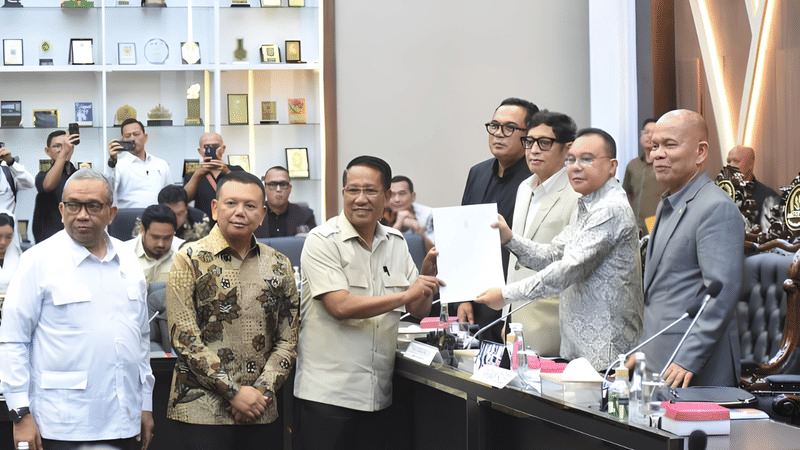
Indonesia’s new domestic workers law seeks to end years of exclusion by guaranteeing fair wages, regulated working hours, social security, and formal recognition as workers with fundamental rights.
Indonesia has formally enacted a long-awaited law to protect domestic workers, marking a historic milestone after more than two decades of advocacy by labour unions, civil society groups, and worker organisations.
The Domestic Workers Protection Law (UU PPRT) was approved by the House of Representatives (DPR) following a plenary session on April 21, in what labour groups describe as both a victory and a turning point for millions of workers, most of them women, who have long operated in legal grey areas.
Calling the moment symbolic, the Confederation of Indonesian Trade Unions (KSBSI) linked the passage to Kartini Day, which honors Indonesia’s pioneering women’s rights figure R.A. Kartini.
“UU PPRT is a victory,” the group said in a statement. “However, it is also a reminder that domestic work, which has long been underestimated, is a foundation of the economy that can no longer be ignored. It is now time for the state to be truly present in protecting, recognising, and honoring domestic workers as an inseparable part of Indonesia’s working class.”
For years, domestic workers in Indonesia were excluded from formal labour protections, lacking guarantees on fair wages, working hours, social security, and access to grievance mechanisms. The new law aims to correct those structural gaps by formally recognising domestic workers as employees entitled to fundamental rights.
“This is not merely a legislative product, but the result of collective pressure from domestic workers, trade unions, and civil society movements who have long fought invisibility and injustice in domestic labour relations,” KSBSI said.
Labour leaders emphasized that the law establishes a fundamental principle: all work has value, and all workers deserve equal protection.
“There must be no discrimination simply because the workplace is within the domestic sphere. The employment relationship between domestic workers and employers remains an industrial relationship that must adhere to principles of justice, transparency, and accountability,” said Elly Rosita Silaban.
However, she cautioned that the real test lies ahead in implementation. “The struggle does not end with ratification. The challenge now is ensuring effective enforcement. The state must immediately draft strong implementing regulations, ensure access to social security, and build oversight systems that prevent violations behind closed doors. Without adequate supervision, the law risks becoming a symbol without force,” she said.
Unions also stressed the importance of guaranteeing freedom of association for domestic workers, arguing that collective organisation is key to strengthening workers’ bargaining power in a traditionally isolated sector.
“We appreciate the DPR and all parties who contributed to the birth of this law. However, legal recognition must be accompanied by political will and budgetary support. Without that, protection will remain a promise on paper,” Elly added.
International organisations welcomed the move as a major step forward. Simrin Singh, Country Director of the International Labour Organisation (ILO) in Indonesia, described the passage as the culmination of over 20 years of sustained advocacy.
“So delighted to share that the long awaited, 20+ years, Decent Work for Domestic Workers Bill was passed by the Indonesia Parliament this morning!!!” she said. “Tremendous thanks and recognition for the tireless efforts of Domestic Workers Organisations… trade unions and government champions… and my ILO colleagues… that sustained the momentum to make this a reality.”
The ILO Asia-Pacific office echoed the sentiment, noting that such reforms require long-term commitment. “These types of changes don’t happen overnight but through sustained engagement, dialogue, and effort from many stakeholders,” it said in a statement.
Indonesia’s National Commission on Human Rights (Komnas HAM) also hailed the law as a strategic step toward strengthening human rights protections for a vulnerable and historically marginalized group.
“This ratification marks the state’s commitment to fulfilling its constitutional obligations, especially in protecting a vulnerable group that has long been marginalized,” said Komnas HAM chief Anis Hidayah.
According to Komnas HAM, Indonesia has an estimated 4.2 million domestic workers, many of whom have faced job insecurity, poor working conditions, and repeated human rights violations. In 2024 alone, the agency recorded at least 47 complaints, including cases of physical, psychological, and sexual violence, wage discrimination, exploitation, forced labour, and modern slavery.
The newly enacted law introduces several key provisions, including recognition of domestic workers as formal employees, access to social security, protection from violence, a minimum working age of 18, and clear employment agreements. It also mandates monitoring systems, dispute resolution mechanisms, and skills development programs.
Parliament Speaker Puan Maharani presided over the ratification, which followed the resolution of hundreds of legislative issues. Lawmakers unanimously approved the bill before it was formally passed into law.
The legislation is expected to reshape labour relations in the domestic sector by promoting more equitable and humane working conditions while addressing longstanding discrimination. Yet, stakeholders agree that the passage of the law is only the beginning.
Author
Loading...