








Economy Policy
Indonesia launches health labour market analysis to tackle workforce shortages






Only 65% of Indonesia’s primary healthcare centres meet minimum staffing requirements, and the country could face a shortage of around 65,000 medical specialists by 2032 as healthcare demand rises.
Indonesia is stepping up efforts to tackle long-standing shortages and imbalances in its health workforce by launching a comprehensive labour market analysis aimed at shaping more evidence-based policies and improving access to healthcare services nationwide.
According to the World Health Organization (WHO), significant gaps remain across the country’s healthcare system. Currently, only 78.1% of public hospitals have the full complement of seven essential medical specialists—radiology, anaesthesiology, clinical pathology, surgery, paediatrics, obstetrics and gynaecology, and internal medicine, resulting in uneven access to specialised care across regions.
Workforce challenges are also evident at the primary care level. Only 65% of Indonesia’s primary healthcare centres (puskesmas) meet the minimum staffing requirement of nine essential health worker categories, including doctors, dentists, nurses, midwives, pharmacists and laboratory technologists.
The shortages are expected to intensify in the coming years. By 2032, Indonesia’s Ministry of Health of Indonesia estimates the country could face a shortfall of around 65,000 medical specialists, driven by population growth and rising disease burdens.
To address these challenges, the Ministry, with support from WHO, is advancing a Health Labour Market Analysis (HLMA) to better understand how healthcare workers are trained, recruited, distributed and retained across the system. The analysis will provide policymakers with a clearer picture of the dynamics shaping the healthcare workforce.
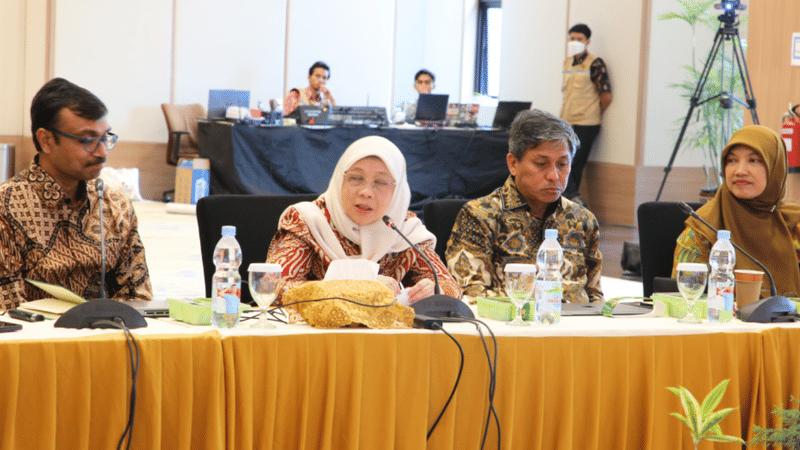
The initiative began with a multi-stakeholder workshop in December 2025, followed by an official kick-off meeting that brought together directors from the Directorate General of Health Workforce and technical teams. Participants reviewed priority workforce issues, refined policy questions and agreed on data requirements and timelines for the analysis, which will run from January to June 2026.
Under the initiative, the Ministry of Health will lead quantitative data collection covering key areas such as education and training capacity, workforce distribution, recruitment and vacancies, attrition and migration trends, remuneration levels and service delivery across hospitals and primary care facilities.
WHO will provide technical support during data mapping, validation and preliminary analysis to help identify emerging trends and inform policy discussions.
Dr. Yuli Farianti, Director General of Health Workforce at the Ministry of Health, said the analysis would serve as a critical foundation for future workforce planning.
“The analysis is a crucial foundation for future health workforce policies. I fully support this process and encourage all stakeholders to actively contribute and ensure that the data used are of high quality, so that the resulting policy analysis is credible and accountable for strengthening Indonesia’s health workforce,” she said.
Officials say the labour market analysis will help policymakers design more targeted strategies to close workforce gaps and improve the distribution of health professionals across the country. Over time, the effort is expected to strengthen Indonesia’s health system and ensure more reliable access to quality care for communities nationwide.
Author
Loading...