








Economy Policy
Indonesia sets eight industrial priorities for 2027 amid push to strengthen manufacturing






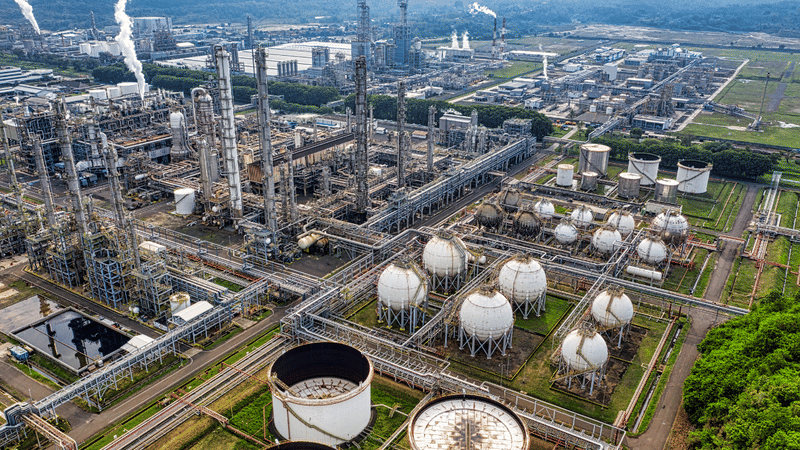
The priorities align with the government’s 2027 Draft Government Work Plan, which targets economic growth of 5.8% and manufacturing growth of 5.86%.
Indonesia’s Industry Ministry has outlined eight priority programmes for 2027 aimed at strengthening the country’s manufacturing sector, improving productivity and competitiveness, and accelerating industrial transformation.
Industry Minister Agus Gumiwang Kartasasmita announced the priorities during a working meeting with House of Representatives Commission VII in Jakarta on August 31, saying the programmes are designed to reinforce the foundations of the national industrial sector.
The priorities align with the government’s 2027 Draft Government Work Plan, which targets economic growth of 5.8% and manufacturing growth of 5.86%. The plan also aims to increase manufacturing’s contribution to Indonesia’s gross domestic product to 21.5%.
The eight priorities cover industrial workforce development, strengthening small and medium industries as part of domestic supply chains, and expanding downstream processing of natural resources alongside the development of priority industries.
The ministry also plans to drive productivity through innovation and technology, increase the use of domestically produced goods, develop Indonesia’s halal industry, accelerate exports of industrial services and promote green industry.
Industrial agglomeration through the development of industrial estates is another key priority.
“These eight programmes are instruments to ensure that the agendas of strengthening the domestic market, increasing productivity, downstream processing, industrial transformation, and expanding markets, as directed in the 2027 Government Work Plan, can continue,” Agus said.
The workforce component of the agenda comes as Indonesia seeks to build the capabilities needed to support a more productive and technology-driven manufacturing sector. Alongside workforce development, the ministry is placing greater emphasis on helping small and medium industries integrate into supply chains, potentially enabling smaller manufacturers to benefit from the country’s broader industrial expansion.
Technology and innovation are also positioned as key drivers of the ministry’s productivity agenda, while the focus on downstream processing reflects the government’s continued push to increase the domestic value generated from Indonesia’s natural resources rather than relying primarily on exports of raw materials.
However, funding could pose a challenge to the implementation of the 2027 agenda.
The Industry Ministry’s 2027 budget ceiling has been set at Rp2.01 trillion, representing a reduction of Rp488.16 billion, or 19.51%, from its initial 2026 allocation.
In response, the ministry has proposed an additional Rp1.72 trillion to support implementation of its priority programmes.
The requested funding would be directed towards productivity and competitiveness initiatives, downstream processing, small and medium industry development, industrial workforce development and broader national industrial transformation.
The competing demands of industrial expansion and tighter public spending could determine how quickly Indonesia is able to implement its manufacturing agenda in 2027. For employers and workers, the emphasis on skills, technology, productivity and green industry is likely to remain central as the country seeks to make manufacturing a stronger contributor to economic growth.
Topics
Author
Loading...