








Economy Policy
Indonesia’s Destry pledges to support job creation if approved as central bank governor






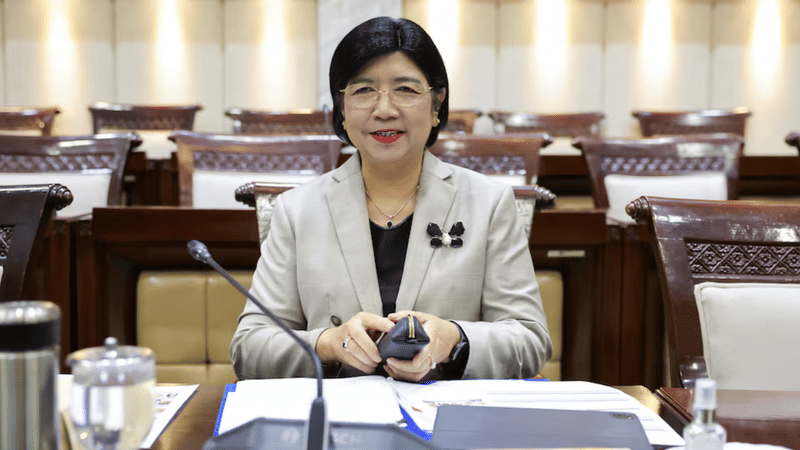
If parliament approves Destry’s nomination, she will take over permanently for a full five-year term, putting her at the centre of Indonesia’s monetary policy.
Indonesia’s central bank governor candidate Destry Damayanti will serve a full five-year term if parliament approves her nomination, according to the latest update on the leadership transition at Bank Indonesia.
Destry, who is currently serving as acting governor, is the sole candidate nominated for the position. She is undergoing a parliamentary ‘fit and proper’ hearing and could become the first woman to lead Bank Indonesia.
During the hearing on August 26, Destry pledged to support economic growth and job creation while maintaining financial stability. She said monetary policy would be managed pre-emptively to safeguard the stability of the Indonesian rupiah, while continuing to support economic activity.
The nomination follows the unexpected resignation of Perry Warjiyo, who stepped down as Bank Indonesia governor in July citing personal reasons. Warjiyo had served as governor since 2018 and was reappointed for a second five-year term in 2023.
President Prabowo Subianto accepted Warjiyo’s resignation and appointed Destry, then senior deputy governor, as interim chief while the government began the process of selecting a permanent successor.
Growth agenda puts central bank in focus
Destry’s nomination comes as Bank Indonesia faces the challenge of supporting President Prabowo’s ambitious economic growth agenda while managing inflation, financial stability and pressure on the rupiah.
The rupiah reached a record low against the US dollar in June, adding to pressure on policymakers to protect the currency while supporting domestic economic activity.
The central bank’s independence has also become a growing concern. Legislation passed in July expanded Bank Indonesia’s role in supporting economic growth while giving lawmakers greater influence over independent financial regulators, raising questions about the extent of the central bank’s operational independence.
The leadership transition initially prompted a cautious response from financial markets. The rupiah weakened by as much as 0.36% to 18,000 against the US dollar following news of Warjiyo’s resignation, while the benchmark Jakarta Composite Index traded between gains and losses.
Analysts said uncertainty over the succession could weigh on investor confidence.
“What must now be anticipated after Perry's resignation is the weakening of Bank Indonesia's independence,” said Bhima Yudhistira Adhinegara, Executive Director of the Center of Economic and Law Studies.
“Restoring investor confidence will certainly not be easy, especially since the direction of monetary policy is under executive control,” he added.
The banking sector also moved to reassure investors following Warjiyo’s resignation.
If parliament approves Destry’s nomination, she will take over permanently for a full five-year term, putting her at the centre of Indonesia’s monetary policy at a critical point for the country’s economic strategy.
Author
Loading...