








Economy Policy
Philippines government advises private employers to suspend work during severe weather



|
Updated on


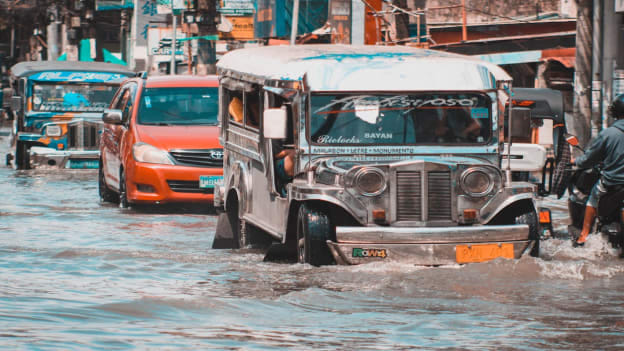
As relentless monsoon rains batter the Philippines, the Department of Labor and Employment (DOLE) reminds private employers they can suspend work for safety.
The Philippines’ labour ministry has issued an advisory to private employers this week, reminding them they may suspend work during weather disturbances as heavy monsoon rains continue to pummel the country.
Referring to the Labour Advisory No. 17-2022, the Department of Labour and Employment (DOLE) said in a Facebook post on Monday that employers can exercise management prerogative and, in coordination with their health and safety committee, safety officer, or another authorised company officer, suspend operations to ensure the health and safety of employees in light of hazardous weather.
DOLE also reiterated guidelines on wages for employees who will and will not report to work:
The agency further emphasised that workers who fail or refuse to work due to imminent danger from weather disturbances or similar events must not face administrative sanctions.
Malacañang has also ordered work suspension in government offices in Metro Manila and other parts of the country. Government workers assigned to health services, preparedness and response, and other essential duties are instructed to report to work, while non-essential personnel may opt for alternate work arrangements.
The Philippines has been under intense rainfall as tropical storms Co-May and Francisco enhance the southwest monsoon. On Thursday morning, the Philippine Atmospheric, Geophysical and Astronomical Services Administration (PAGASA), the nation’s top weather tracking agency, warned that several areas of Luzon may also experience storm-force winds and storm surge in the next few days due to Co-May gaining strength as it crosses the northern part of the island.
In a report by the National Disaster Risk Reduction and Management Council (NDRRMC), more than 2.7 million Filipinos have been affected by flooding and landslides due to continuous heavy rain, which has also caused an estimated $67 million in damage to crops and infrastructure.
Averaging 20 tropical storms each year, more typhoons enter the Philippine Area of Responsibility (PAR) than any other region worldwide, according to PAGASA. The peak of the typhoon season is between July and October, when nearly 70% of storms develop.
Topics
Author
Loading...