








Economy Policy
Philippines labour chief Tolentino outlines wage, worker protection priorities to Consular Corps






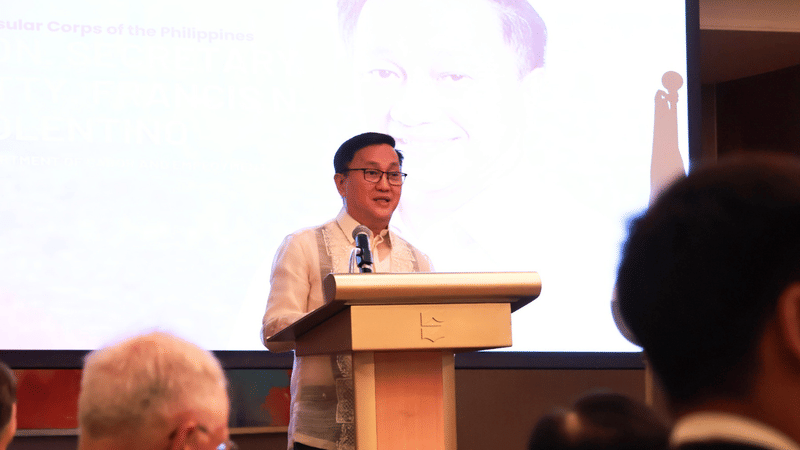
Tolentino also highlighted a proposal to establish a Labor Attorneys’ Office, which would seek to make legal assistance more accessible to workers and strengthen the protection of labour rights.
Philippines Labor Secretary Francis N. Tolentino has outlined the government’s labour priorities, including wage policy, worker protection and access to legal assistance, as the Department of Labor and Employment (DOLE) seeks to strengthen international cooperation on employment issues.
Speaking at the 7th General Membership Monthly Meeting of the Consular Corps of the Philippines on August 5, Tolentino highlighted the government’s approach to addressing labour policy issues while reinforcing its commitment to workers’ rights and inclusive economic growth.
A key focus of the discussion was the recent wage issues in the National Capital Region (NCR). Tolentino said the government respects judicial processes while continuing to pursue fair and equitable wages through the country’s established tripartite wage-setting mechanism.
“We have democracy in play. We listen to the voices of the workers. This coming Friday, I’ll be convening an emergency meeting of workers and employers, including the Employers Confederation of the Philippines, because in our system, it is supposed to be tripartite,” Tolentino said.
During the open forum, the labour secretary explained the country’s wage-setting process and the role of the Regional Tripartite Wages and Productivity Boards (RTWPBs). The boards assess socioeconomic conditions and consult representatives from labour, business and government before issuing wage orders.
Tolentino also highlighted a proposal to establish a Labor Attorneys’ Office, which would seek to make legal assistance more accessible to workers and strengthen the protection of labour rights.
The proposed initiative forms part of the department’s broader focus on strengthening the rule of law, social dialogue and due process in employment relations.
“This has been the instruction given to me by the President on day 1, ensure that we institutionalize, sustain the dignity of labor,” Tolentino said, referring to President Ferdinand R. Marcos Jr.’s directive when he assumed office in May.
The secretary’s engagement with the Consular Corps comes as the Philippine government seeks to deepen international partnerships on labour and employment concerns. DOLE said the diplomatic and consular community has an important role in promoting decent work, protecting workers’ rights and supporting inclusive economic growth.
The meeting also provided an opportunity for the labour department to brief foreign representatives on developments in Philippine labour policy and the mechanisms through which the government, employers and workers participate in employment-related decision-making.
Author
Loading...