








Economy Policy
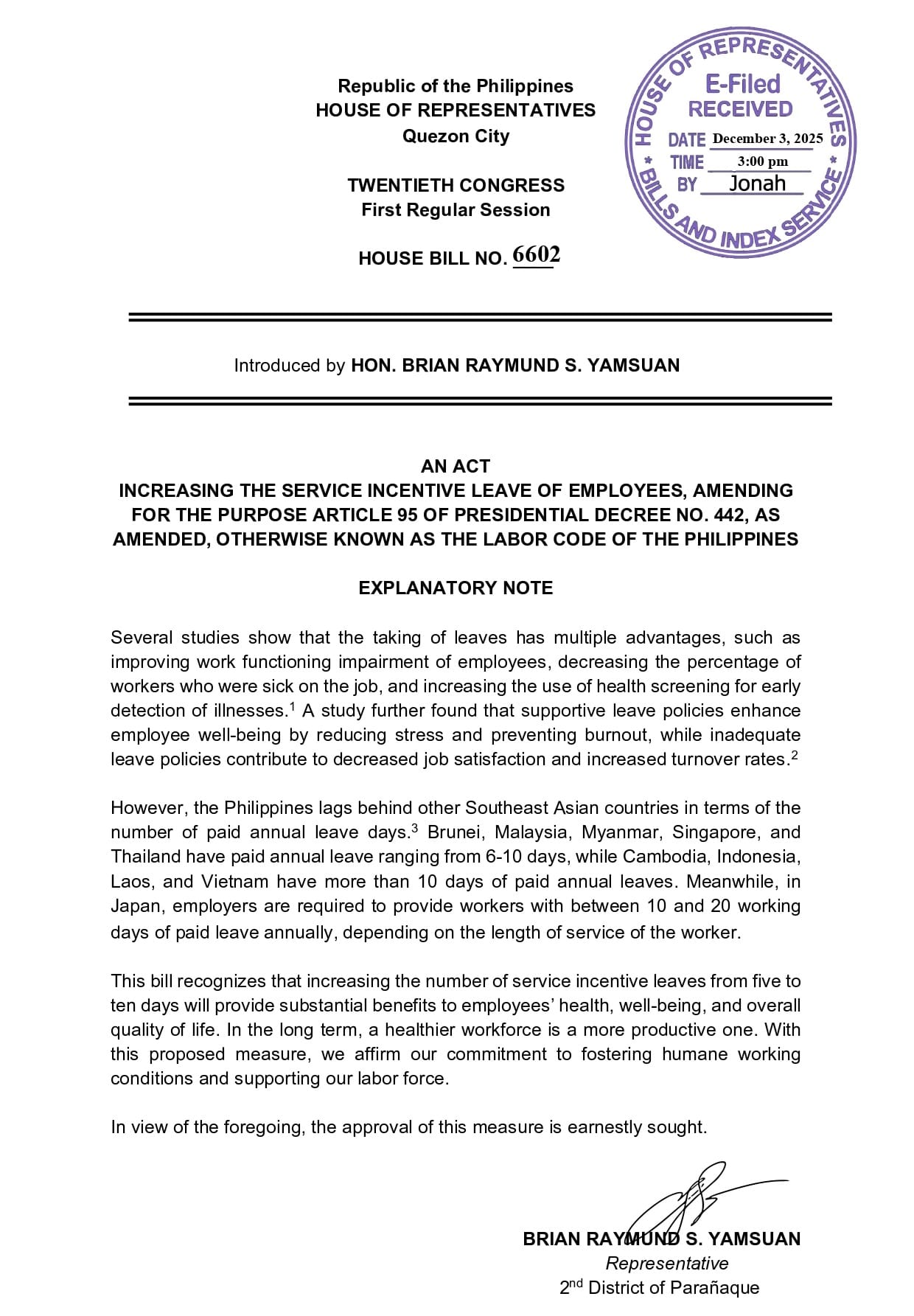
Philippines moves to double paid leave from 5 to 10 days







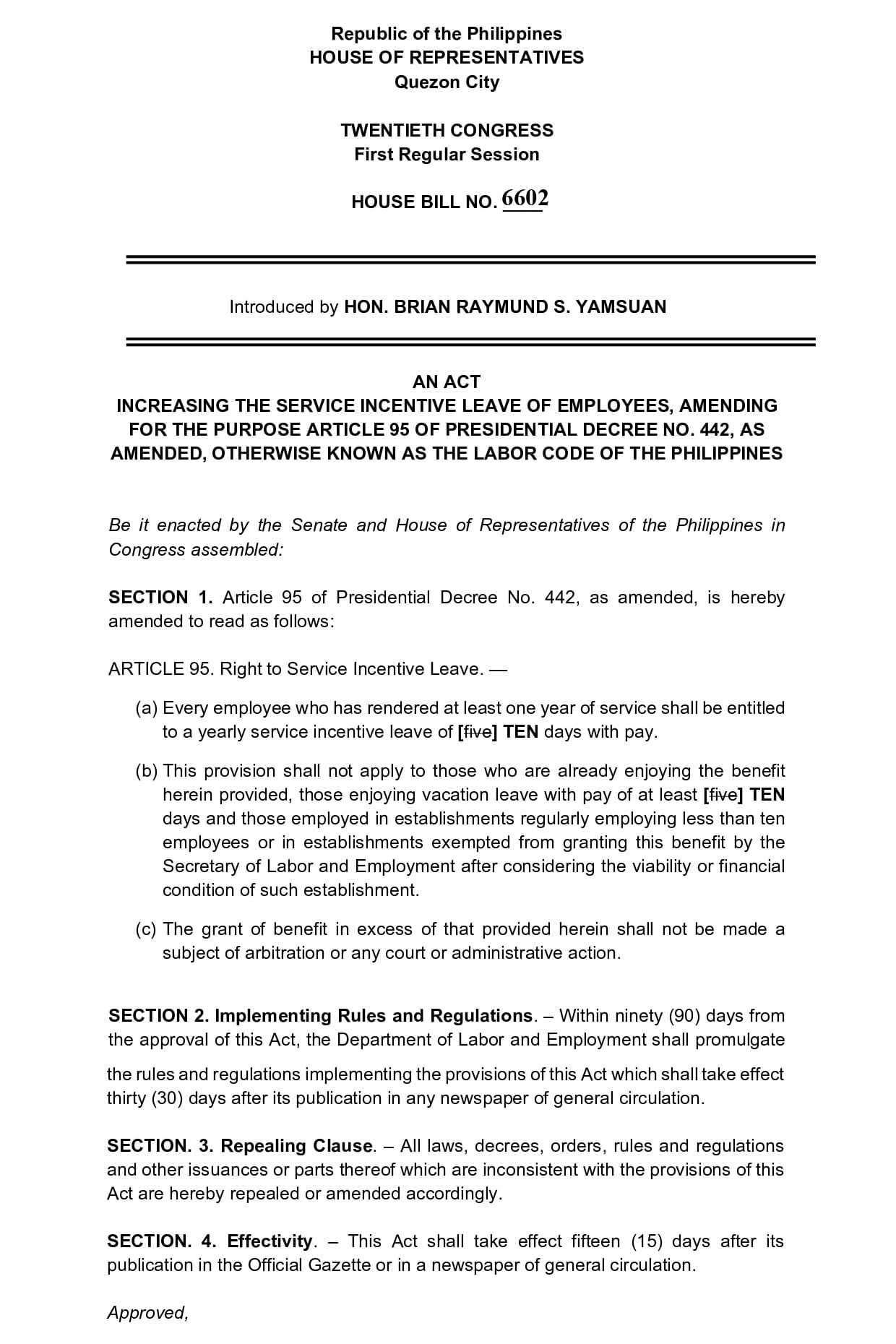
The bill will not apply to workers already receiving at least 10 days of paid leave, employees in establishments with fewer than 10 workers, or firms that have secured exemptions from the Labour Secretary due to financial constraints.
The Philippines could soon see a significant shift in workplace benefits, as lawmakers push to double the country’s minimum mandated paid leave, an effort aimed at closing the gap with regional peers and improving employee well-being.
A new bill introduced by Parañaque 2nd District Representative Brian Yamsuan proposes increasing the annual service incentive leave from five days to 10 days. The measure seeks to amend Article 95 of Labor Code of the Philippines, which currently sets the baseline for paid leave benefits in the country.
Under the proposal, employees who have completed at least one year of service would be entitled to 10 days of paid leave annually, doubling the existing minimum.
However, the bill includes carve-outs. It will not apply to workers already receiving at least 10 days of paid leave, employees in establishments with fewer than 10 workers, or firms that have secured exemptions from the Labour Secretary due to financial constraints.
Playing catch-up in Southeast Asia
The proposed reform comes amid growing recognition that the Philippines lags behind its Southeast Asian neighbours on statutory leave benefits.
Across the region, minimum paid leave ranges are steadily higher. Countries such as Singapore, Malaysia, Thailand, Brunei, and Myanmar typically offer between six and 10 days, while Vietnam, Indonesia, Cambodia, and Laos exceed the 10-day mark.
In his explanatory note, Yamsuan highlighted that the Philippines’ current five-day mandate leaves it trailing behind most of the region. “Supportive leave policies enhance employee well-being by reducing stress and preventing burnout, while inadequate leave policies contribute to decreased job satisfaction and increased turnover rates,” the note stated, citing multiple studies.
Productivity, not just policy
Beyond regional benchmarking, the bill frames paid leave as an economic and public health lever.
Research cited in the proposal links adequate leave to improved employee functioning, reduced presenteeism, and higher uptake of preventive healthcare. The broader argument is clear: better-rested employees are not just healthier, they are more productive.
“The measure recognises that increasing service incentive leave will provide substantial benefits to employees’ health, well-being, and overall quality of life,” Yamsuan said. “In the long term, a healthier workforce is a more productive one.”
Balancing worker welfare and business realities
While the proposal signals a pro-worker shift, it also reflects the balancing act policymakers face. By excluding small businesses and financially distressed firms, the bill attempts to cushion potential cost pressures, particularly for micro and small enterprises that form a large part of the Philippine economy.
Still, if passed, the reform would mark one of the most notable updates to the country’s leave policy in years, bringing it closer in line with regional standards and reinforcing a broader trend across Asia: treating employee well-being as a strategic priority, not just a compliance requirement.
As the bill moves through legislative channels, it is likely to spark debate not just on labour rights, but on how nations compete for talent in an increasingly mobile and expectations-driven workforce.
Author
Loading...