








Economy Policy
Philippines new labor chief adopts open-door policy for workers, unions and employers






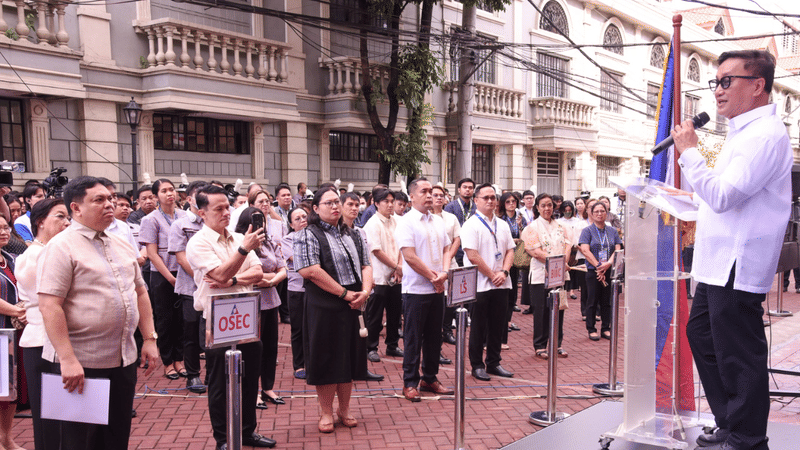
The newly appointed Labor Secretary said the department would regularly invite representatives from sectors served by the agency to share their perspectives and concerns directly with government officials.
The Philippines’ newly appointed Labor Secretary Francis N. Tolentino has announced plans to open the Department of Labor and Employment’s (DOLE) weekly flag ceremonies to labor leaders, employer groups and policymakers, in a move aimed at strengthening dialogue across the country’s labor and employment sectors.
Speaking during his first flag-raising ceremony at the DOLE Central Office, Tolentino said the department would regularly invite representatives from sectors served by the agency to share their perspectives and concerns directly with government officials.
The initiative aligns with the administration of President Ferdinand Marcos Jr., which has emphasised worker welfare, industrial peace and stronger labor sector engagement.
“We need to get their voices heard as well… a flag ceremony is not just a weekly ritual, a flag ceremony is a renewal and commitment of what we should do as government servants,” Tolentino said.
According to the labor chief, invitations will extend to lawmakers, labor groups, employer organisations and federations representing domestic workers to ensure broader representation in policy discussions.
Tolentino said he intends to position DOLE as one of the country’s top-performing government departments while improving both employee welfare and the public image of the institution.
The labor secretary also clarified the implementation of a memorandum issued on May 28, 2026, which mandates the return to five-day workweek for selected frontline DOLE offices and personnel.
The directive will apply specifically to the Office of the Secretary, the National Conciliation and Mediation Board (NCMB), the National Labor Relations Commission (NLRC), labor inspectors conducting on-site labor standards inspections, and personnel involved in the TUPAD Brigada Eskwela Program.
Tolentino said full on-site operations are necessary for offices handling dispute resolution, labor inspections and community-based social protection programmes, adding that these services require immediate and uninterrupted public engagement.
The developments come as the Philippines continues to strengthen labor governance and improve coordination between government, employers and worker groups amid evolving workforce and economic challenges.
Topics
Author
Loading...