








Economy Policy
Philippines pilots green construction training to build climate-ready workforce






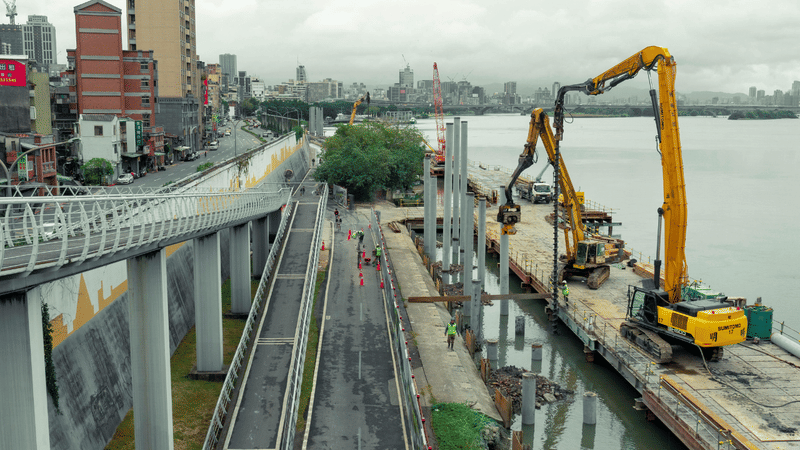
The training for green construction skills focuses on maximizing natural resources, reducing energy consumption, and using eco-friendly materials to prepare workers for sustainable and climate-resilient jobs.
The Philippines has launched a new initiative to equip young workers with green construction skills, aiming to prepare the country's workforce for a more sustainable and climate-resilient future amid growing environmental challenges.
The programme, led by the International Labour Organization (ILO) through the ILO-Korea Partnership Programme, has trained a core group of master trainers who will champion foundational competencies in sustainable building materials, renewable energy, resource efficiency, and climate-resilient design across the construction sector.
The initiative comes as the Philippines faces increasing threats from climate change, including more frequent typhoons and earthquakes, while the construction industry continues to serve as a major source of employment, accounting for nearly 10% of the national workforce.
According to the ILO’s 2025 baseline study on skills in the Philippine construction sector, demand for green construction skills remains limited due to the slow adoption of sustainable building practices, despite policies such as the Philippine Green Building Code. The study also found that most existing training programmes focus on advanced green building concepts, leaving a gap in practical and entry-level green skills development.
To address these challenges, experts from construction companies, labour unions, environmental organisations, academia, and government agencies participated in the Introduction to Green Construction Skills (IGCS) master training programme held from June 2 to 5, 2026.
“The transition must be worker-centred. All workers, from labourers and skilled workers to equipment operators and supervisors, must have access to training opportunities that improve their access to green jobs,” said Santiago Nolla, Secretary-General of the National Union of Builders and Construction Workers (NUBCW).
The newly certified trainers are expected to promote a standardized set of green competencies that can be integrated into construction-related training programmes nationwide. Pilot sessions are scheduled for July, with a broader rollout planned across various regions beginning in August.
Joshua Miguel Lopez, National Project Coordinator of the ILO-Korea Partnership Programme, said the training translates sustainability into practical workplace capabilities.
“It is crucial to be mahusay or adept at using green building techniques, masinop or thorough in the use of energy and material resources, and ligtas, ensuring safe and secure construction for workers and building occupants,” Lopez said.
Developed in collaboration with experts from Korea Polytechnic University, the IGCS course introduces workers to core green building concepts and techniques, including carbon reduction, sustainable materials, renewable energy, passive and active building design, and green building certifications.
The programme encourages construction professionals to adopt practices that maximize natural resources such as sunlight and wind, reduce energy consumption, and utilize environmentally friendly materials suited to local conditions.
“Green construction is a way of rethinking building performance across its full life cycle,” said Engineer Michael Gayona, Center Coordinator of the Technical Education and Skills Development Authority (TESDA) Green Technology Center. “The challenge now is not only how to teach these concepts, but how to contextualise them within the Philippine construction sector.”
Industry leaders noted that the skills being promoted have applications beyond construction and can support sustainability efforts across sectors including engineering, transport, energy, and business operations.
“These foundational skills are relevant across a wide range of industries, from construction and engineering to energy, transport, and even business operations,” said Engineer Ronaldo Elepano Jr., Immediate Past President of the Philippine Constructors Association (PCA).
Author
Loading...