








Economy Policy
Philippines pushes for future-ready maritime workforce as blue economy expands






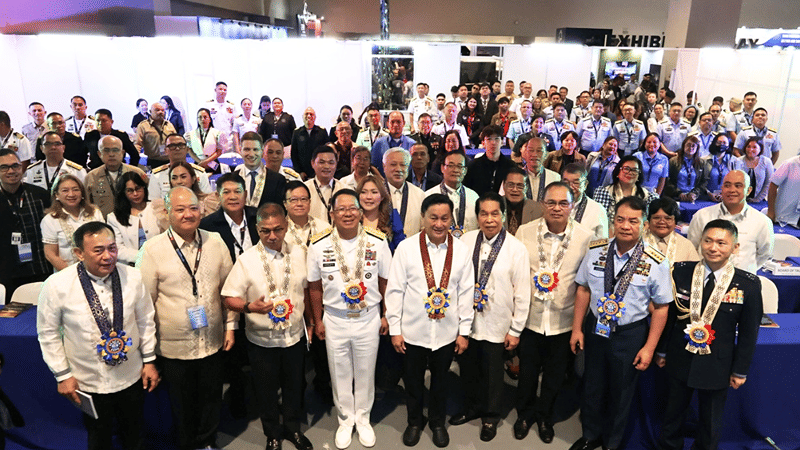
DOLE said the expansion of the blue economy will require greater investment in skills, education, technology and industry capabilities to help Filipino workers.
The Philippines is stepping up efforts to prepare workers for emerging jobs in the maritime sector as technology, green shipping and the broader blue economy reshape skills requirements.
The Department of Labor and Employment (DOLE) said it is focusing on skills development and the creation of higher-value, decent jobs as the country seeks to capture more opportunities from its ocean economy.
Speaking at BEACON Expo 2026, Labor Secretary Francis N. Tolentino said advances in artificial intelligence, automation, green shipping technologies, low-carbon fuels and modern shipbuilding are changing the nature of maritime work.
According to DOLE, the Philippine ocean economy generated P1.08 trillion in economic value in 2025, equivalent to 3.8 per cent of the country’s GDP, while providing employment to 2.46 million Filipinos.
The workforce spans seafarers, fisherfolk, coastal communities, shipbuilders, ship repair workers and others engaged in ocean-related activities.
“Growing the maritime industry requires investments that create well-paid jobs, technology transfer, expertise, and access to higher education opportunities,” Tolentino said. He called for partnerships that can help build these capabilities within the Philippines rather than abroad.
Maritime jobs shift towards specialised skills
DOLE said the expansion of the blue economy will require greater investment in skills, education, technology and industry capabilities to help Filipino workers move into higher-value segments of the maritime industry.
Tolentino highlighted the need to move beyond predominantly manual work towards more technical and specialised roles, including marine engineering, ship design, vessel retrofitting and ship repair.
The Philippines is recognised as the world’s fourth-largest shipbuilding and ship repair nation, according to DOLE. The department said maintaining and advancing this position will require continued investment in both workers’ capabilities and maritime technologies.
The blue economy encompasses the sustainable development and management of marine and coastal resources while supporting economic activity, livelihoods and ocean health.
DOLE strengthens protections for seafarers
Alongside workforce development, DOLE is strengthening mechanisms to protect Filipino maritime workers.
The department has established the Maritime Labor Affairs Office to consolidate services for Filipino seafarers, including legal assistance, conciliation, dispute settlement, workers’ education and employment services.
The office also supports implementation of the Magna Carta of Filipino Seafarers and the development of trained maritime conciliator-mediators, labour arbiters and voluntary arbitrators with expertise in seafarer laws, international standards and maritime industry practices.
DOLE’s Labor Attorneys’ Office also provides free legal assistance and representation to qualified workers, including seafarers who cannot afford legal counsel.
“Rights must not remain in promises written in law. They must be understood, accessible, and enforceable, regardless of a worker’s financial capability,” Tolentino said.
The department is also extending its focus beyond formal maritime employment to workers and communities whose livelihoods depend on coastal and marine resources.
DOLE said its Trabahong-Dagat programme, an initiative under the TUPAD programme, is intended to support fisherfolk and coastal communities during closed fishing seasons and seasonal or climate-related disruptions.
The department said the programme seeks to move beyond temporary income support by creating more sustainable livelihood pathways for communities dependent on the ocean economy.
The workforce push forms part of the Philippine government’s broader efforts to develop the blue economy, generate employment and strengthen the country’s position as a regional maritime hub.
Topics
Author
Loading...