








Economy Policy
Philippines urges APEC cooperation on skills, credentials and jobs






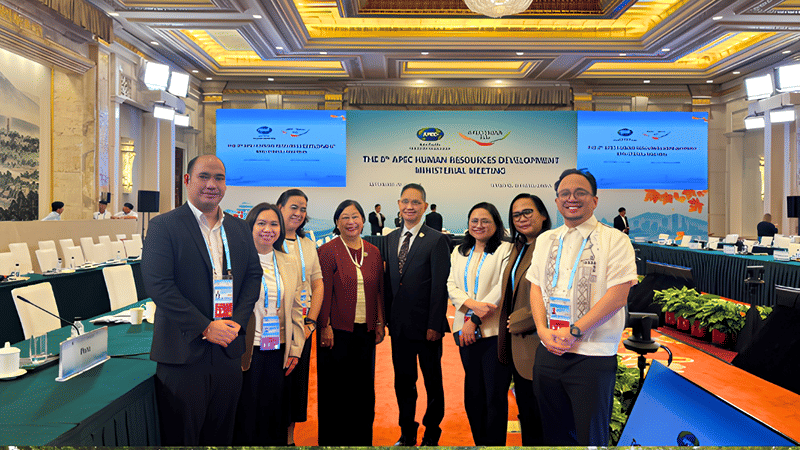
TESDA chief Kiko Benitez called for greater APEC cooperation on digital-skills standards and platforms to support worker mobility across economies.
The Philippines has called for stronger links between skills development, labour-market demand and quality employment as Asia-Pacific economies navigate changing workforce requirements.
Speaking at the 8th APEC Human Resources Development Ministerial Meeting (HRDMM), Technical Education and Skills Development Authority (TESDA) Director General Jose Francisco “Kiko” Benitez highlighted the need to ensure that investments in technical and vocational education translate into clear career pathways.
“Credentials are only worthy if they lead to decent jobs,” Benitez said during the ministerial session on “Investing in People: Enhancing Vocational Skills Training”.
Benitez presented the National Education and Workforce Development Plan 2026–2035 (NatPlan) as a framework for aligning education and workforce systems with current and emerging labour-market needs. He also highlighted the role of the Education and Workforce Development Group in improving coordination between government efforts and strengthening the transition from education and training into employment.
The approach complements the Department of Labor and Employment’s Philippine Labor and Employment Plan, with the government seeking to align skills development more closely with high-quality, full and productive employment.
Flexible pathways and lifelong learning
The Philippines also highlighted measures aimed at making skills development more flexible, including recognition of prior learning, microcredentials, competency-based assessment and ladderised pathways connecting technical-vocational education, higher education and employment.
Initiatives such as TechPro, work immersion and the Philippine Credit Transfer System were cited as examples of efforts to give learners greater flexibility to move between education, training and employment.
Addressing skills mismatches was another focus of the country’s presentation. Benitez highlighted the Philippine Skills Framework, developed with industry and government partners to map sector-specific skills requirements and improve the alignment between qualifications and changing industry needs.
The Philippines is also expanding digital skills and AI literacy in technical-vocational education and training, alongside the use of AI-enabled tools for skills anticipation and course development.
Digital credentials and workforce mobility
TESDA also presented its Skills Passport, a digital credential record designed to make skills verification easier and strengthen the link between certified competencies and employment opportunities.
The agency is piloting AI-assisted assessment scheduling and instant credential verification, while exploring interoperability between skills records and employment opportunities through DOLE’s Public Employment Service Offices, the Department of Migrant Workers and online job platforms.
Benitez also proposed greater cooperation among APEC economies on digital-skills standards and platforms that could support worker mobility while taking into account each economy’s qualification and regulatory systems.
APEC adopts HR development priorities
The meeting concluded with the adoption of the Nanjing Statement, titled “Modernizing Human Resources Development for a Stronger Asia-Pacific Community”.
The statement identifies three areas for regional cooperation: promoting high-quality, full and productive employment and employment-friendly economic growth; investing in people and enhancing vocational skills training; and strengthening and optimising social security systems.
It calls for stronger lifelong vocational training and continuing education, work-based learning and quality apprenticeships, smoother transitions between education, training and employment, monitoring of emerging occupations and skills, and expanded digital skills and AI literacy.
The statement also highlights targeted employment assistance, reskilling and upskilling, improved employment services, workers’ rights, occupational safety and health, and access to social protection as labour markets evolve.
For the Philippines, these priorities reinforce efforts to connect skills development with employment outcomes and provide workers with more flexible pathways into productive and decent work.
Topics
Author
Loading...