








Economy Policy
Philippines ramps up OFW reintegration as Middle East deployment crisis leaves thousands stranded






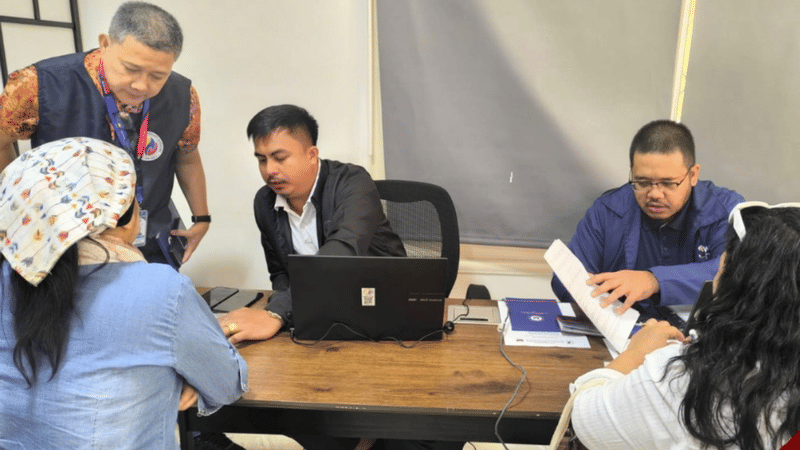
The reintegration push comes amid a deepening crisis, with over 40,000 OFWs stranded in Manila following a deployment ban to key Middle East destinations.
The Philippine government has intensified efforts to support Overseas Filipino Workers (OFWs) returning from conflict-affected regions in the Middle East, as thousands face uncertainty following widespread deployment disruptions.
The reintegration push comes amid a deepening crisis, with more than 40,000 OFWs currently stranded in Manila after a deployment ban to key destinations, including Saudi Arabia, the UAE, Kuwait, Bahrain, Oman, Qatar, Israel, and Lebanon.
The suspension has disrupted employment continuity, leaving many workers in limbo, either housed in recruitment agency facilities or sent back to their home provinces. Government data shows that over 4,000 workers and their dependents have already been repatriated, highlighting the scale of the disruption.
In response, the Department of Migrant Workers (DMW), in partnership with over 25 government agencies, recruitment firms, and the Quezon City local government, launched the New Pilipinas Bayanihan para sa Balikbayang Workers National Reintegration Network (NRN) alongside a job fair on April 6. The initiative reflects a “whole-of-government” approach aimed at delivering sustained and coordinated support to returning OFWs and their families.
The programme offers a wide range of services, including job matching for more than 8,000 local and overseas employment opportunities, livelihood grants, skills training scholarships, social protection benefits, and immediate psychosocial support.
DMW Secretary Hans Leo J. Cacdac underscored the importance of unified government action, echoing President Ferdinand R. Marcos Jr.’s directive that “no Filipino will be left behind and no one will be neglected.”
Recent repatriation efforts have included workers and tourists returning from countries such as Dubai, Jordan, and Qatar, where 88 Filipinos arrived over a two-day period, bringing total repatriations from Qatar to 585. Returnees were provided financial assistance prior to departure, along with coordinated support upon arrival, including food, medical aid, transportation, and temporary shelter.
Beyond the immediate crisis, experts warn of broader workforce implications. Migration specialist Emmanuel Geslani noted that overseas deployment to the Middle East could decline sharply in the coming months, driven by ongoing regional tensions, oil production disruptions, and refinery rehabilitation. This could slow overseas employment pipelines and impact remittance flows, a key pillar of the Philippine economy.
Officials say the NRN will play a critical role in addressing both immediate and long-term challenges, strengthening reintegration pathways while opening new opportunities for displaced workers. The initiative is part of a broader government push to build a more inclusive and resilient support system for OFWs, particularly in times of global uncertainty.
Topics
Author
Loading...