








Economy Policy
Philippines vows ethical labour migration as OFW welfare takes centre stage in UAE talks






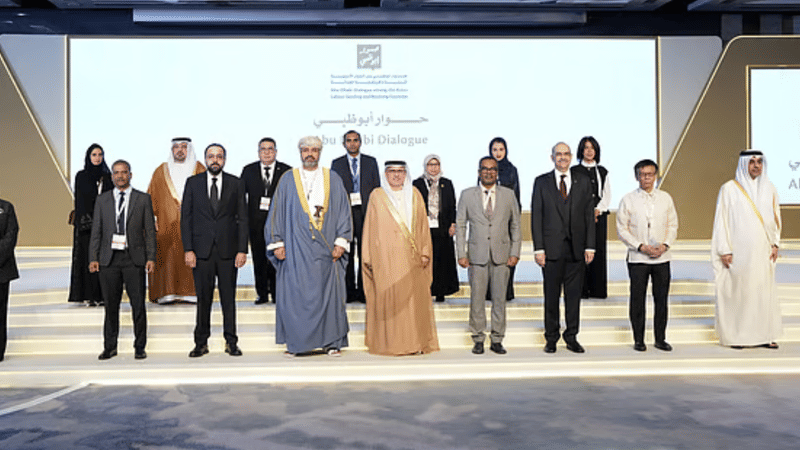
As part of the strategy, the DMW has partnered with TESDA to boost upskilling and education support for Filipino workers abroad, helping them stay competitive in fast-changing labour markets.
The Philippines has placed safe and ethical labour migration at the top of its international agenda after assuming the chairmanship of the 9th Abu Dhabi Dialogue (ADD), a key regional platform linking labour-sending and labour-receiving countries across Asia.
In a statement, Hans Cacdac, Secretary of the Department of Migrant Workers (DMW), outlined a wide-ranging agenda focused on worker welfare, skills development, closing education-to-employment gaps, safe recruitment, social protection, and digitalisation.
“We consistently position ourselves as leading advocates and establish a migration governance system with regular pathways to labour migration, safe, ethical, and sustainable recruitment,” Cacdac said.
Skills and protection push
As part of the strategy, the DMW has partnered with the Technical Education and Skills Development Authority (TESDA) to strengthen upskilling and educational support for Filipino workers abroad, aiming to keep them competitive in rapidly evolving labour markets.
Cacdac also reiterated Manila’s firm stance against irregular migration. “We are not a country where irregular or illegal migration or labour migrants exist or would come from, and we maintain very strong anti-illegal recruitment and anti-human trafficking policies,” he said.
Strengthening global cooperation
The Abu Dhabi Dialogue brings together member states of the Colombo Process, including the Philippines and the United Arab Emirates, to advance safer and more ethical labour mobility across the region.
Philippine officials said the government will intensify international cooperation centred on protecting the rights and welfare of Overseas Filipino Workers (OFWs), particularly the large Filipino community in the UAE, one of the top destination countries for Filipino talent.
During its year-end performance assessment in Makati, the DMW said it would deepen partnerships with host governments and global institutions to improve working conditions overseas. Key collaborators include the Association of Southeast Asian Nations (ASEAN), the International Labour Organization (ILO), and the International Organization for Migration (IOM).
Bilateral focus and policy alignment
Undersecretary Jainal Rasul Jr. stressed the need for stronger bilateral engagement aligned with Cacdac’s 10-point agenda on safer migration, fair recruitment, and transparent employment systems.
“He emphasised the importance of policy consultation, stakeholder engagement, strategic research, and collaborative activities in strengthening bilateral relations and promoting safe migration practices,” the DMW said.
The renewed push comes amid persistent concerns over illegal recruitment and human trafficking involving OFWs, prompting officials to call for tighter coordination with host governments to prevent abuse.
Plans to improve services
Assistant Secretary Levinson Alcantara reviewed the agency’s recent accomplishments and outlined priorities for the year ahead. “To further improve performance in 2026, the cluster suggested increasing manpower, budget support, and additional equipment to enhance coordination and the delivery of responsive programs for OFWs,” he said.
For Filipino workers in the UAE - spanning healthcare, hospitality, construction, and domestic services—the Philippines’ chairmanship of the Abu Dhabi Dialogue signals continued efforts to reinforce labour agreements and strengthen protections for one of the Emirates’ largest expatriate communities.
Author
Loading...