








Economy Policy
Singapore to take ASEAN chairmanship in 2027, with focus on unity, integration and regional resilience






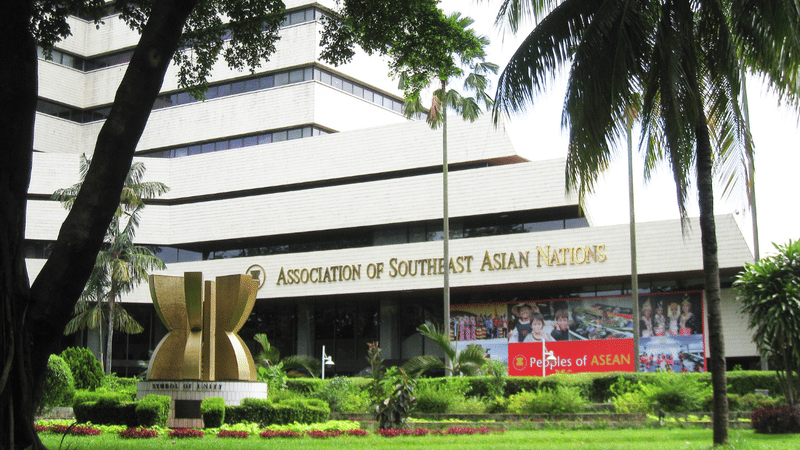
Singapore could use its ASEAN chairmanship to drive regional cooperation on AI governance, digital transformation and the future of work as technology adoption accelerates across Southeast Asia.
Singapore will take over the ASEAN Chairmanship from January 1, 2027 onwards, assuming a key regional role at a time when Southeast Asia is navigating geopolitical tensions, economic fragmentation, rapid technological change and growing pressure to strengthen regional cooperation.
The chairmanship will follow the Philippines, which holds the ASEAN chair in 2026. Under the ASEAN Charter, the chairmanship rotates annually based on the alphabetical order of the English names of member states. The chairing country is responsible for convening and leading the ASEAN Summit and related summits, the ASEAN Coordinating Council, the three ASEAN Community Councils and relevant ministerial and senior officials’ meetings.
The Philippines is the current ASEAN chair for 2026, following Malaysia in 2025. Singapore last held the chairmanship in 2018.
For Singapore, the 2027 chairmanship is expected to centre on reinforcing ASEAN’s relevance and ability to act collectively as the region faces a more uncertain global environment.
Singapore Prime Minister Lawrence Wong said the country would use its chairmanship to strengthen ASEAN centrality and unity, deepen regional integration and make ASEAN a more effective single market. Singapore also plans to strengthen partnerships beyond Southeast Asia by bringing diverse partners together, building common ground and keeping channels for dialogue and cooperation open.
The priorities reflect a broader challenge for ASEAN i.e. maintaining regional cohesion while member states navigate competing economic and geopolitical interests.
For Singapore, trust will be a central part of that effort. Wong said Singapore’s ability to remain connected to global supply chains, business, finance, capital and talent depends heavily on the trust placed in its institutions and commitments. He argued that as countries become more divided, Singapore must build more connections rather than retreat from the world.
The chairmanship will therefore require Singapore to balance two objectives: strengthening ASEAN’s internal cohesion while keeping the bloc open and relevant to external partners.
Under the ASEAN Charter, the chair is not simply responsible for hosting meetings. The country holding the chairmanship is expected to actively promote ASEAN’s interests and wellbeing, advance the ASEAN Community through policy initiatives, coordination, consensus and cooperation, ensure ASEAN centrality and respond to urgent regional issues and crises. It is also responsible for representing ASEAN in strengthening relations with external partners.
That places a premium on diplomacy and consensus-building. Singapore will need to bring together member states with different economic priorities, political positions and strategic interests, while ensuring that ASEAN remains capable of responding collectively to regional disruptions.
Economic integration is likely to be another major test. Singapore has said it wants to deepen regional integration and make ASEAN a more effective single market. Delivering on that ambition will require progress on reducing barriers to trade and investment, strengthening regional supply chains and improving connectivity across member states.
Technology will also form an important part of the regional agenda. Wong said Singapore intends to harness new technology, including artificial intelligence, while putting safeguards in place and ensuring that people remain in control. He also called for countries to work together on common rules and safeguards for increasingly capable AI systems, noting that Singapore would seek to bring countries and companies together to build practical coalitions.
This could give Singapore an opportunity to position ASEAN as a platform for cooperation on AI governance, digital transformation and the future of work, particularly as businesses across Southeast Asia accelerate their adoption of emerging technologies.
At the same time, the chairmanship will unfold against a backdrop of economic and geopolitical uncertainty. Singapore has acknowledged that the region is entering a period in which countries are pulling apart and global cooperation is becoming more difficult. Its stated response is to strengthen connections, deepen partnerships and keep dialogue open.
For ASEAN, that means the 2027 chairmanship could be an important test of whether the bloc can preserve its central role while managing increasingly complex relationships among major powers.
Singapore will also need to ensure that ASEAN’s agenda translates into outcomes for businesses and workers across the region. A more integrated ASEAN single market would require not only government-level agreements but also stronger regional connectivity, skills development and the ability of workers and businesses to adapt to technological and economic shifts.
The Philippines’ 2026 chairmanship provides the immediate context for Singapore’s handover. As the current chair, the Philippines is responsible for advancing ASEAN’s agenda during 2026, while Singapore will take on the chairmanship in 2027 as part of the bloc’s established annual rotation.
Singapore’s previous chairmanship was in 2018, meaning the 2027 term will come after nearly a decade. Its return to the chair comes as ASEAN faces a substantially different regional environment, with technology, supply-chain resilience, geopolitical competition and economic integration becoming increasingly intertwined.
The bigger question for Singapore will be whether it can turn its priorities of trust, connectivity, ASEAN centrality and integration into a practical regional agenda that member states can collectively support.
As Wong put it, Singapore cannot choose the world it lives in, but it can choose how it responds. For its 2027 ASEAN chairmanship, that response will likely be measured by how effectively it can keep the region connected, resilient and capable of acting together despite growing global fragmentation.
Author
Loading...