








Economy Policy
South Korea pilots 4.5-day work week to ease burden on workers



|
Updated on


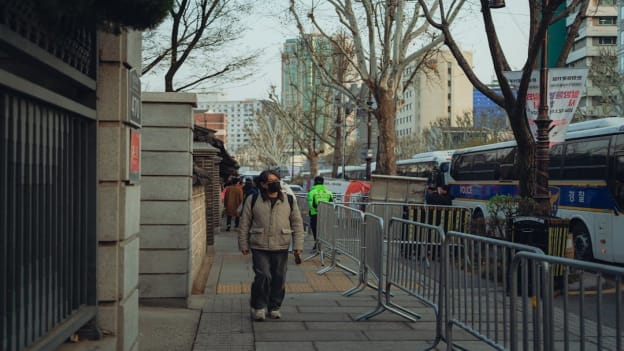
South Korea's most populous province has launched a pilot program implementing a shorter work week for participating companies.
South Korea’s most populous province has launched a pilot project that shrinks the work week into four and a half days to address the country’s chronically long work hours.
Gyeonggi province, which is located next to Seoul, officially became the first South Korean province to implement a 4.5-day work week. The project, which involves 67 small and midsize enterprises and one public institution, aims to analyse changes in productivity and employee satisfaction up to 2027.
From South Korea’s current legal standard of 40 hours per week, employees can choose from three different schedules: a 35-hour work week, a four-day work week every other week, and a 4.5-day work week.
The province will also provide up to 20 million won in consulting and construction for the attendance management system for participating companies and provide compensation of up to 260,000 won per worker per month.
Gyeonggi Province Governor Kim Dong-yeon told reporters last year that the provincial government has allocated an initial budget of 250 million won for the program, with another 10 billion won annually. However, South Korean media have reported that the province has only budgeted 8 billion won for the project as of writing.
The province hopes that, through the project, workers will have more time for personal concerns, which will lead to more positive impacts elsewhere, such as South Korea’s rapidly declining birth rate.
According to the Organisation for Economic Co-operation and Development (OECD), South Korean workers averaged 1,865 hours of work in 2024, surpassing the global average of 1,736 hours.
South Korea’s newly appointed President Lee Jae Myung also listed workplace reforms as one of the key issues of his administration, vowing to bring the country’s annual working hours below the OECD average by the end of his five-year term in 2030.
During a July news conference, Lee said that shorter working hours are the international trend and that, in the past, South Korea competed on ‘quantity over quality’.
"Even if you work a lot, productivity and international competitiveness gradually decline, so can we continue with this approach forever?" he asked.
Incoming labour minister Kim Young-hoon also echoed sentiments, telling reporters in June that the 4.5-day workweek and other labor reforms are ‘the paths we must take’.
“Reducing working hours through a 4.5-day workweek or extending the retirement age are the only tools that can overcome crises such as the digital transition, population decline, aging society, and labor shortages,” Kim said.
Author
Loading...