








Economy Policy
World Bank approves $800m for Philippines to boost economy and job-ready workforce






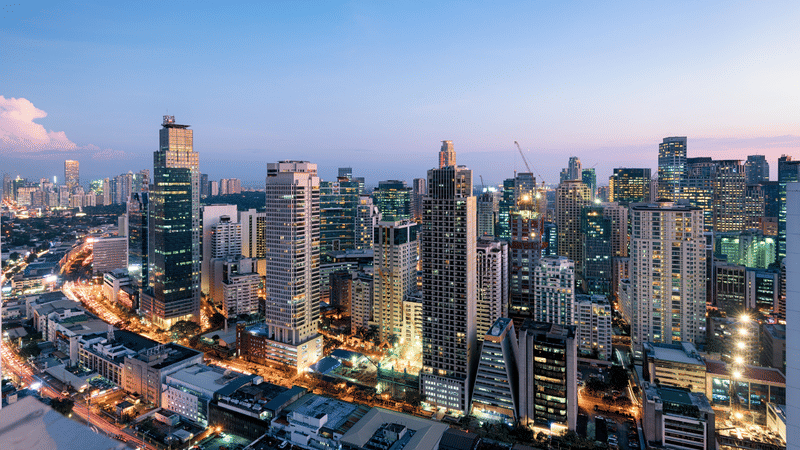
The fund will help Philippines reforms aim to streamline regulations, reduce business compliance costs, and boost competition and foreign investment to support expansion and create better-paying jobs.
The Philippines is set to strengthen private investment, workforce skills, and fiscal resilience after the World Bank approved $800 million in financing aimed at supporting economic reforms and sustaining long-term growth.
The Philippines Growth and Jobs Development Policy Loan, approved by the World Bank’s Board of Executive Directors, will support reforms designed to strengthen fiscal management, improve the business environment, and enhance labor-force capabilities.
According to the World Bank, the reforms aim to convert the country’s strong economic growth into higher-quality investments and more productive jobs, particularly for young people and women.
“The World Bank is proud to continue supporting the Philippines’ priorities—turning strong growth into more and better-paying jobs,” said Zafer Mustafaoğlu, World Bank Division Director for the Philippines, Malaysia, and Brunei. “By strengthening fiscal foundations, improving the business climate, and investing in human capital, this effort will unlock private investment and equip people with the skills they need to find jobs and thrive.”
The $800 million Development Policy Loan (DPL) will provide policy-based budget support to help the government implement institutional and structural reforms across key sectors.
Under the fiscal management pillar, reforms will focus on strengthening domestic resource mobilization and improving the efficiency of public spending. These measures are intended to safeguard fiscal space for priority investments in infrastructure and human capital.
The program will also target improvements in the business environment by streamlining regulations, lowering compliance costs for firms, and promoting competition and foreign direct investment in key sectors. These initiatives are expected to help businesses expand operations and generate better-paying employment opportunities.
Another major focus is skills development and human capital, with reforms spanning early childhood education, improvements in basic education quality, and the upgrading of technical and vocational education and training (TVET). The initiative also aims to strengthen the country’s innovation ecosystem to better match workforce skills with industry demand.
“These reforms aim to crowd in private investment, create more and better jobs, and drive the Philippine economy toward more sophisticated, higher-value activities,” said Jaffar Al-Rikabi, World Bank Senior Economist.
The new financing comes as the Philippines has reached the upper-middle-income threshold in gross national income (GNI) per capita, supported by inclusive GDP growth since 2010 that has enabled the economy to double in size roughly every 13.5 years.
However, the country continues to face domestic and global economic shocks, underscoring the need for ongoing fiscal and structural reforms to maintain stable and job-rich growth while reducing vulnerability to external pressures.
Implementation of the reform program will involve multiple government agencies, including the Department of Education, Department of Finance, Department of the Interior and Local Government, Securities and Exchange Commission, and the Technical Education and Skills Development Authority.
The Development Policy Loan also complements the World Bank Group’s broader work in the Philippines, including investments in connectivity, agricultural modernization, digital infrastructure, and financial sector development, as well as efforts by the International Finance Corporation (IFC) and the Multilateral Investment Guarantee Agency (MIGA) to mobilize private capital.
Topics
Author
Loading...