








Employee Engagement
Office attendance drops 26% after US elimination from FIFA World Cup: Report






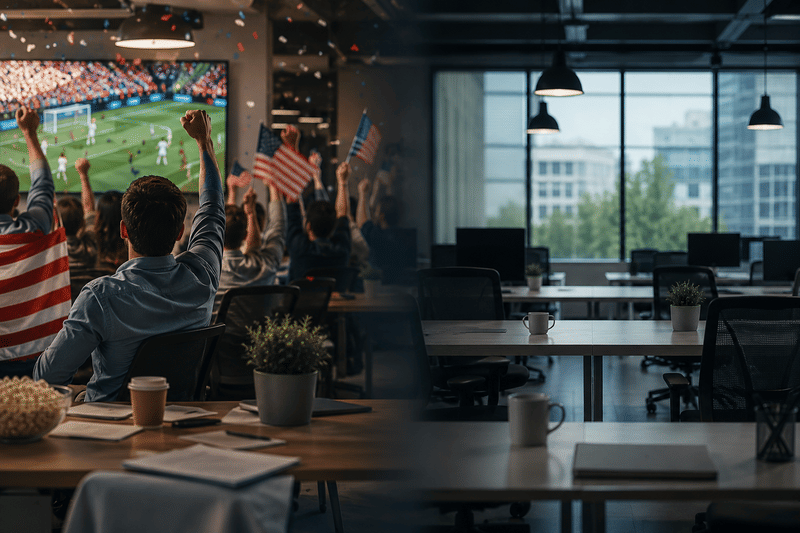
Envoy analysis finds the morning after the US Men's National Team's World Cup exit had a bigger impact on workplace attendance than the post-Super Bowl slowdown.
The United States Men's National Team's (USMNT) exit from the 2026 FIFA World Cup triggered a sharp fall in workplace attendance, with office entries dropping 26% below typical Tuesday levels the following morning, according to a new analysis by Envoy.
The workplace technology company's latest data, based on office entry records from more than 300 US metro areas during the World Cup knockout rounds, found the biggest disruption came not on match day but the day after the US team's elimination.
The report said the impact on workplaces was significantly greater than the decline recorded after Super Bowl LIX, when office attendance fell by just 1.87%.
One day stood out during the tournament
According to Envoy, office attendance remained relatively stable throughout most of the World Cup knockout stage despite several weekday fixtures. The exception came after the US lost 4-1 to Belgium in the Round of 16 on 6 July.
The report highlighted the following trends:
- Total workplace entries fell nearly 26% below normal Tuesday levels on 7 July
- Attendance on the preceding Monday was around 11% below a typical Monday
- The Tuesday decline was roughly 18 percentage points deeper than the week's no-match comparison day
- Compared with the post-Super Bowl slowdown, the workplace impact was around ten times greater
According to Envoy, offices largely remained open during the period. The decline reflected fewer people entering buildings rather than widespread workplace closures.
Meetings declined more than employee attendance
The report found the biggest disruption came from cancelled or postponed meetings rather than employees staying away from work. Key findings included:
- Employee entries declined by 11.5%
- Visitor entries dropped 32%
- Scheduled visitor traffic fell between 26% and 38% across every region tracked
- States including Georgia, Michigan, New Jersey and Tennessee recorded some of the largest declines relative to their normal attendance levels
Envoy said the findings suggest employees largely continued reporting to work, while organisations reduced client meetings, interviews and vendor visits after the late-night match.
Host cities followed a different pattern
The analysis also found World Cup host cities generally maintained normal workplace activity while matches were taking place. According to Envoy:
- Seattle operated close to normal on the day it hosted the US match before recording its weakest weekday attendance the following morning, down 20.4%
- Los Angeles exceeded its normal attendance baseline while hosting a quarterfinal
- Dallas also remained broadly in line with normal attendance during its match day
The report concluded World Cup matches tended to increase activity within host cities rather than empty office buildings. Visitor traffic, however, often declined as organisations avoided scheduling external meetings on match days.
No evidence of a hometown effect
Envoy also examined whether cities associated with US players experienced larger workplace disruptions.
The report found no measurable difference in attendance across the hometown metropolitan areas of players including Christian Pulisic, Weston McKennie and Tim Ream. According to the analysis, workplace attendance in these locations closely mirrored national trends throughout the tournament.
Impact eased after the US exited
The report said the national workplace effect reduced once the United States was eliminated from the competition. Following the sharp decline after the Round of 16 defeat:
- The first quarterfinal recorded a 5.5% attendance decline
- Another quarterfinal saw attendance down 1.7%
- Weekend quarterfinals tracked close to normal attendance levels
According to Envoy, remaining World Cup fixtures continued to influence activity in host cities but produced limited disruption across the wider national workforce.
With the tournament final scheduled for 19 July, the company expects workplace attendance after the championship match to resemble the relatively modest post-Super Bowl slowdown rather than the significant drop seen after the US team's elimination. The report suggests employers planning major meetings or client events may need to consider how high-profile sporting events continue to influence workplace attendance and visitor schedules.
Topics
Author
Loading...