








Employee Engagement
Singapore worker says boss criticised her for using all her annual leave, Igniting online debate






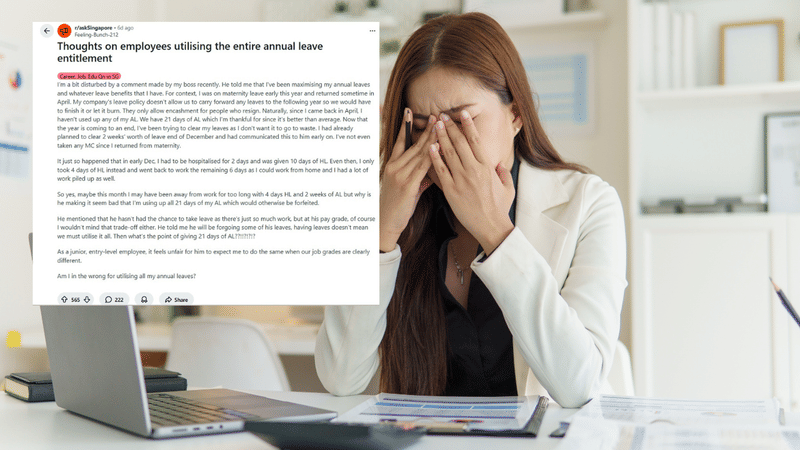
The debate struck a broader chord, spotlighting familiar workplace tensions in Singapore and beyond, prompting netizens to remark that this is “exactly why HR is needed.”
Annual leave is meant to be a benefit, not a bargaining chip. But for one employee in Singapore, using the leave she was entitled to become a source of quiet tension at work, and a wider debate online.
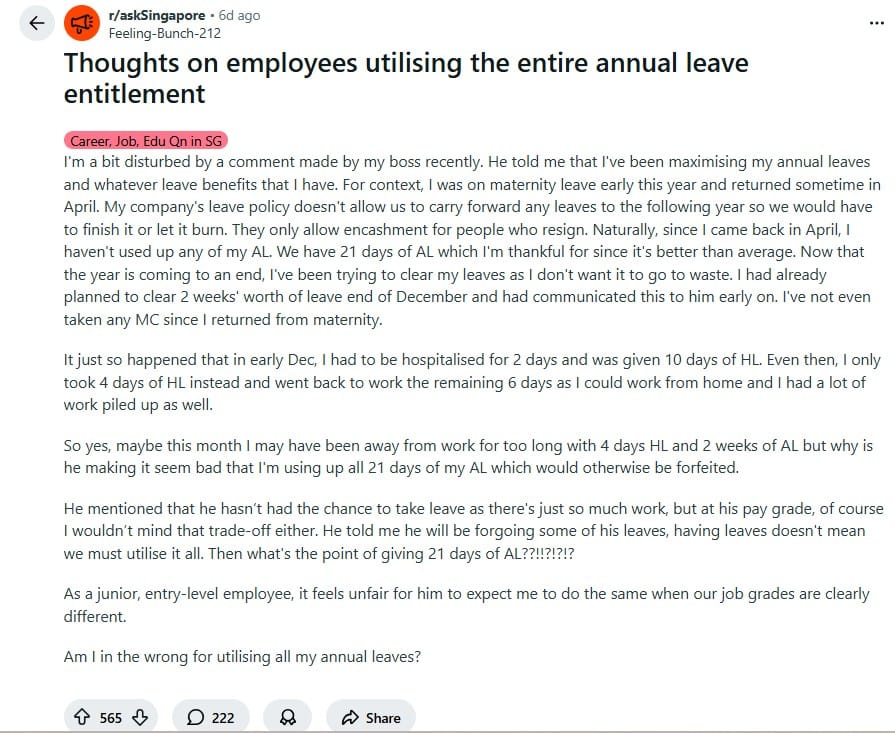
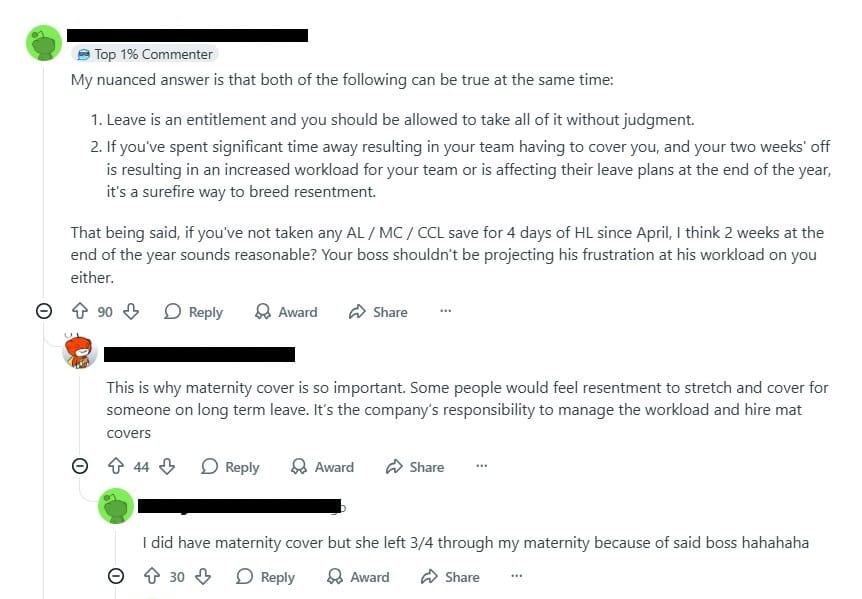
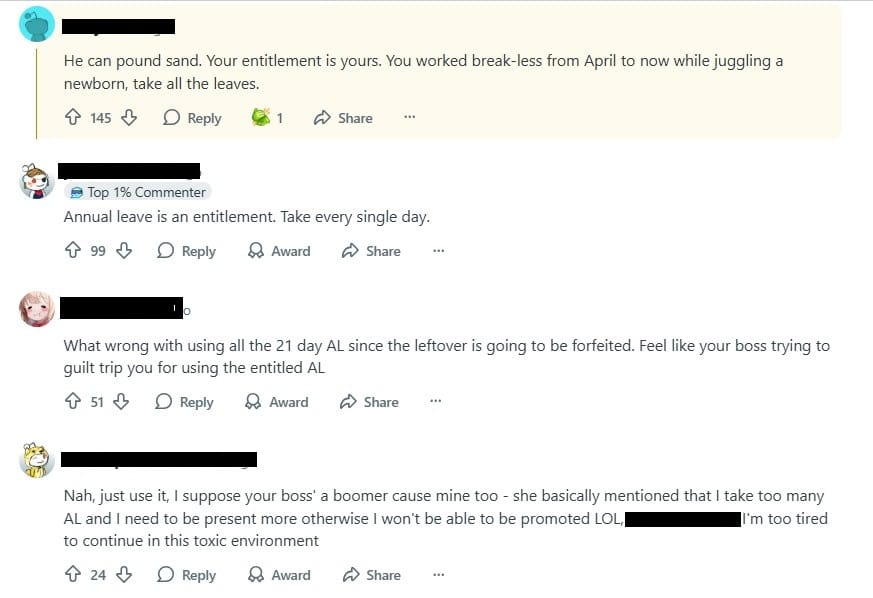
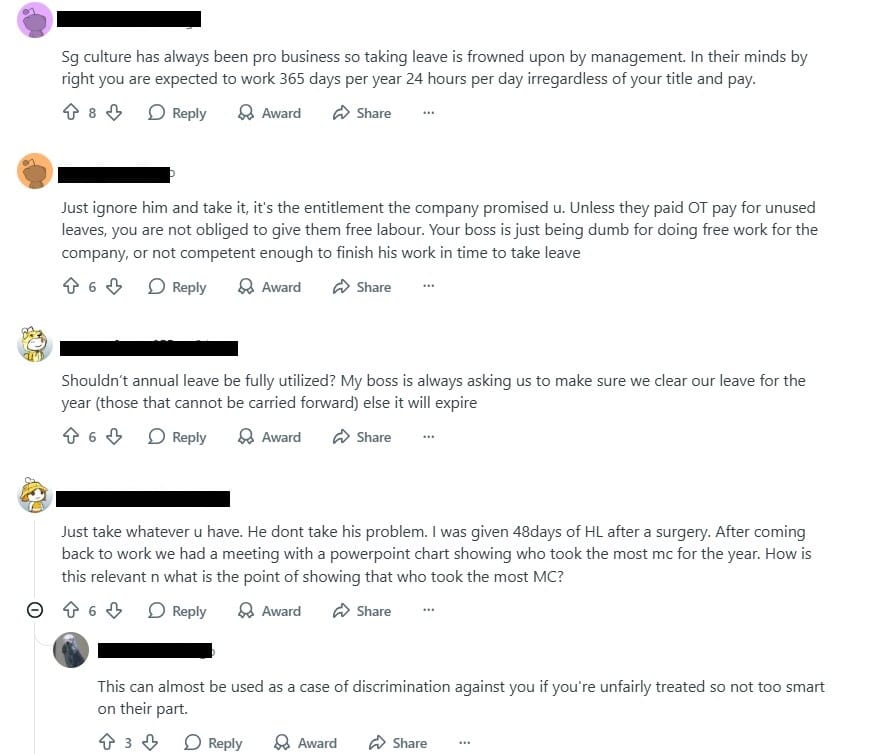
The issue surfaced after the employee shared her experience on Reddit in a post titled “Thoughts on employees utilising the entire annual leave entitlement.”
In it, she described feeling “disturbed” by a remark from her boss suggesting she was “maximising” her leave benefits, despite staying entirely within company policy.
The employee, who had returned to work in April after maternity leave, explained that her organisation offers 21 days of annual leave but does not allow unused days to be carried forward. Encashment is only permitted upon resignation.
Having taken little to no leave since her return, she planned ahead to clear her remaining days before the year-end, including a two-week break in December that she had communicated early.
She also pointed out that she had not taken any medical leave since returning from maternity leave.
Even when she was hospitalised earlier in December and granted 10 days of home leave, she took only four days and returned to work early, working remotely to manage her workload. Despite this, her boss reportedly framed her leave usage negatively, contrasting it with his own inability to take time off due to heavy workloads.
According to the employee, he suggested that having leave “doesn’t mean we must utilise it all,” adding that he himself would be forfeiting some of his days.
That comparison struck a nerve. As a junior, entry-level employee, she felt it was unfair to be measured against a senior leader with a different pay grade, responsibilities, and level of autonomy.
“Then what’s the point of giving 21 days of annual leave?” she asked, questioning whether she was wrong for simply using what would otherwise be lost.
The post quickly gained traction, with many commenters pointing the finger not at the employee, but at management practices. One commenter, who identified as working in HR - was blunt: “Just take your leave. They’re annoyed because they don’t want to hire additional manpower to cover work.”
Another argued that consistently excessive workloads are a structural issue, not an employee failing. “If teams are always stretched, that’s a management problem,” they wrote. “They’re trading your health and well-being to make money for the company.”
Perhaps the most ironic twist came from the original poster herself, who responded to one HR comment with a simple line: “I’m a fellow HR too, the irony.”
Another commenter, who identified as a manager, shared a similar experience, noting that leadership support plays a critical role in enabling genuine work-life balance. “I have 21 days of leave too, and I’m clearing two weeks until January,” the commenter wrote. “People will complain, but my direct supervisor told me it’s not my problem if higher-ups didn’t plan manpower properly. My team will be running on a skeleton crew since HR isn’t flexible about carrying leave forward, malicious compliance, but compliance nonetheless.”
The discussion struck a broader chord, highlighting a recurring workplace tension in Singapore and beyond: when leave exists on paper but is subtly discouraged in practice.
As one commenter summed it up, situations like these are “exactly why we need HR” - not just to define policies, but to ensure they are respected in spirit, not just on paper.
At its core, the debate raises a simple question many employees quietly ask themselves: if you’re given leave, but made to feel guilty for using it, is it really a benefit at all?
Author
Loading...