








Employee Engagement
Workplace happiness falls below 60% in Singapore and Australia: SEEK Report







The findings suggest that perks and pay hikes alone are no longer enough, what’s required is systemic change in how work is designed, recognised and supported.
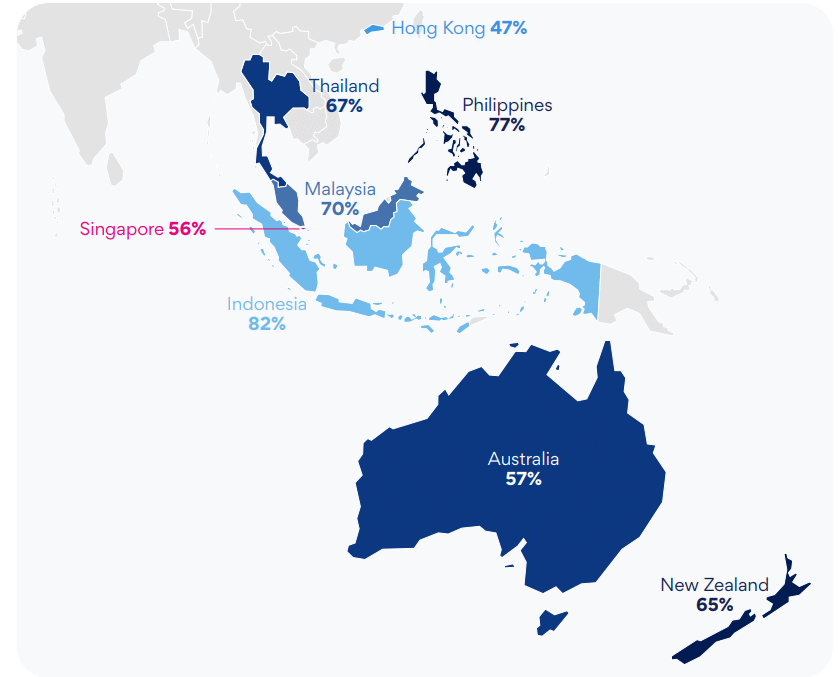
Singapore’s workers haven’t given up on the idea of workplace happiness. But for many, it remains frustratingly out of reach. According to Jobstreet by SEEK’s latest Workplace Happiness Index: Singapore, just 56% of workers describe themselves as happy at work, placing Singapore among the lowest-ranked markets in Asia Pacific, behind Indonesia, the Philippines, Malaysia and Australia.
The findings reveal a growing disconnect between aspiration and reality, where belief in happiness coexists with burnout, stalled progression and uneven access to opportunity. The study surveyed 1,000 working adults aged 18 to 64 across Singapore’s employment market. While eight in ten respondents believe happiness at work is achievable, nearly half say they are struggling to experience it in practice.
Singapore lags regional peers on workplace happiness
Indonesia tops the regional rankings, with 82% of workers reporting they are happy at work, followed by the Philippines at 77% and Malaysia at 70%. Australia stands at 57%, narrowly ahead of Singapore, while Hong Kong ranks last at 47%.
The lower scores in Singapore, Hong Kong and Australia reflect more competitive corporate environments and rising cost-of-living pressures—conditions that appear to be weighing heavily on employee wellbeing.
Pay attracts talent, but purpose keeps it
While salary remains important, 64% of Singapore workers say higher pay would improve their happiness, the research shows that money alone does not sustain long-term engagement.
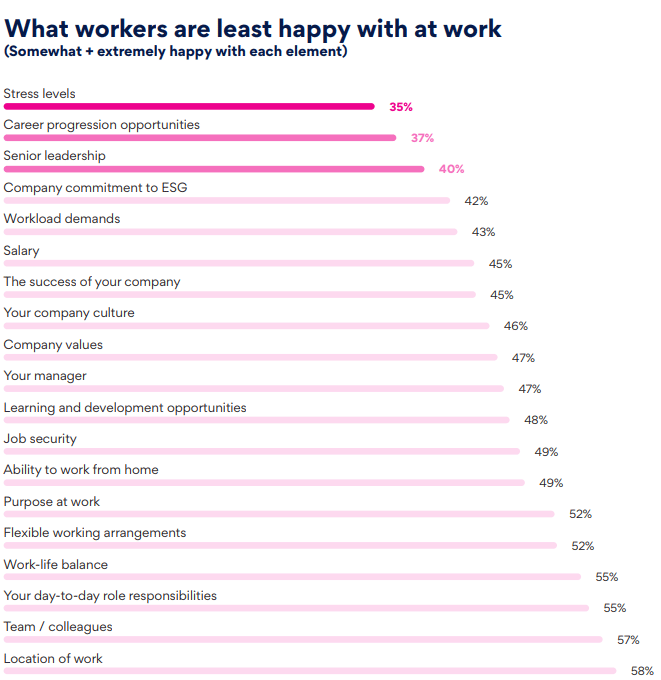
Instead, purpose at work emerges as the strongest driver of workplace happiness, followed by career progression opportunities and day-to-day role satisfaction. Yet only half of workers say they feel a sense of purpose in their jobs, and just 37% are happy with their career progression. Recognition is equally inconsistent, with only one in two employees feeling valued for their contributions.
In a high-cost economy like Singapore, fair pay is increasingly viewed as a baseline expectation. What differentiates fulfilling workplaces is whether employees feel their work is meaningful, acknowledged and aligned with personal goals.
Burnout persists, even among the “happy”
Despite widespread belief in workplace happiness, 45% of workers report feeling burnt out or exhausted. Stress levels are a particular pain point, with only 35% saying they are happy with their stress at work—the lowest-rated workplace attribute measured.
Notably, burnout is not limited to dissatisfied employees. Among those who describe themselves as happy, 41% still report feeling burnt out. This group is more likely to earn over SG$6,000 a month, and burnout is particularly prevalent among men and working parents.
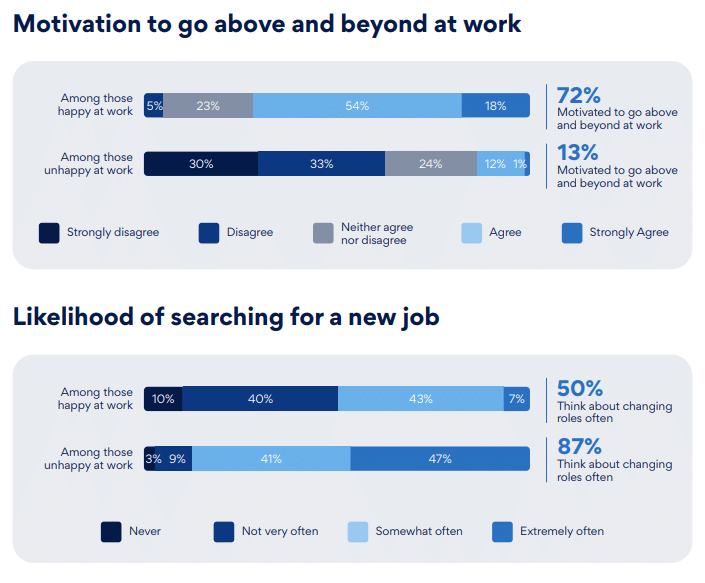
The consequences for employers are significant. Happy employees are five times more likely to go above and beyond in their roles and are 37% less likely to be actively seeking another job. Conversely, unhappy workers are 1.5 times more likely to experience burnout and nearly twice as likely to dread going to work.
Happiness is unevenly distributed
The report also highlights clear disparities across gender and generations, pointing to structural issues rather than individual resilience.
Men report higher workplace happiness (62%) than women (51%) and are more satisfied across key drivers such as purpose, progression and recognition. These gaps mirror income and opportunity disparities, suggesting that access to advancement continues to shape workplace experiences.
Generational differences are even more pronounced. Millennials, often referred to as the “sandwich generation”, are the least happy cohort, with just 52% reporting workplace happiness. They also feel the least valued, the most stressed, and the least motivated to go beyond their core responsibilities.
Balancing career pressures alongside caregiving responsibilities for both children and ageing parents appears to be a significant source of strain. In contrast, Baby Boomers emerge as the happiest generation, with 71% reporting positive workplace experiences—likely reflecting greater autonomy, seniority and alignment with meaningful work.
Culture over prestige
More than one in three workers say they would consider moving to a less prestigious company for a better work culture, underscoring a shift in priorities. While job security ranks low as a direct driver of happiness, anxiety around the future remains, particularly as AI reshapes the workplace.
Technology sector employees are the most concerned about AI’s impact on job security. Overall, 85% of respondents believe workplace happiness is a shared responsibility between employers and employees. The findings suggest that perks and pay rises alone are no longer enough. What’s required is systemic change in how work is designed, recognised and supported.
A warning sign for employers
“What our latest Workplace Happiness Index shows us is that Singapore’s workers are not disengaged or unmotivated, but rather feeling stretched and undervalued,” said Esther Lee, Managing Director, Singapore, Jobstreet by SEEK.
“When nearly half the workforce feels burnt out, employers need to focus on systems and culture, not just compensation. With one of the lowest happiness levels in the region, this should be a warning sign that burnout, stalled progression and unequal opportunity are now business-critical issues.”
In a hiring market where retention has become the new battleground, and organisations that help employees connect their work to purpose, growth and recognition stand to gain not just happier workers, but stronger performance, productivity and loyalty in the long run.
Author
Loading...