








Employee Skilling
Indonesia urges youth to build ‘triple readiness’ to stay competitive in changing job market






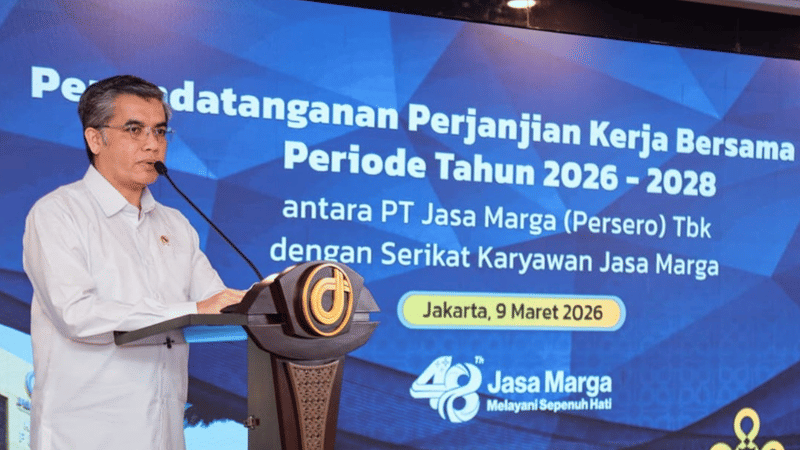
The Minister of Manpower said that the skills expected to be most in demand by 2030 will largely be human-centred abilities, including leadership, analytical and creative thinking, resilience, curiosity, empathy, and talent management, underscoring the growing importance of interpersonal and cognitive capabilities in the future workforce.
Indonesia’s Minister of Manpower, Yassierli, has urged young people to strengthen their competitiveness by embracing what he describes as “triple readiness”, a combination of technical skills, soft skills, and the ability to navigate and enter the labour market.
In a statement, the minister said that while technical and interpersonal capabilities remain important, they are no longer sufficient on their own in a rapidly evolving global employment landscape.
“Facing these three challenges, technical skills and soft skills alone are not enough. Young people must have market entry readiness, or the ability to understand the dynamics of the global labour market,” Yassierli said.
He warned that workers today face increasing global uncertainty, intensifying international competition, and sweeping technological disruption that is reshaping industries and employment patterns worldwide. In such an environment, he said, adaptability will be essential for young people seeking to secure and sustain employment.
Beyond youth readiness, Yassierli also stressed that companies must take a more active role in developing their workforce. According to him, employers should not only provide jobs but also create opportunities for employees to continuously learn, build skills, and prepare for changes in the world of work.
“Workers should not remain in the same position for years without opportunities to develop and improve their skills,” he said.
The minister described employee development as a key pillar of healthy, humane, and sustainable industrial relations. Supporting workers’ growth, he added, is not merely an act of goodwill but a long-term strategic investment for companies.
“When we empower workers, it will have a long-term effect on the company,” Yassierli said, noting that employees who are given opportunities to grow tend to develop stronger engagement and loyalty to their workplace.
He added that empowering workers also helps create a sense of purpose and ownership, encouraging them to contribute beyond their basic job responsibilities.
“Empowering workers means making their work meaningful. They have engagement and passion that can go beyond simply carrying out their duties,” he said.
Yassierli further highlighted the importance of maintaining Indonesia’s cultural values, including mutual cooperation, kinship, and deliberation, in shaping positive industrial relations between employers and workers.
“Something is missing from our DNA. We are a nation that has a spirit of mutual cooperation, kinship, and deliberation. We must revive this DNA,” he said.
The minister also expressed concern that some employees spend 10 to 20 years in the same role without meaningful professional development, a situation he said should not be considered normal.
“Humans have enormous potential for growth,” he said, stressing that companies should help workers discover and maximise their capabilities.
As an example, Yassierli said he has encouraged workers across various roles, including drivers, security personnel, and maintenance staff, to develop new skills such as computer literacy to prepare for evolving workplace demands.
“I encourage drivers to learn computers. I also encourage security guards and maintenance personnel to learn computers because we don’t want them to stay in those positions forever,” he said.
He also noted that advances in automation and artificial intelligence are transforming industries, with technology no longer serving merely as a support tool but increasingly shaping how businesses operate and innovate.
“This phenomenon has triggered a surge in demand for high-skilled labour. Companies now seek human resources who can not only operate technology but also design, manage, and collaborate with AI systems,” he said.
According to the minister, eight of the 11 core skills expected to be in high demand by 2030 are human-centred capabilities. These include leadership and social influence, analytical and creative thinking, resilience and agility, curiosity and lifelong learning, motivation and self-awareness, empathy and active listening, and talent management.
To help young people transition into the workforce, the government is promoting initiatives such as the National Internship Programme in industry, which aims to provide practical work experience for graduates while also creating pathways to permanent employment.
Officials say the programme is designed to bridge the gap between education and industry needs while preparing Indonesia’s young workforce for the demands of a technology-driven global economy.
Topics
Author
Loading...