








Leadership
Nokia chair Sari Baldauf to step down, successor named






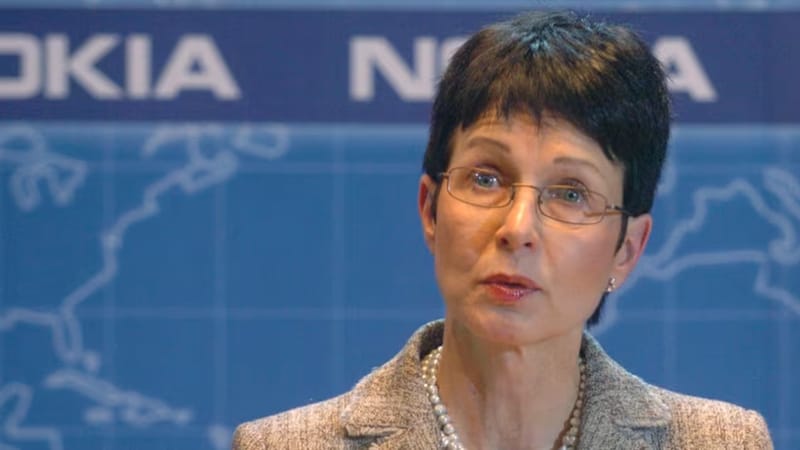
Sari Baldauf plans to exit as chair while AI and data centre demand underpin quarterly results amid restructuring.
Nokia said on Thursday that its chair Sari Baldauf will step down, as the Finnish telecoms equipment maker reported fourth-quarter profit broadly in line with expectations, supported by growing demand linked to artificial intelligence.
The company said it would propose Timo Ihamuotila, currently vice chair, as Baldauf’s successor. The announcement came alongside quarterly results that showed AI-driven businesses helping to offset weakness in parts of Nokia’s 5G operations.
Shares fell about 6% in early Helsinki trading, making Nokia one of the weakest performers on Europe’s Stoxx 600 index, as investors weighed leadership changes against a cautious outlook.
Leadership transition at the top
Baldauf, one of Nokia’s longest-serving executives, has chaired the board since 2020, having returned to the company in 2018. Her earlier tenure from 1994 to 2005 coincided with Nokia’s rise as a global mobile phone champion.
Ihamuotila previously served as Nokia’s chief financial officer from 2009 to 2016 and currently holds the role of vice chair. He is set to leave Swiss engineering group ABB by the end of 2026, Nokia said.
The board transition comes at a pivotal moment for the company, which is undergoing one of its most significant restructurings since selling its mobile phone business more than a decade ago.
AI demand supports quarterly performance
Nokia reported comparable operating profit of 1.05 billion euros in the fourth quarter, down 3% from a year earlier but broadly matching the 1.01 billion euros expected by analysts polled by LSEG, Reuters reported.
Net sales reached 6.12 billion euros, also in line with forecasts.
Growth was led by the Optical Networks unit, where sales rose 17%, driven by strong order intake and a book-to-bill ratio above one. Nokia said demand from AI and cloud infrastructure customers continued to support this business, which it views as critical to scaling AI-related networks.
Pressure persists in core networks
Despite the support from AI-linked segments, Nokia continues to face pressure from weaker spending and contract losses in the 5G market. The company has warned that US import tariffs and a weaker dollar could weigh on margins, increasing the need for tighter cost control.
Last year, Nokia appointed Justin Hotard, a former Intel executive, as chief executive to accelerate the company’s transition towards higher-growth areas such as data centres and AI infrastructure.
For 2026, Nokia forecast comparable operating profit of between 2 billion and 2.5 billion euros. Analysts at Jefferies described the outlook as “somewhat conservative,” according to Reuters.
The company said it would keep its dividend payout unchanged from the previous year at up to 14 euro cents per share.
As Nokia presses ahead with its strategic reset, investors will be watching closely to see whether AI-led growth can sustainably compensate for ongoing challenges in traditional telecoms markets.
Topics
Author
Loading...