








Organisational Culture
APAC workplaces evolve with hybrid models and inclusivity for diverse workforce






The report suggests that the office is no longer just a place to sit and work, instead, it is becoming a strategic tool, one that shapes performance, culture, and employee experience
Workplaces across Asia Pacific are undergoing a fundamental shift as corporate occupiers rethink how offices function, who they serve, and what employees now expect from them.
From hybrid work models to multi-generational design and employee-centric investments, the region’s offices are slowly moving away from cost-driven decisions toward experience-led strategies.
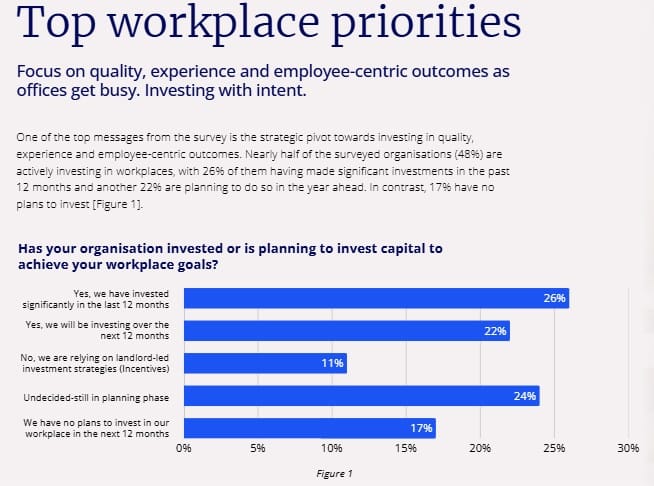
According to Colliers’ newly released 2026 Asia Pacific Workplace Insights report, organizations are prioritising quality, flexibility, and inclusivity to meet the needs of an increasingly diverse workforce. The report draws insights from more than 800 corporate occupiers surveyed across the region and reflects a broader recalibration of workplace strategy in a post-pandemic world.
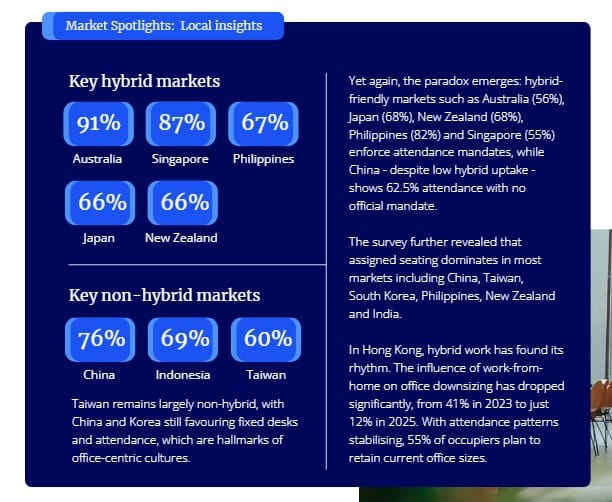
The Philippines stands out as one of the region’s most hybrid-friendly markets, with 82 percent of organizations adopting hybrid work arrangements. Yet the report highlights a persistent “hybrid paradox”: while flexibility is widely endorsed, traditional attendance mandates and assigned seating remain common, limiting true agility in how offices are used.
“Philippine occupiers are moving beyond cost-efficiency to create workplaces that inspire, connect, and support evolving ways of working,” said Kevin Jara, head and director of office services, tenant representation at Colliers Philippines. Despite high hybrid adoption, many offices continue to reflect legacy structures that do not fully align with flexible work ambitions.
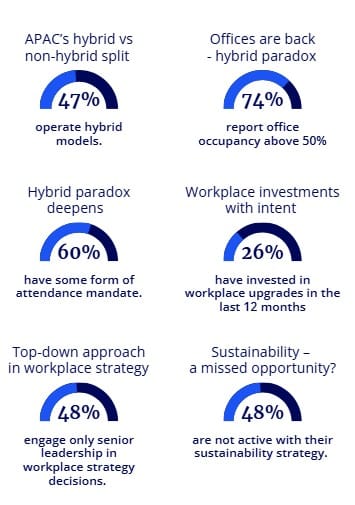
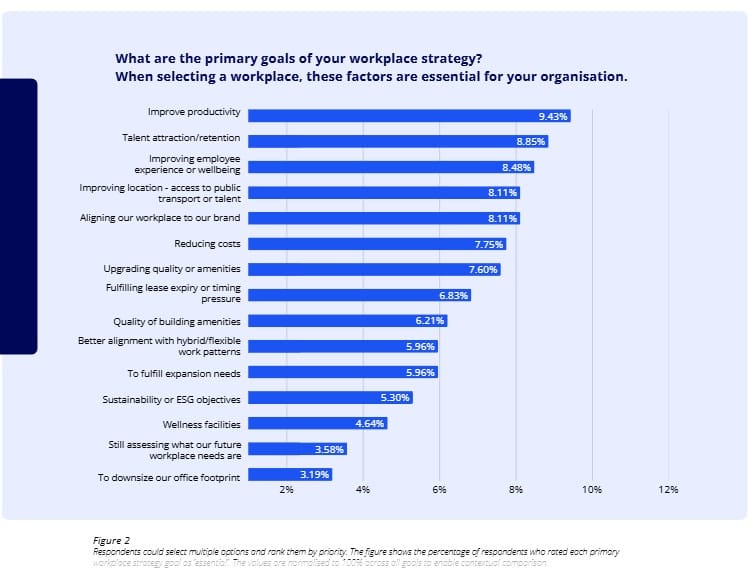
Investment appetite, however, is growing. Around 32 percent of Philippine organizations plan to invest in workplace upgrades within the next year. These investments are increasingly focused on improving productivity, enhancing employee experience, and attracting talent, priorities that now outweigh pure cost reduction.
Generational diversity is another area where the Philippines is ahead of much of the region. The report notes that 43 percent of organizations have already integrated multi-generational needs into their workplace strategies. This positions the country well as five generations, from Baby Boomers to Generation Alpha, are expected to coexist in the workforce by 2030.
Sustainability remains a work in progress. While environmental, social, and governance (ESG) considerations are gaining prominence globally, 26 percent of Philippine respondents said they are unsure about their sustainability approach, underscoring the need for clearer strategies and stronger collaboration between occupiers and landlords.
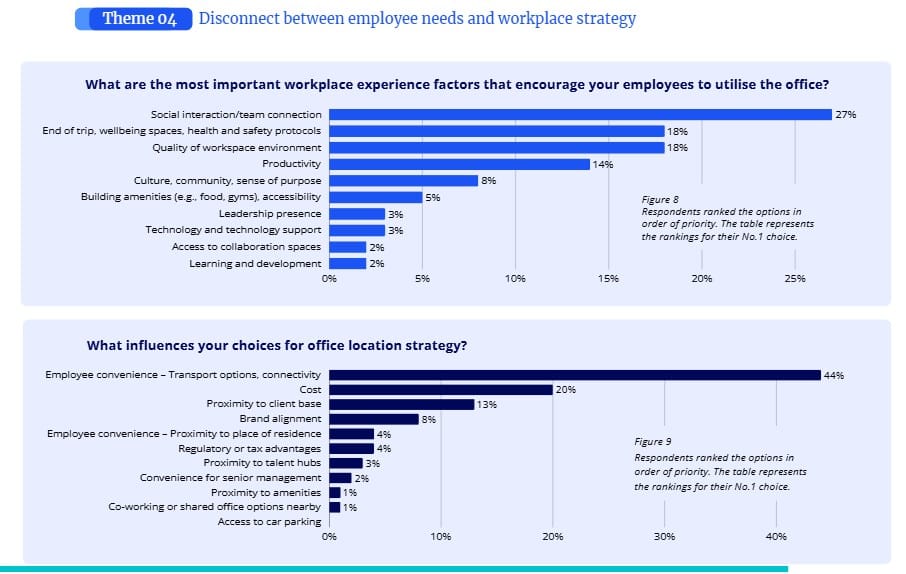
Mike Davis, managing director of occupier services for Asia Pacific at Colliers, said the findings reveal a gap between intent and execution. “While investment and ambition are strong, the winners will be those who turn intent into action, particularly when it comes to flexibility, sustainability, and inclusivity,” he said.
As Asia Pacific workplaces continue to evolve, in a workforce that is more diverse, distributed, and demanding than ever before.
Author
Loading...