








Organisational Culture
Uber staff use AI clone of CEO to rehearse boardroom pitches






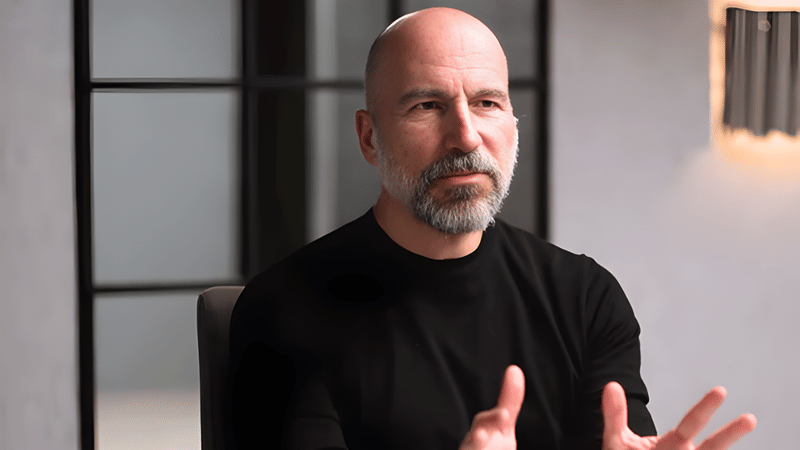
Uber CEO Dara Khosrowshahi says AI’s long-term impact on work could be profound, as employees use “Dara AI” to rehearse presentations, turning the tech into a digital training tool rather than a replacement for leadership.
AI is changing workplaces so much that employees at Uber are now using an AI version of their CEO to rehearse presentations, showing how technology is beginning to play a role even in high-level corporate interactions.
Some employees at Uber have reportedly created an AI version of the company’s CEO, Dara Khosrowshahi, to practice presentations before pitching ideas to him in real meetings.
Khosrowshahi revealed the existence of the AI “clone” during a recent podcast, explaining that teams are using the tool to rehearse high-stakes presentations and refine their proposals before facing the real executive.
“One of my team members told me that some teams have built a Dara AI, so that they basically make their presentation to the Dara AI as a prep for making a presentation to me,” Khosrowshahi said.
“By the time something comes to me, there’s been a prep and a meeting, and the slide deck has been beautifully honed. So they have Dara AI to tune their prep.”
The CEO’s digital twin reflects a broader surge in workplace adoption of artificial intelligence tools across the company. According to Khosrowshahi, about 90% of Uber’s software developers are now using AI in some form, with roughly 30% considered “power users” who rely on the technology heavily in their day-to-day work.
“There’s about 30% of them that are using AI at a completely accelerated pace,” he said, noting that the shift is driving productivity gains he has “never seen before.”
Uber CEO believes the long-term impact of the technology could be profound. Over the next decade, he predicted that AI could replace between 70% and 80% of tasks currently performed by humans. However, he suggested that many roles, particularly in engineering, will evolve rather than disappear.
Instead of writing code manually, developers may increasingly orchestrate AI systems that generate and manage code themselves. “It becomes more of an orchestration job versus a manual writing job,” he said. “But the job will still be there.”
Despite concerns about automation replacing workers, Khosrowshahi maintains that productivity gains could actually lead to more hiring. If engineers become significantly more efficient, he said, companies may expand teams to accelerate innovation rather than reduce headcount.
“My attitude is if my average engineer became 25% more efficient, I’m going to hire more engineers because I want to go faster,” he said.
Uber is already embedding AI across its platform, from improving operational efficiency to creating new earning opportunities through programs such as Uber AI Solutions, which allow drivers to take on additional gig-based tasks.
The CEO appeared amused rather than threatened by the idea of his AI counterpart. In fact, he joked that his team has not even allowed him to see the code behind the digital version of himself. “I’m not paranoid,” Khosrowshahi said. “My instinct is just to move forward. We are moving headlong into AI.”
Still, the experiment highlights growing debate over how far artificial intelligence could extend into leadership roles. A 2023 study by edX found that nearly half of C-suite executives believe that most or all of the CEO role could eventually be automated.
For now, Uber’s “Dara AI” is less about replacing leadership and more about preparing for it, giving employees a digital rehearsal room before stepping into the real boardroom.
Author
Loading...