








Recruiting & Onboarding
43% of Singapore professionals switch jobs for 10%+ pay hikes as salary dissatisfaction grows







The report also found that 19% of professionals in Singapore do not expect a pay rise in 2026, compared with 40% across Asia, while only 2% anticipate a salary reduction.
A rising number of professionals in Singapore are changing employers to secure higher salaries, reflecting growing dissatisfaction with pay and evolving career priorities, according to the 2026 Asia Salary Guide by Hays.
The report reveals that 43% of professionals who switched jobs in 2025 received salary increases of more than 10%, underscoring the growing appeal of job mobility as a pathway to financial growth. The trend is expected to continue into 2026, with another 43% planning to change roles or career paths in the year ahead.
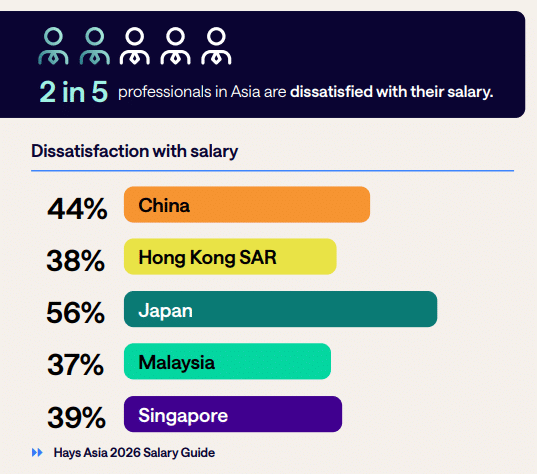
Salary dissatisfaction on the rise
Despite Singapore’s reputation as a competitive labour market, many professionals feel undercompensated. Around 39% reported dissatisfaction with their salaries, slightly lower than the regional average of 44% across Asia.
This frustration is tied to recent salary outcomes. More than a third of workers in Singapore did not receive a pay raise in 2025, while a small proportion experienced salary cuts.
Although expectations for 2026 appear more optimistic, the disconnect between anticipated and actual pay increases has prompted many professionals to reconsider their career choices.
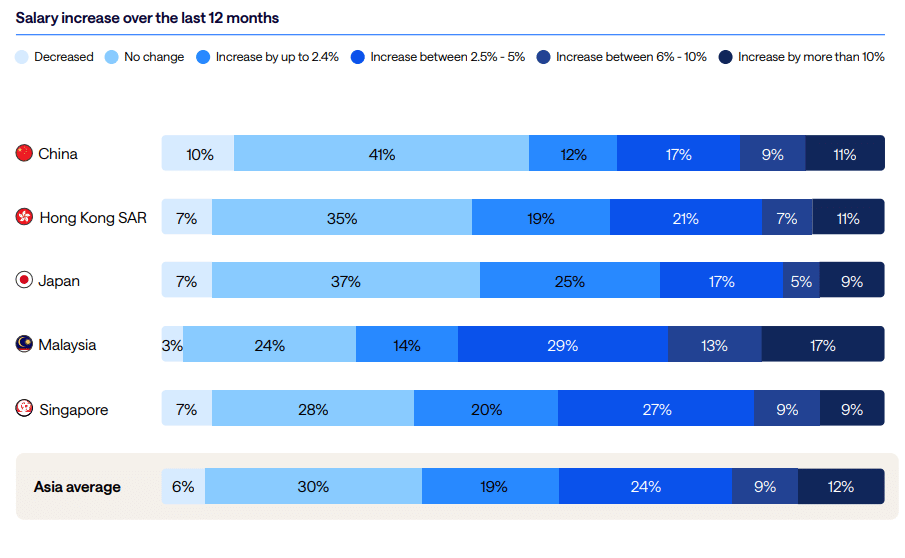
Across Asia, salary growth has remained modest, averaging 2.7%, with Singapore recording similar increases. Inflation continues to erode real wage gains, intensifying pressure on employers and employees alike.
Job-hopping delivers a “mover’s premium”
Switching jobs has emerged as one of the most effective ways to secure significant salary growth. The report highlights that nearly half of professionals who achieved pay increases exceeding 10% did so by moving to a new organisation.
However, financial incentives are not the sole drivers of career changes. Limited career progression was cited by 43% of Singapore professionals as the primary reason for seeking new opportunities, followed by better salaries and benefits (41%) and concerns over job security (30%).
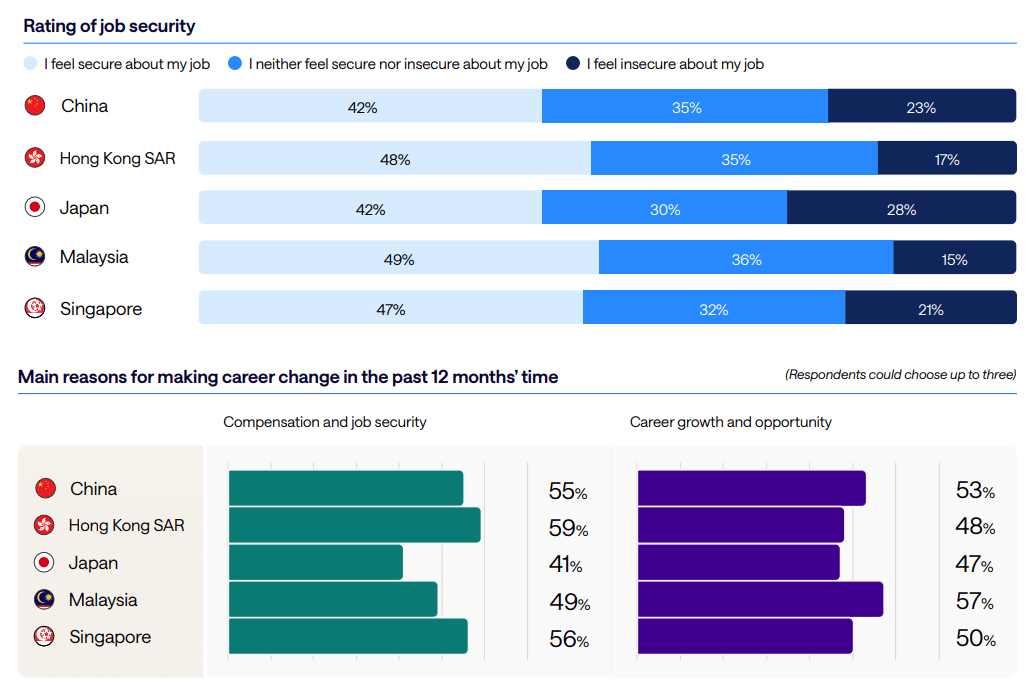
These findings indicate a shift in workforce priorities, with professionals increasingly seeking roles that offer both competitive pay and long-term stability.
Stability and security take centre stage
Tom Osborne, Managing Director of Hays Southeast Asia, noted that professionals are adopting a more cautious and strategic approach to career decisions.
“Singapore’s labour market remains highly competitive, yet the findings show that professionals are increasingly prioritising long-term stability when making career decisions,” Osborne said. He added that job security has emerged as a significant concern amid ongoing restructuring and organisational changes.
The report also found that 19% of professionals in Singapore do not expect a pay rise in 2026, compared with 40% across Asia, while only 2% anticipate a salary reduction.
“These pressures are prompting more individuals to evaluate whether their current employer can provide both stability and a clear path forward,” Osborne added.
A cautious outlook amid economic uncertainty
The findings come at a time of heightened economic uncertainty across Asia. Only 14% of professionals expressed optimism about the broader economic climate and its potential to create employment opportunities over the next two to five years, while more than half reported a pessimistic outlook.
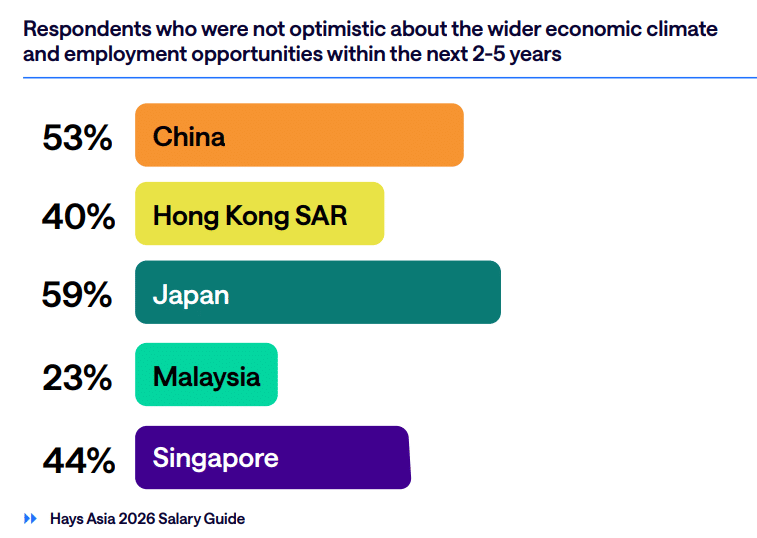
Hiring confidence has softened as organisations respond to fiscal pressures, and concerns over restructuring and budget constraints continue to influence workforce sentiment. Inflation and wage stagnation have further widened the gap between employee expectations and organisational realities.
The AI paradox and evolving workforce strategies
The report also highlights a growing “AI-productivity paradox.” While 81% of employees across Asia use artificial intelligence tools, only 39% receive formal training.
This gap presents both risks and opportunities, as organisations grapple with shadow IT concerns while facing shortages of critical human capabilities such as complex problem-solving and critical thinking.
In response, many companies are increasingly turning to contractors and freelancers to bridge skills gaps. Nearly half of organisations across Asia now consider contract talent a strategic solution for scaling capabilities amid budget constraints.
Talent shortages intensify hiring challenges
Despite economic caution, hiring demand remains steady. Around 46% of organisations plan to increase headcount in 2026. However, talent shortages persist, with 87% of employers reporting difficulties in finding skilled professionals.
Competition from rival employers, inadequate pay levels, and limited training and development opportunities are among the top challenges cited by hiring managers. Intermediate-level roles remain the hardest to fill, followed by management and executive positions.
Employers face mounting retention pressures
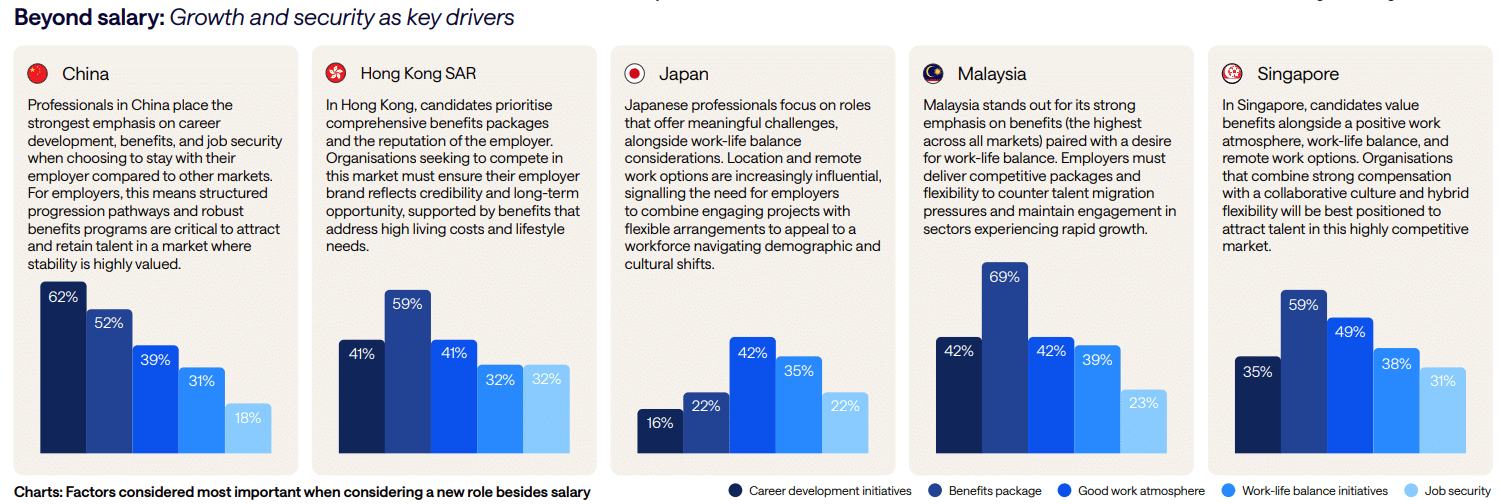
The report underscores a growing retention challenge for organisations in Singapore. Compensation and benefits remain the cornerstone of a compelling employer value proposition, ranked among the top priorities by 59% of professionals.
However, employees increasingly seek a holistic employment experience that includes clear leadership direction, meaningful work, career advancement opportunities, and flexible work arrangements.
Transparent communication and structured career pathways are becoming essential for retaining talent in an increasingly competitive labour market.
A more calculated workforce
The findings highlight a shift toward more deliberate career decision-making among professionals in Singapore. Workers are weighing financial rewards against long-term stability, organisational culture, and growth opportunities.
For employers, this means offering competitive salaries alone is no longer sufficient. Companies must strike a balance between remuneration, career development, and job security to attract and retain top talent.
As businesses and professionals navigate economic uncertainty and technological transformation, the ability to align expectations with opportunities will define success in Singapore’s evolving world of work.
Author
Loading...